ProLogium’s DCN vs Factorial Energy’s Solid-Polymer Technology: Which Battery is Superior?
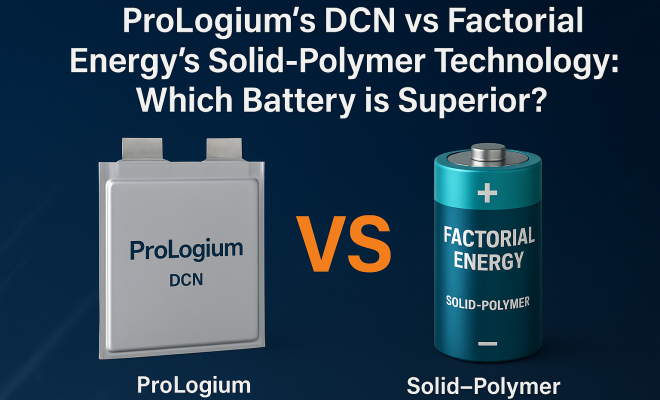
“`html
One Battery Company Just Leapfrogged Toyota’s Decade-Long Plan — Here’s How
The race to revolutionize electric vehicle (EV) batteries is heating up, and it’s not just about incremental improvements anymore. We’re seeing some truly astonishing advancements that promise to reshape everything we think we know about EV performance. Two major players, ProLogium and Factorial Energy, are at the forefront of this charge, each bringing distinct, compelling technologies to the table. ProLogium recently unveiled its Dynamic Coordination Network (DCN) electrolyte architecture, aiming for ultra-fast charging that could make range anxiety a relic of the past. Meanwhile, Factorial Energy is making waves with its solid-polymer technology, which some are saying has leapfrogged even industry giants like Toyota in the solid-state battery race.
It’s a fascinating matchup, a real clash of titans in the battery world, and the implications for consumers and the automotive industry are massive. We’re talking about the potential for EVs that charge almost as fast as you can fill a gas tank, and drive hundreds of miles further on a single charge. This article will dive deep into a ProLogium DCN vs Factorial Energy battery comparison, exploring the core technologies, their claimed performance metrics, and what they could mean for the future of electric mobility. Who’s really ahead in this high-stakes game, and which approach holds the most promise for your next EV?
1. ProLogium’s Dynamic Coordination Network (DCN) Electrolyte Architecture: The Speed Demon
Let’s start with ProLogium, a Taiwanese company that’s been quietly working on solid-state battery tech for years. Their latest big reveal is the Dynamic Coordination Network (DCN) electrolyte architecture, designed specifically for their next-generation GEN4 batteries. This isn’t just a tweak; it’s a fundamental shift in how they’re approaching the electrolyte, which is the crucial component that allows ions to move between the anode and cathode during charging and discharging. Traditional lithium-ion batteries use liquid electrolytes, which have known limitations in terms of stability, safety, and charging speed.
The DCN architecture aims to overcome these hurdles by creating a more efficient pathway for ion transport. Imagine a complex highway system where traffic flows seamlessly without bottlenecks. That’s essentially what ProLogium is trying to achieve with their DCN. The promise is remarkable: ultra-fast charging from 5% to 80% in an astonishing 6.4 minutes. Think about that for a second. Pulling into a charging station, grabbing a coffee, and being back on the road with 80% charge before you’ve even finished checking your emails. That’s the kind of convenience that could genuinely persuade a lot of skeptics to make the switch to an EV.
2. Factorial Energy’s Solid-Polymer Technology: The Range King
Now, let’s turn our attention to Factorial Energy, an American solid-state battery company that has been garnering significant attention. While ProLogium is pushing the boundaries of charging speed, Factorial Energy appears to be focusing heavily on range and compatibility. Their technology utilizes a solid-polymer electrolyte, a different approach to solid-state batteries than some others. The key here is the solid nature of the electrolyte, which inherently offers greater safety and stability compared to liquid electrolytes, reducing the risk of thermal runaway and fires.
What’s truly captivating about Factorial’s claims is the reported range. They’ve achieved a staggering 745 miles of range in a Mercedes-Benz EQS test vehicle. Let that sink in. That’s the kind of range that obliterates any lingering ‘range anxiety’ for virtually any driver. For context, even the best conventional EVs struggle to break the 400-mile mark. A 745-mile range means you could drive from New York City to Chicago on a single charge with miles to spare. This level of performance could truly redefine long-distance travel in an EV, making it not just feasible, but genuinely convenient.
3. Charging Speed: ProLogium’s Edge in the ProLogium DCN vs Factorial Energy Battery Comparison
When it comes to charging speed, ProLogium’s DCN architecture seems to hold a distinct advantage, at least based on their current claims. The 6.4-minute charge from 5% to 80% is a headline-grabbing figure that would be transformative for the EV experience. This isn’t just about convenience; it’s about infrastructure. If EVs can charge this quickly, the demand on individual charging stalls decreases, meaning more vehicles can be served by fewer stations in the same amount of time. It could alleviate bottlenecks at popular charging hubs and make long road trips much more viable.
Achieving such speeds requires not only an advanced electrolyte but also sophisticated battery management systems and robust charging infrastructure. ProLogium’s DCN is designed to facilitate rapid ion movement without degrading the battery’s performance or lifespan, which has historically been a challenge for ultra-fast charging. The ability to charge almost as fast as a gas car could be the psychological barrier breaker for many consumers still hesitant about switching to electric.
4. Range Performance: Factorial Energy’s Dominance
On the flip side, Factorial Energy’s solid-polymer technology appears to be the undisputed champion in terms of range. The reported 745 miles in a Mercedes-Benz EQS test vehicle isn’t just good; it’s groundbreaking. This kind of range moves EVs beyond just urban commuters or regional travel and firmly into the realm of true long-haul vehicles. Imagine the freedom of driving cross-country with minimal stops, or the peace of mind knowing you have a massive buffer even on longer commutes.
This impressive range is likely a combination of several factors: the inherent energy density benefits of solid-state technology, the efficiency of the solid-polymer electrolyte, and potentially optimizations within the battery pack design itself. While ultra-fast charging addresses one major concern, a colossal range addresses another equally significant one: the perception that EVs are somehow limited. Factorial Energy’s success here could completely change that narrative, making EVs an even more compelling option for a wider audience. (See: Electric vehicle battery advancements.)
5. Compatibility with Existing Production Methods
One of Factorial Energy’s most compelling selling points, and a crucial factor in the ProLogium DCN vs Factorial Energy battery comparison, is its reported compatibility with existing lithium-ion production methods. This is a massive advantage for scaling up production. Building entirely new gigafactories or retooling existing ones for a completely novel battery architecture can be incredibly expensive and time-consuming. If Factorial’s technology can be integrated into current manufacturing processes with minimal disruption, it means faster adoption and potentially lower production costs per unit. For more context, see AI advancements in technology.
This compatibility is often a critical bottleneck for new battery technologies. Many promising lab-scale innovations struggle to make the leap to mass production due to complex manufacturing requirements. Factorial’s approach suggests a more seamless transition, which could accelerate its deployment into consumer vehicles. It reduces the barrier to entry for automotive manufacturers looking to adopt solid-state technology without incurring exorbitant retooling expenses or years of development cycles.
6. Addressing Key EV Challenges: Range Anxiety and Charging Times
Both ProLogium and Factorial Energy are directly tackling the two biggest pain points for potential EV owners: range anxiety and charging times. ProLogium’s DCN aims to eliminate charging time concerns, while Factorial’s solid-polymer promises to obliterate range anxiety. It’s almost like they’re attacking the same problem from different angles, and both approaches are critically important for mainstream EV adoption.
For many consumers, the fear of running out of charge in an inconvenient location, or the thought of waiting for hours at a charging station, has been a significant deterrent. These innovations represent a future where those fears are largely unfounded. If you can charge in minutes and drive for hundreds of miles, the practical differences between an EV and a gasoline car become negligible, or even favor the EV due to lower running costs and environmental benefits. This dual assault on core EV challenges is what makes these technologies so exciting and so virally popular in discussions about future mobility.
7. The ‘Leapfrog’ Claim: Factorial vs. Toyota
The claim that Factorial Energy has ‘leapfrogged Toyota’s decade-long roadmap’ for solid-state batteries is a bold one, and it’s certainly generated a lot of buzz. Toyota has been a pioneer in hybrid technology and has been very public about its long-term commitment to solid-state batteries, setting ambitious timelines for their commercialization. For a relatively newer company like Factorial to claim such a significant advancement suggests a breakthrough that could genuinely disrupt the established order.
This isn’t just about bragging rights; it has serious implications for market leadership. If Factorial can indeed bring viable solid-state technology to market faster and more efficiently than a behemoth like Toyota, it could give its partners a significant competitive edge in the rapidly evolving EV landscape. It highlights the dynamic nature of battery development, where smaller, agile companies can sometimes innovate faster than larger, more bureaucratic organizations, even with their vast resources. This claim alone makes the ProLogium DCN vs Factorial Energy battery comparison even more compelling.
8. Material Science and Engineering Innovations
At the heart of both ProLogium’s DCN and Factorial Energy’s solid-polymer technologies are fundamental advancements in material science and engineering. ProLogium’s Dynamic Coordination Network isn’t just a fancy name; it signifies a novel approach to electrolyte chemistry that enhances ion conductivity while maintaining stability. This could involve new polymer compositions, ceramic materials, or hybrid structures that offer the best of both worlds – the rapid ion movement of liquids with the stability of solids.
Factorial’s solid-polymer technology also represents significant material innovation. Solid-polymer electrolytes have been researched for decades, but challenges with conductivity at ambient temperatures and mechanical stability have limited their widespread adoption. Factorial’s breakthroughs likely involve proprietary polymer formulations that overcome these limitations, enabling high performance in a practical package. These are not just engineering feats; they are deep dives into the molecular structure of materials, pushing the very boundaries of what’s possible in energy storage.
9. Market Impact and Future Outlook: ProLogium DCN vs Factorial Energy Battery Comparison
The potential market impact of both ProLogium’s DCN and Factorial Energy’s solid-polymer technologies is immense. For ProLogium, ultra-fast charging could redefine the charging infrastructure landscape, making EVs as convenient as gasoline cars for quick top-ups. This convenience could accelerate mass adoption, particularly in regions where charging infrastructure is still developing.
Factorial Energy’s enormous range, combined with manufacturing compatibility, could see a rapid integration into luxury and long-range vehicles first, then trickle down to more mainstream models. The ability to offer nearly 750 miles of range is a powerful differentiator and could sway consumers who prioritize maximum driving distance. Ultimately, the success of either company will hinge on their ability to move from impressive prototypes and lab results to reliable, mass-produced batteries that meet automotive-grade standards for safety, durability, and cost-effectiveness. The future of EVs is certainly looking brighter, and a lot more exciting, thanks to these innovators. (See: Solid-state battery technology overview.)
10. Safety Implications of Solid-State Electrolytes
Beyond performance metrics like charging speed and range, safety is a paramount concern for any automotive technology, especially batteries. This is where solid-state electrolytes, whether ProLogium’s DCN or Factorial’s solid-polymer, offer a significant inherent advantage over traditional liquid lithium-ion batteries. Liquid electrolytes are flammable and can lead to thermal runaway events if the battery is damaged or short-circuited. You’ve probably heard stories of EV battery fires, and while rare, they’re often linked to these liquid components.
By replacing the flammable liquid with a solid material, the risk of fire and explosion is dramatically reduced. This isn’t just a small improvement; it’s a fundamental shift in battery chemistry that makes EVs inherently safer. This enhanced safety profile isn’t just good for consumers; it’s also crucial for automakers who face stringent safety regulations and liability concerns. A safer battery means more peace of mind for everyone involved, potentially lowering insurance costs and increasing public trust in EV technology. It’s a quiet but incredibly important benefit that often gets overshadowed by the flashier performance numbers. For more context, see future of technology in medicine.
11. The Role of Energy Density in Performance
Energy density, which refers to the amount of energy a battery can store per unit of volume or weight, is a critical factor influencing both range and vehicle design. Higher energy density means a smaller, lighter battery pack can store more energy, leading to greater range or allowing for a lighter vehicle with better handling and efficiency. Factorial Energy’s impressive 745-mile range strongly suggests a significant leap in energy density for their solid-polymer cells.
While ProLogium focuses on charging speed, improved energy density is still a core goal for their DCN architecture as well. A battery that charges quickly but only offers limited range wouldn’t be as appealing. The magic of solid-state technology lies in its potential to pack more active material into a given space compared to liquid-based cells, as the solid electrolyte can be made much thinner and more stable. This compact design not only helps with range but also frees up valuable space in the vehicle, which designers can use for passenger comfort or additional features. It’s a win-win that drives the overall efficiency and attractiveness of the EV.
12. Scalability Challenges and Production Roadmaps
Bringing a revolutionary battery technology from the lab to mass production is incredibly difficult, often taking years and billions of dollars. Both ProLogium and Factorial Energy face significant scalability challenges, even with their promising lab results. Factorial’s claim of compatibility with existing lithium-ion production methods is a huge advantage here, as it could accelerate their path to market. Automakers are wary of investing in entirely new manufacturing lines unless the technology is proven and the benefits are undeniable.
ProLogium, while also producing solid-state batteries, might face different scaling hurdles depending on the specifics of their DCN architecture. New material processing or assembly techniques can add complexity and cost. Both companies need to demonstrate not only that their batteries perform as claimed but also that they can be manufactured consistently, reliably, and at a cost that makes them competitive with, or superior to, current lithium-ion technology. Their success will depend on securing strong partnerships, attracting significant investment, and meticulously refining their production processes. The next few years will be crucial in watching how these roadmaps unfold.
13. Partnerships and Industry Validation
The credibility and future success of these battery innovators are heavily bolstered by the strategic partnerships they form with major automotive players. Factorial Energy has notably secured partnerships with Mercedes-Benz and Stellantis (the parent company of brands like Jeep, Chrysler, and Fiat). These aren’t just minor agreements; they involve significant investment and joint development efforts, indicating a serious commitment from established automakers to integrate Factorial’s technology into their future vehicles. For Factorial, having these giants on board provides crucial funding, engineering expertise, and a guaranteed market for their batteries once scaled.
ProLogium has also been active in this space, announcing a long-term partnership with Mercedes-Benz back in 2022, and also working with other manufacturers like VinFast. These endorsements from leading carmakers serve as powerful validation, suggesting that both companies’ technologies are not just theoretical breakthroughs but are seen as viable and impactful solutions by those who will actually put them into cars. These partnerships are a strong indicator that the industry is taking these solid-state advancements very seriously, and it shows where automakers are placing their bets for the next generation of EVs.
14. Cost-Effectiveness and Lifecycle Considerations
While performance and safety are critical, the ultimate widespread adoption of any new battery technology hinges on its cost-effectiveness over the entire lifecycle. Initially, solid-state batteries might be more expensive to produce than traditional lithium-ion batteries due to novel materials and manufacturing processes. However, as production scales and technology matures, costs are expected to come down. Factorial’s compatibility with existing production lines could give them an early advantage in cost reduction. (See: Latest in electric vehicle technology.)
Beyond the initial purchase price, lifecycle costs include factors like battery degradation, warranty periods, and potential for recycling. If ProLogium’s ultra-fast charging or Factorial’s extended range can lead to less frequent charging cycles or longer battery life, these benefits could offset a higher upfront cost. Reduced degradation over time would mean EVs retain more of their range and performance for longer, increasing their resale value and overall appeal. Both companies will need to prove not just performance, but also economic viability to truly capture a significant share of the market.
Frequently Asked Questions (FAQ)
Q1: What are the main differences between ProLogium DCN and Factorial Energy batteries?
The primary difference lies in their core focus and claimed strengths. ProLogium’s Dynamic Coordination Network (DCN) architecture is designed to enable ultra-fast charging, boasting a 5% to 80% charge in just 6.4 minutes. Their innovation is geared towards rapid ion transport within a solid-state electrolyte. Factorial Energy, on the other hand, emphasizes extended range, having achieved an impressive 745 miles in a test vehicle, and highlights its solid-polymer electrolyte’s compatibility with existing lithium-ion manufacturing processes, making it potentially easier to scale up production.
Q2: How do solid-state batteries improve safety compared to traditional lithium-ion batteries?
Solid-state batteries, like those from ProLogium and Factorial Energy, significantly improve safety by replacing the flammable liquid electrolyte found in conventional lithium-ion batteries with a solid material. This solid electrolyte eliminates the risk of leakage and greatly reduces the chance of thermal runaway events, which can lead to fires. It creates a more stable and robust battery structure, making EVs inherently safer in the event of damage or extreme conditions.
Q3: What does ‘leapfrogging Toyota’ mean in the context of Factorial Energy?
When it’s claimed that Factorial Energy has ‘leapfrogged Toyota,’ it means that Factorial has potentially achieved significant advancements in solid-state battery technology and commercialization timelines that surpass Toyota’s long-established and highly publicized roadmap. Toyota has been a major player in solid-state battery research for decades, and for a newer company like Factorial to claim faster or more efficient progress suggests a disruptive breakthrough that could alter the competitive landscape for EV battery development.
Q4: Will these batteries be affordable for mainstream EVs?
Initially, advanced solid-state batteries like those from ProLogium and Factorial Energy are likely to be more expensive than current lithium-ion batteries, meaning they may first appear in premium or luxury EVs. However, as manufacturing processes are refined, production scales up, and material costs potentially decrease, the cost is expected to come down. Factorial’s stated compatibility with existing production methods could give them an advantage in achieving cost-effectiveness sooner, as it reduces the need for entirely new, costly manufacturing infrastructure.
Q5: How will ultra-fast charging (ProLogium DCN) impact EV charging infrastructure?
Ultra-fast charging, as proposed by ProLogium’s DCN, would dramatically change the EV charging experience and infrastructure. If an EV can charge to 80% in under 7 minutes, it means charging stops become much shorter and less frequent. This could reduce queues at charging stations, allow more vehicles to use fewer chargers, and make long-distance travel significantly more convenient. It would also lessen the overall demand for massive charging capacities at individual stalls, potentially making infrastructure deployment more efficient and less costly in the long run.
Q6: What role do strategic partnerships play in the success of these battery companies?
Strategic partnerships, like Factorial’s with Mercedes-Benz and Stellantis, and ProLogium’s with Mercedes-Benz and VinFast, are absolutely crucial. These collaborations provide essential funding for research and development, access to automotive engineering expertise, and a direct path to integrate the new battery technology into production vehicles. For the battery companies, these partnerships offer market validation and a guaranteed customer base, helping them overcome the immense challenges of scaling up and commercializing a complex new technology. For automakers, it’s a way to secure a competitive edge in the rapidly evolving EV market.
“`
Trending Now
Frequently Asked Questions
What is ProLogium's DCN technology?
ProLogium's Dynamic Coordination Network (DCN) technology is an innovative electrolyte architecture designed for ultra-fast charging in their GEN4 solid-state batteries. This technology aims to significantly reduce charging times, potentially alleviating range anxiety for electric vehicle users.
How does Factorial Energy's solid-polymer technology work?
Factorial Energy's solid-polymer technology utilizes a solid-state electrolyte to enhance battery safety and performance. This technology enables higher energy density and longer lifespan compared to traditional lithium-ion batteries, positioning it as a competitive alternative in the electric vehicle market.
Which battery technology is better for electric vehicles?
Determining the superior battery technology between ProLogium's DCN and Factorial Energy's solid-polymer approach depends on specific needs. ProLogium is focused on ultra-fast charging, while Factorial Energy offers enhanced safety and energy density, making both promising options for future electric vehicles.
What are the advantages of solid-state batteries?
Solid-state batteries, like those from ProLogium and Factorial Energy, offer several advantages over traditional lithium-ion batteries, including improved safety, higher energy density, faster charging times, and longer lifespans. These benefits could significantly enhance the performance of electric vehicles.
How do ProLogium and Factorial Energy compare in the battery market?
ProLogium and Factorial Energy are leading contenders in the battery industry, each with unique technologies. ProLogium's DCN focuses on charging speed, while Factorial Energy's solid-polymer technology emphasizes safety and energy efficiency, making both key players in the evolving electric vehicle landscape.
What did we miss? Let us know in the comments and join the conversation.