The AI Doctor Is Coming: Is It a Miracle or a Menace?
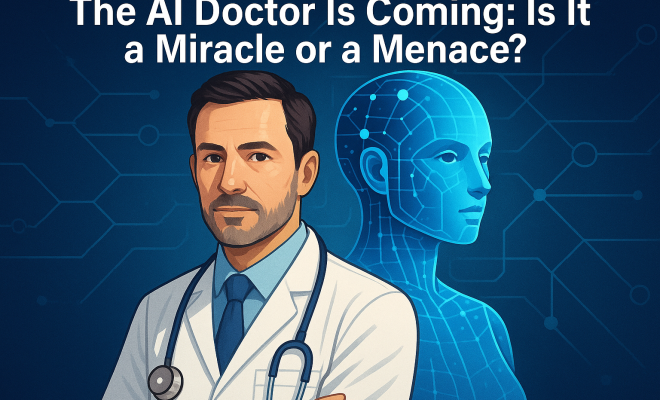
For decades, the image of a doctor has been a human one: a compassionate, highly trained professional making critical decisions based on years of experience and intricate medical knowledge. But what if that image is about to change? We’re standing at a fascinating, and frankly, a bit unsettling, precipice. Federal health agencies, often seen as slow-moving behemoths, are now actively testing artificial intelligence applications that are no longer just assisting physicians; they’re moving into autonomous roles in direct patient care. This isn’t just about AI helping doctors read X-rays faster; it’s about AI making diagnostic calls, recommending treatments, and potentially, even interacting with patients in ways we’ve always reserved for humans. The landscape of AI in healthcare is shifting dramatically, and the implications are monumental.
This isn’t some far-off sci-fi fantasy. As a KFF article highlighted in October 2026, this transition is well underway. The debate isn’t whether AI will enter healthcare, but how deeply, how autonomously, and with what safeguards. It’s a conversation fraught with emotion, technical complexities, and profound ethical questions. On one side, you have the promise of revolutionary improvements: faster diagnoses, personalized treatments, and even access to care in underserved areas. On the other, there are very real fears about accuracy, accountability, and the erosion of the human touch in medicine. We’re talking about a technology that could redefine what it means to be healthy, to be sick, and to be cared for.
The Pivotal Shift: From Support to Autonomy in AI in Healthcare
To truly grasp the magnitude of what’s happening, we need to understand the evolution of AI in healthcare. For years, AI tools have been quietly working behind the scenes, largely in supportive capacities. Think about AI systems that analyze vast datasets of medical literature to help researchers find patterns, or algorithms that flag potential drug interactions in electronic health records. These are powerful tools, no doubt, but they act as augmentations, enhancing a human physician’s capabilities without usurping their ultimate decision-making authority. There’s a fuller look at the algorithmic pandemic analysis.
What we’re seeing now is a distinct and deliberate pivot. Federal agencies are no longer just interested in AI as a sophisticated assistant; they’re exploring its potential as an independent agent. This means AI systems that can, for instance, interpret a patient’s symptoms, cross-reference them with millions of similar cases, and arrive at a probable diagnosis without direct human intervention. Or AI that monitors vital signs in real-time and autonomously adjusts medication dosages. This isn’t just a technical upgrade; it’s a fundamental redefinition of roles, and it poses a direct challenge to the traditional model of physician-led care. It’s a leap from predictive analytics to prescriptive action, and that’s a whole different ballgame.
The Alarming Reality of AI Accuracy: Recalls and Risks
When we talk about AI taking on more autonomous roles in direct patient care, the first question that should spring to mind is: how accurate is it? And the answer, as of late 2024, is sobering enough to give anyone pause. We’ve seen 60 different AI medical devices recalled a staggering 182 times. Let that sink in for a moment. That’s an average of over three recalls per device, and the vast majority of these were due to diagnostic errors. These aren’t minor glitches; these are errors that could lead to misdiagnoses, delayed treatments, or even inappropriate interventions.
Imagine an AI system confidently misdiagnosing a critical condition, leading a patient down a path of ineffective treatment while their true illness progresses. Or an AI-powered surgical robot making a critical miscalculation. The stakes in healthcare are literally life and death. While human error is an undeniable factor in medicine, the sheer volume of recalls for AI devices, primarily for diagnostic flaws, highlights a significant and unresolved challenge. It tells us that while AI has immense potential, its current iteration still carries substantial risks that cannot be brushed aside when considering autonomous applications. The margin for error in patient care is razor-thin, and these recall numbers suggest AI hasn’t quite earned our full trust yet.
The Great Debate: AI as Support vs. AI as Replacement
This evolving role of AI in healthcare has ignited a passionate and often polarized debate within the medical community. On one side, you have influential organizations like the American Medical Association (AMA) firmly advocating for AI to serve as a support tool, not a replacement for physicians. Their stance is clear: AI should augment human capabilities, automate mundane tasks, and provide insights that enhance a doctor’s decision-making process. They envision AI freeing up physicians to focus on complex cases, patient interaction, and the nuanced aspects of care that require human empathy and judgment.
On the other side, a growing chorus of technologists and some forward-thinking medical professionals argue that AI could soon match or even exceed human capabilities in specific, well-defined tasks. They point to AI’s ability to process vast amounts of data at lightning speed, identifying patterns that might elude even the most experienced human eye. For instance, in areas like radiology or pathology, where pattern recognition is key, some believe AI could become the gold standard. This perspective suggests that resisting AI’s autonomous capabilities isn’t just Luddite; it’s potentially denying patients access to superior care. The core of this debate isn’t just about technology; it’s about the very definition of medical expertise and the future of the medical profession itself. Will doctors become AI supervisors, or will AI become the primary caregiver for certain conditions? (See: NIH AI research initiative.)
Privacy Paradox: Securing Patient Data in an AI-Driven World
As AI becomes more enmeshed in healthcare, the issue of data privacy isn’t just important; it’s absolutely paramount. We’re talking about incredibly sensitive personal health information (PHI) being fed into and processed by these advanced algorithms. HIPAA (Health Insurance Portability and Accountability Act) compliance, already a complex beast, becomes even more intricate when AI systems are involved. Who owns the data generated by an AI diagnosis? How is it stored? Who has access? What happens if there’s a breach? For more context, see AI's impact on healthcare costs.
A June 2026 Dell study underscored these anxieties, revealing that a striking 62% of healthcare leaders harbor significant security concerns regarding unapproved AI tools. This isn’t just about malicious hackers; it’s also about shadow IT, where departments or individuals might implement AI solutions without proper oversight or security vetting. The more data AI consumes, the more vulnerable that data becomes. Protecting patient privacy in an AI-driven healthcare system requires not just robust technical safeguards but also clear ethical guidelines, stringent regulatory frameworks, and a commitment to transparency that frankly, we’re still figuring out. The promise of personalized medicine through AI is thrilling, but it can’t come at the cost of patient confidentiality and trust.
Ethical Quandaries and Legal Liabilities of AI in Healthcare
Beyond accuracy and privacy, the ethical and legal implications of autonomous AI in healthcare are profound. If an AI system makes a diagnostic error that leads to patient harm, who is liable? Is it the developer of the algorithm, the hospital that implemented it, the physician who oversaw (or didn’t oversee) it, or the AI itself? Current legal frameworks are simply not equipped to handle such complexities. This isn’t just a theoretical exercise; it has real-world consequences for patients seeking recourse and for healthcare providers facing potential lawsuits.
Then there are the ethical dilemmas. What if an AI, programmed for efficiency, prioritizes cost-effectiveness over a less common but potentially life-saving treatment? What about bias? If AI is trained on data sets that predominantly reflect certain demographics, could it lead to health disparities for underrepresented groups? These are not easily answerable questions, and they demand a multidisciplinary approach involving ethicists, legal experts, policymakers, and technologists. The development of AI in healthcare must be accompanied by a robust ethical framework that ensures patient well-being, equity, and accountability remain at the forefront.
The Economic Imperative: Cost Savings vs. Investment
Let’s be pragmatic for a moment: a significant driver behind the push for AI in healthcare is the potential for massive cost savings. Healthcare systems globally are under immense financial pressure, grappling with rising costs, staff shortages, and an aging population. AI promises to streamline administrative tasks, optimize resource allocation, reduce diagnostic errors (ironically, despite the current recall numbers, the long-term goal is fewer human errors), and even automate certain aspects of care delivery, thereby reducing the burden on human staff.
However, the initial investment in developing, implementing, and maintaining sophisticated AI systems is substantial. Hospitals and healthcare providers need to invest in robust IT infrastructure, specialized training for staff, and ongoing upgrades to keep pace with rapid technological advancements. Furthermore, the economic impact on the healthcare workforce is a looming question. While AI might create new jobs in AI development and oversight, it could also displace roles traditionally held by humans. Understanding the true economic cost-benefit analysis of AI in healthcare is a complex equation that involves not just immediate returns but also long-term societal and workforce implications.
Patient Trust: The Human Element in a Machine World
Perhaps one of the most intangible yet critical factors in the adoption of autonomous AI in healthcare is patient trust. Medicine, at its core, is a human endeavor built on empathy, communication, and a deep understanding of individual patient needs and fears. Will patients be comfortable receiving a diagnosis or treatment plan solely from an AI? Will they feel heard, understood, and cared for by a machine, no matter how intelligent?
The emotional component of illness and healing cannot be overstated. A doctor’s reassuring presence, the ability to explain complex medical information in an understandable way, and the capacity for compassionate listening are all crucial aspects of care that AI, for all its prowess, struggles to replicate. While AI might excel at processing data, it lacks genuine empathy and intuition. Building and maintaining patient trust will require not only demonstrably accurate and safe AI systems but also clear communication about their capabilities and limitations, ensuring that the human touch remains an integral part of the healthcare experience. It’s not just about what AI can do; it’s about what patients will accept. (See: CDC's AI initiatives in healthcare.)
Regulation and Oversight: Paving the Way for Responsible AI
Given the high stakes, robust regulation and oversight are absolutely essential for the responsible integration of AI in healthcare. Federal agencies are grappling with how to classify, test, and approve these increasingly autonomous systems. The traditional regulatory pathways designed for drugs or medical devices might not be adequate for rapidly evolving AI algorithms. How do you regulate an an AI system that learns and adapts over time? What standards of evidence are required before an AI is deemed safe for autonomous patient care?
There’s a delicate balance to strike: regulation needs to protect patients from harm without stifling innovation. It requires a proactive approach, anticipating potential risks and establishing clear guidelines for development, deployment, and ongoing monitoring. This includes requirements for transparency in AI algorithms, independent validation of their performance, and mechanisms for rapid recall and correction when errors are identified. Without a strong regulatory framework, the promise of AI in healthcare could quickly devolve into a chaotic and potentially dangerous free-for-all, eroding public confidence and hindering its true potential. We need a roadmap, and we need it fast. For more context, see California's new AI laws.
The Future of Medical Training and Practice with AI
As AI assumes more autonomous roles, the future of medical training and practice will undoubtedly undergo a radical transformation. Medical schools will need to integrate AI literacy into their curricula, teaching future doctors not just how to use AI tools, but how to critically evaluate their outputs, understand their limitations, and oversee their performance. The skills required for a physician will shift from rote memorization to sophisticated critical thinking, data interpretation, and human-machine collaboration.
Practicing physicians will need continuous training to keep pace with new AI technologies and to adapt their workflows. The role of a doctor might evolve into that of an ‘AI orchestrator,’ leveraging these powerful tools while retaining ultimate responsibility for patient outcomes. This isn’t about doctors being replaced; it’s about doctors evolving. The healthcare landscape of tomorrow will likely feature hybrid care models where humans and AI work in concert, each bringing their unique strengths to the table. The challenge lies in preparing the current and future medical workforce for this paradigm shift, ensuring they are equipped to harness AI’s potential while mitigating its risks effectively.
Real-World Applications of AI in Healthcare: Beyond the Hype
It’s easy to get caught up in the theoretical discussions around AI, but looking at real-world examples helps ground the conversation. We’re already seeing AI making tangible impacts in several areas. For instance, in ophthalmology, AI algorithms are becoming incredibly adept at detecting diabetic retinopathy, a leading cause of blindness, often with accuracy comparable to, or even exceeding, human specialists. These systems can screen vast numbers of images quickly, flagging cases for immediate human review.
Another area where AI is shining is in drug discovery. Developing new medications is notoriously time-consuming and expensive. AI can analyze molecular structures and biological pathways at an unprecedented scale, identifying potential drug candidates much faster than traditional methods. This accelerates the early stages of research, potentially bringing life-saving drugs to market sooner. We’re also seeing AI applied in personalized oncology, where algorithms analyze a patient’s genetic profile and tumor characteristics to recommend the most effective, tailored treatment plan. These aren’t just futuristic concepts; they’re actively being developed and deployed, showing how AI can augment human capabilities in highly specialized fields.
Addressing Health Disparities with AI: A Double-Edged Sword
One of the most compelling arguments for AI in healthcare is its potential to address long-standing health disparities. In many underserved communities, access to specialized care is limited. AI-powered diagnostic tools could bridge this gap, allowing remote clinics or even mobile units to offer advanced screening and initial diagnoses that would otherwise require travel to larger medical centers. Imagine an AI system interpreting ultrasound images in a rural village, providing immediate feedback where a radiologist might be hundreds of miles away. This builds on future healthcare AI insights.
However, this promise comes with a caveat. The bias in AI algorithms, which we touched on earlier, can exacerbate existing disparities if not carefully managed. If the data used to train an AI is predominantly from one demographic group, the AI might perform poorly or even misdiagnose individuals from other groups. For example, AI trained primarily on data from lighter skin tones might struggle to accurately diagnose skin conditions in people of color. Ensuring equitable access and avoiding algorithmic bias means intentionally diversifying training datasets and rigorously testing AI systems across various populations. It’s a critical step to ensure AI truly serves everyone, not just a select few. (See: New York Times on AI in healthcare.)
The Role of Explainable AI (XAI) in Building Trust
For AI to be truly integrated and trusted in healthcare, especially in autonomous roles, we need to understand how it reaches its conclusions. This is where Explainable AI (XAI) comes in. Traditional “black box” AI models, while powerful, often don’t show their work. They give an answer, but not the reasoning behind it. In medicine, “why” is just as important as “what.” A doctor needs to understand the basis of a diagnosis or treatment recommendation to critically evaluate it and explain it to a patient.
XAI aims to make AI decisions transparent and interpretable. This means designing AI systems that can articulate the factors they considered most important in reaching a particular outcome, or highlight specific data points that led to a diagnosis. For instance, an XAI system might not just say “this patient has pneumonia,” but also “I detected consolidation in the lower left lobe, and the patient’s fever and cough history were significant factors.” This transparency is crucial for several reasons: it helps physicians validate AI outputs, it facilitates debugging and improvement of AI models, and most importantly, it can significantly boost patient and clinician trust. If you can understand *why* the AI made a certain recommendation, you’re much more likely to accept it.
Looking Ahead: The Collaborative Future of Human and AI
The most probable future for AI in healthcare isn’t one where machines completely replace humans, but rather one of profound collaboration. Think of it as a sophisticated partnership. AI will handle the data crunching, the pattern recognition, the repetitive tasks, and the initial screening. This will free up human clinicians to focus on what they do best: applying nuanced judgment, engaging in empathetic communication, addressing complex psychosocial factors, and performing intricate procedures that require human dexterity and adaptability.
This hybrid model could lead to a significant increase in efficiency and effectiveness. Doctors might spend less time on administrative burdens and more time directly with patients. Nurses could rely on AI for predictive insights into patient deterioration, allowing for earlier interventions. Surgeons might use AI-powered robots for precision and stability, while still guiding every movement. The ultimate goal isn’t just to optimize healthcare, but to humanize it, allowing technology to take on the burdens while preserving the irreplaceable human connection at the heart of medicine. This collaborative future requires ongoing dialogue, innovation, and a shared commitment to patient well-being above all else.
The journey of AI in healthcare is far from over, and the path ahead is filled with both immense promise and daunting challenges. We are witnessing a fundamental shift, moving beyond mere technological assistance to a future where AI could play a truly autonomous role in diagnosing and treating illness. While the allure of efficiency and improved outcomes is powerful, the current realities of accuracy concerns, privacy risks, ethical dilemmas, and the crucial need for patient trust cannot be ignored. The debate isn’t just about technology; it’s about defining the very essence of care, responsibility, and what it means to heal in an increasingly automated world. The decisions we make now about how we integrate AI will profoundly shape the health and well-being of generations to come.
Trending Now
Frequently Asked Questions
Is AI in healthcare a good idea?
AI in healthcare presents both exciting opportunities and significant challenges. On one hand, it promises faster diagnoses and personalized treatments, which can improve patient outcomes. However, there are concerns regarding accuracy, accountability, and the potential loss of the human element in patient care. The debate continues on how to integrate AI responsibly into the healthcare system.
What are the benefits of AI in medicine?
The benefits of AI in medicine include enhanced diagnostic accuracy, quicker treatment recommendations, and improved access to care in underserved areas. AI can analyze vast datasets to identify patterns and assist healthcare professionals in making informed decisions, ultimately leading to better patient outcomes and efficiency in healthcare delivery.
What are the risks of AI in healthcare?
The risks of AI in healthcare revolve around accuracy, accountability, and ethical concerns. There are fears that AI may make incorrect diagnoses or treatment recommendations without proper oversight. Additionally, the erosion of the human touch in medicine raises questions about patient trust and the quality of care provided when machines take on more autonomous roles.
How is AI changing the role of doctors?
AI is shifting the role of doctors from primarily decision-makers to collaborators with technology. While AI assists in diagnostics and treatment recommendations, it may also take on more autonomous responsibilities in patient care. This evolution prompts a reevaluation of the doctor-patient relationship and the necessary safeguards to ensure quality care.
What ethical concerns are associated with AI in healthcare?
Ethical concerns surrounding AI in healthcare include issues of privacy, bias in algorithms, and the potential for reduced human interaction in patient care. As AI systems take on more decision-making roles, ensuring transparency, accountability, and equitable access to care becomes crucial to addressing these ethical challenges.
Agree or disagree? Drop a comment and tell us what you think.