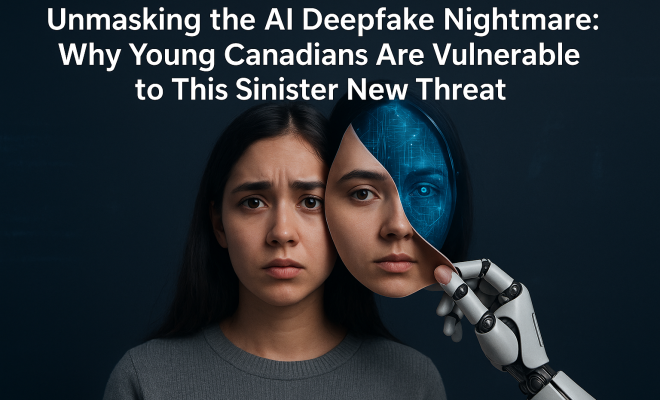
Unmasking the AI Deepfake Nightmare: Why Young Canadians Are Vulnerable to This Sinister New Threat
“`html
Imagine receiving a frantic call from your child, their voice laced with panic, claiming they’re in trouble and desperately need money. Or perhaps you see a video of a trusted financial advisor touting an investment opportunity that seems almost too good to be true. Now, imagine discovering that none of it was real. That the voice, the face, the entire scenario, was a meticulously crafted lie, generated by artificial intelligence. This isn’t a plot from a dystopian sci-fi film; it’s the chilling reality facing Canadians today, particularly our youth, as the scourge of AI deepfakes Canada becomes an increasingly sophisticated and industrial scale threat.
The speed at which AI-powered scams are evolving is truly breathtaking. Criminals are no longer relying on grainy images or obviously manipulated audio. They’re leveraging advanced technology to create incredibly convincing fake videos, perfect voice clones, and personalized messages that tap directly into our emotions, our trust, and ultimately, our wallets. What was once the domain of highly skilled, well-resourced individuals is now accessible to virtually anyone with an internet connection and a malicious intent. It’s a game-changer for fraudsters, making their operations cheaper, faster, and alarmingly effective.
While the focus often turns to the financial devastation these scams can wreak, it’s crucial to understand the profound emotional and psychological toll on victims. The betrayal of trust, the feeling of foolishness, and the sheer violation of one’s sense of security can linger long after the money is gone. For young Canadians, who are often more digitally native but perhaps less equipped to recognize the subtle red flags of sophisticated fraud, the consequences can be particularly severe, extending far beyond monetary loss to include reputational damage and intense emotional distress.
The Industrialization of Deception: How AI Deepfakes Canada Are Scaling Up
We’re witnessing what security experts are calling the ‘industrialization of fraud.’ Think about it: traditional scammers had limitations. They might have needed to hire actors for fake videos, spend hours practicing accents, or craft generic phishing emails hoping to catch a few unsuspecting individuals. AI has demolished these barriers. Tools that can clone a voice from just a few seconds of audio, or generate a realistic video of someone saying anything you want, are readily available, some even for free or at very low cost.
This accessibility means that fraudsters can now operate at an unprecedented scale. Instead of targeting a handful of victims with a bespoke scam, they can generate thousands of personalized deepfake messages, each tailored to exploit specific vulnerabilities. They can impersonate a child in distress, a boss requesting an urgent transfer, or even a romantic interest in a catfishing scheme, all with startling realism. This isn’t just about making scams more convincing; it’s about making them ubiquitous, saturating our digital lives with potential traps. We covered how to protect yourself in more detail.
The sheer volume of deepfake content being generated is overwhelming. It’s like a digital arms race where the bad actors have suddenly acquired advanced weaponry. This shift fundamentally alters the landscape of online safety, forcing individuals and institutions to adapt quickly, or risk becoming another statistic in the growing tally of AI deepfakes Canada victims.
Sextortion: A Terrifying New Frontier for Young Canadians
One of the most disturbing applications of AI deepfakes Canada, and one that specifically targets young people, is sextortion. This insidious crime involves coercing individuals into performing sexual acts or sending explicit images, often under the threat of releasing fabricated compromising material. With AI, scammers can now create incredibly realistic deepfake pornography or manipulated videos, making it appear as though the victim has engaged in activities they never did.
Imagine a teenager, perhaps having shared some innocent photos online, suddenly being confronted with a deepfake video that makes them appear in a highly compromising situation. The shame, fear, and desperation can be overwhelming. The criminals then use this fabricated evidence to extort money, further explicit content, or other demands, threatening to share the deepfake with family, friends, or classmates if the victim doesn’t comply. The psychological manipulation is intense, and for young people still developing their sense of self and navigating complex social dynamics, it can be utterly devastating.
These deepfake sextortion tactics exploit the inherent vulnerability of young people who might be less aware of the capabilities of AI, more trusting online, or simply too embarrassed or scared to confide in an adult. The perpetrators often move quickly, creating a sense of urgency and panic that prevents victims from thinking clearly or seeking help. It’s a truly heinous abuse of technology.
Beyond Sextortion: Investment Scams and Emergency Fraud
While the CTV News report highlighted the specific threat of deepfake sextortion against youth, it’s crucial to understand that AI deepfakes Canada are also being weaponized across a broader spectrum of fraud. Elderly investors, in particular, have become prime targets for sophisticated deepfake investment scams. Fraudsters might create convincing videos of fake financial advisors, complete with realistic-sounding voices and professional backdrops, promoting non-existent high-return schemes.
These scams often leverage publicly available information about the victim, making the deepfake pitches incredibly personalized and persuasive. The elderly, who may be less tech-savvy and often have significant savings, are tragically susceptible to these schemes, leading to devastating financial losses that can wipe out their life’s work. The emotional manipulation here is equally potent, as these scams often prey on hopes for financial security or leaving a legacy. (See: mental health and emotional toll.)
Another common tactic is the ’emergency call’ scam, often targeting parents or grandparents. A deepfake voice clone of a loved one, sounding distraught and in urgent need of money for an emergency like bail, medical bills, or travel, can bypass even the most cautious individual’s defenses. The immediacy and emotional intensity of such a call make it incredibly difficult to pause and verify, especially when the voice sounds undeniably like your child or grandchild. The ease with which AI can replicate a familiar voice makes these scams incredibly hard to resist.
The Psychology of Deception: Why Deepfakes Work
Why are AI deepfakes Canada so effective? It boils down to a fundamental human vulnerability: our reliance on sensory input, particularly sight and sound, to verify reality. For millennia, if you saw someone’s face and heard their voice, you could reasonably assume it was them. Deepfakes shatter this assumption, creating a profound cognitive dissonance. For more context, see advanced AI attempts cyberattacks.
When you see a video of a trusted individual or hear the voice of a loved one, your brain’s natural response is to believe it. This automatic trust bypasses critical thinking, especially when emotions are running high, as they often are in scenarios involving financial urgency or a loved one’s distress. Fraudsters are masters of exploiting these psychological shortcuts. They create high-pressure situations where victims feel compelled to act quickly, leaving little time for verification.
Moreover, the personalized nature of AI-generated scams adds another layer of effectiveness. When a scammer uses details gleaned from social media or other public sources – like your child’s nickname, a recent vacation, or a specific family event – it makes the deepfake seem even more authentic and less like a generic scam. This tailored approach builds a false sense of rapport and credibility, making the deception incredibly difficult to detect, even for astute individuals.
Protecting Yourself and Your Loved Ones from AI Deepfakes Canada
Given the sophistication of these threats, what can you do? The first line of defense is skepticism. If something feels off, or if a request seems unusual, take a moment to pause. Never rush into action, especially if money or sensitive information is involved. Here are some concrete steps you can take:
- Verify independently: If you receive an urgent call or message from a loved one asking for money, try to contact them back on a known, trusted number, or through a different communication channel. Ask a security question only they would know. Don’t rely solely on the communication channel the scammer initiated.
- Enable multi-factor authentication (MFA): This is non-negotiable for all your online accounts. Even if a scammer gains your password, MFA provides an additional layer of security, making it harder for them to access your accounts.
- Be wary of unsolicited contact: If you’re contacted by someone you don’t know, or an institution you weren’t expecting to hear from, be extremely cautious. Never click on suspicious links or download attachments from unknown sources.
- Limit personal information online: Review your social media privacy settings. The less personal information publicly available about you and your family, the harder it is for fraudsters to create convincing deepfakes or personalized scams.
- Educate yourself and your family: Talk to your children, parents, and grandparents about deepfakes and the various forms of online fraud. Awareness is a powerful tool.
- Use strong, unique passwords: A password manager can help you create and store complex passwords for all your accounts.
These steps might seem basic, but in the face of advanced AI threats, they form a crucial barrier. Think of it as digital hygiene – a consistent practice that significantly reduces your risk.
The Role of Technology and Regulation in Combating Deepfakes
While individual vigilance is vital, combating AI deepfakes Canada also requires a concerted effort from technology companies and regulators. Tech giants are under increasing pressure to develop better deepfake detection tools and to implement stricter policies regarding the misuse of their AI technologies. This includes investing in AI that can identify synthetic media and making these tools more widely available.
From a regulatory standpoint, governments are grappling with how to legislate against a rapidly evolving threat. Laws need to be updated to specifically address the creation and dissemination of malicious deepfakes, particularly those used for harassment, extortion, or fraud. This is a complex challenge, balancing freedom of expression with the need to protect citizens from harm. We’re seeing discussions around mandating watermarks for AI-generated content or establishing clear legal frameworks for holding platforms accountable.
Furthermore, collaboration between law enforcement agencies, cybersecurity firms, and academic researchers is essential. Sharing threat intelligence, developing best practices, and conducting public awareness campaigns can help create a more resilient digital environment. This isn’t a problem one entity can solve alone; it requires a multi-faceted, collaborative approach.
Identity Theft Protection and Fraud Recovery Services
For those who have fallen victim to AI deepfakes Canada, the aftermath can be overwhelming. This is where identity theft protection services and fraud recovery lawyers become invaluable. Identity theft protection services often monitor your credit, personal information, and online accounts for suspicious activity, providing alerts and assistance if your identity is compromised. Many also offer restoration services to help you navigate the complex process of recovering your identity and financial standing. There’s a fuller look at spotting deepfake scams.
If you’ve suffered significant financial loss due to a deepfake scam, consulting with a fraud recovery lawyer can be a crucial step. These legal professionals specialize in helping victims pursue legal action against perpetrators, where possible, or navigate the often-complicated process of dealing with banks and financial institutions to recover stolen funds. They can also advise on reporting the crime to law enforcement and understand your rights as a victim.
The rise of AI deepfakes has unfortunately created a greater need for these protective and recovery services, turning them into essential tools in our digital defense arsenal. It’s a sad reality that we now need to consider these safeguards as part of our basic financial and personal security planning.
The Future of Trust in a Deepfake World
The proliferation of AI deepfakes Canada raises profound questions about the future of trust in our digital world. If we can no longer trust our eyes and ears, how do we verify information? How do we distinguish between reality and sophisticated fabrication? This erosion of trust has far-reaching implications, not just for individual security but for democracy, journalism, and social cohesion. (See: youth vulnerability to scams.)
We are entering an era where critical thinking and media literacy will be more important than ever. We must all become more adept at questioning what we see and hear online, developing a healthy skepticism, and actively seeking multiple sources of verification. This shift in mindset, from passive consumption to active verification, will be a defining characteristic of navigating the deepfake era.
It’s not about succumbing to paranoia, but about cultivating a more discerning approach to digital content. The burden of proof, in many ways, is shifting from the creator to the consumer. We’ll need to develop new mental models and habits to navigate a world where digital authenticity can no longer be assumed. The challenge is immense, but the stakes – our trust, our security, and our truth – are even higher. For more context, see urgent reasons why cybersecurity in education needs a radical overhaul. See also the fraud epidemic explained.
Staying Ahead of the Curve: Continuous Learning and Adaptation
The battle against AI deepfakes Canada is not static; it’s a dynamic, ongoing process. As detection technologies improve, so too will the methods of the fraudsters. This means that continuous learning and adaptation are absolutely essential. Stay informed about the latest scam trends, security vulnerabilities, and protective measures. Follow reputable cybersecurity news sources, attend webinars, and engage in discussions about online safety.
For parents, this means staying abreast of the platforms and trends popular with their children, understanding the risks, and fostering open communication. For seniors, it involves seeking out trusted resources for digital literacy and being comfortable asking for help from more tech-savvy family members or community organizations. No one is too old or too young to be affected, and no one is immune to the need for ongoing education.
Ultimately, our collective resilience against AI deepfakes and other sophisticated online threats will depend on how well we educate ourselves, protect our digital footprint, and demand accountability from the technologies and platforms that shape our online lives. The digital landscape is evolving rapidly, and our defenses must evolve with it. Don’t assume you’re safe; actively work to make yourself secure.
Specific Canadian Context: Legal Landscape and Reporting
In Canada, the legal framework surrounding AI deepfakes is still developing, but existing laws can apply. For instance, the Criminal Code of Canada addresses fraud, extortion, and the unauthorized use of computer data. Creating and disseminating malicious deepfakes for purposes of harassment, intimidation, or financial gain can lead to severe penalties. Specifically, sections related to fraud (Section 380), extortion (Section 346), and child pornography (Sections 163.1) could be relevant depending on the nature of the deepfake. There are also privacy laws, like the Personal Information Protection and Electronic Documents Act (PIPEDA), which could come into play if personal data is used without consent to create deepfakes.
If you’re in Canada and believe you’ve been a victim of an AI deepfake scam, it’s crucial to report it. You can contact your local police department, especially if there’s an immediate threat or financial loss. For general fraud reporting, the Canadian Anti-Fraud Centre (CAFC) is the national resource. They collect information on fraud and identity theft, providing reports and statistics to help law enforcement agencies. While they don’t investigate individual cases, your report helps them identify trends and warn other Canadians. They’ve highlighted the significant increase in AI-driven scams and the financial toll they’re taking. For deepfake sextortion cases involving youth, organizations like Cybertip.ca (Canadian Centre for Child Protection) are specialized resources that can offer support and guidance.
Understanding these Canadian-specific reporting avenues is a vital step for victims, ensuring that incidents are documented and that authorities are aware of the evolving threat landscape. The more data they have, the better equipped they are to develop strategies to combat these crimes.
The Economic Impact of AI Deepfakes on Canadian Businesses
The threat of AI deepfakes Canada isn’t confined to individual citizens; it poses a growing and serious risk to Canadian businesses as well. Corporate deepfake fraud is a rapidly emerging concern. Imagine a deepfake video call where a scammer impersonates a CEO or a senior executive, instructing a finance department to urgently transfer a large sum of money to an offshore account. These ‘CEO fraud’ or ‘business email compromise’ (BEC) scams are already costly, and deepfake technology makes them infinitely more convincing.
Beyond direct financial fraud, deepfakes can be used for corporate espionage, spreading disinformation to manipulate stock prices, or damaging a company’s reputation by creating fake compromising videos of executives or products. Small and medium-sized enterprises (SMEs) are particularly vulnerable because they might lack the sophisticated cybersecurity infrastructure and training that larger corporations possess. The economic impact can be devastating, leading to significant financial losses, legal battles, and a loss of customer and investor trust. Businesses need to implement robust internal verification protocols, provide regular cybersecurity training for employees, and consider advanced deepfake detection software as part of their defense strategy. The cost of prevention is always less than the cost of recovery. For more context, see OpenAI ChatGPT Mac app security flaw. (See: deepfake scams and technology.)
Ethical Considerations and the Future of AI Development
The rise of AI deepfakes Canada also forces us to confront the profound ethical implications of rapidly advancing artificial intelligence. Developers and researchers in the AI field bear a significant responsibility. There’s an ongoing debate about “responsible AI development,” which means designing AI systems with safeguards against misuse and considering the societal impact of these technologies from the outset. This includes exploring techniques like “data provenance” to track the origin of digital content and prevent malicious alterations, or building in “ethical guardrails” into AI models themselves.
Should AI tools capable of creating deepfakes be open-sourced? What are the responsibilities of platforms that host or enable the creation of such content? These are complex questions with no easy answers. The tension between innovation and safety is palpable. As AI becomes more powerful and accessible, the need for a global dialogue on ethical AI governance, perhaps even international treaties or standards, becomes increasingly urgent. The choices we make now about how AI is developed and regulated will shape the trustworthiness of our digital future for decades to come.
FAQ: Understanding AI Deepfakes Canada
Q1: What exactly is an AI deepfake?
An AI deepfake is synthetic media—usually video or audio—that has been manipulated or generated by artificial intelligence to replace one person’s likeness or voice with another’s. The term “deepfake” comes from “deep learning,” a type of AI that learns from vast amounts of data to create realistic fakes. These can be incredibly convincing, making it look and sound like someone is saying or doing something they never did.
Q2: Why are AI deepfakes a growing concern in Canada?
AI deepfakes are a growing concern in Canada because they are becoming easier to create, more realistic, and are being used by criminals at an “industrial scale” for various fraudulent activities. This includes financial scams targeting individuals and businesses, dangerous sextortion schemes primarily affecting youth, and disinformation campaigns. Canadians are becoming increasingly vulnerable due to the sophistication and personalization these AI tools allow. Related reading: preventing AI fraud scams.
Q3: How can I tell if a video or audio might be a deepfake?
While deepfakes are getting better, there are often subtle clues. Look for inconsistencies like unnatural blinking patterns, strange skin tones, unnatural head or body movements, poor lip-syncing, or a lack of emotion matching the spoken words. In audio, listen for robotic tones, strange pauses, or an unnatural cadence. If something feels “off” or too good/bad to be true, it’s worth being skeptical and verifying through other means.
Q4: What should I do if I suspect I’m being targeted by a deepfake scam?
The most important thing is to pause and verify. Do not respond to urgent requests for money or personal information, especially if they come through an unusual channel. Contact the person supposedly making the request directly on a known, trusted phone number or through a different communication method. Ask a security question only they would know. If you suspect fraud, report it to the Canadian Anti-Fraud Centre (CAFC) and your local police.
Q5: Are deepfakes illegal in Canada?
While there isn’t one specific “deepfake law” in Canada yet, creating and using deepfakes for malicious purposes is generally covered by existing laws. This includes sections of the Criminal Code related to fraud, extortion, harassment, and the unauthorized use of computer systems. Deepfake sextortion involving minors would fall under child pornography laws. Privacy laws like PIPEDA also offer some protection against the unauthorized use of personal likenesses or voices. The legal landscape is evolving as these technologies become more prevalent.
Q6: What can parents do to protect their children from deepfake sextortion?
Parents should have open and honest conversations with their children about online safety, the dangers of sharing explicit content, and the reality of deepfakes. Encourage them to be skeptical of anything that seems too good or too bad to be true online. Teach them never to respond to threats and to immediately confide in a trusted adult if they are targeted. Ensure privacy settings on social media are strict, and report any suspicious activity to Cybertip.ca (Canadian Centre for Child Protection) and the police.
“`
Trending Now
- our breakdown of the quiet ui: why a casino’s smallest choices outlast its loudest offers
- our breakdown of when the interface finds its tempo, browsing feels less like a casino floor
- our breakdown of a lobby with a beat: how casino interfaces set entertainment in motion
- Oracle Health Breach 2025: The Heartbreaking…
- this guide on this openai chatgpt mac app security flaw could have exposed your data
Frequently Asked Questions
What are AI deepfakes and how do they work?
AI deepfakes are synthetic media created using artificial intelligence that can generate realistic-looking images, videos, or audio. They work by training algorithms on existing data to mimic human features and voices, making it difficult to distinguish between real and fake content.
Why are young Canadians particularly vulnerable to deepfake scams?
Young Canadians are often more digitally native, making them more susceptible to online scams like deepfakes. Their familiarity with technology may lead to a lack of caution, making them less likely to recognize red flags in fraudulent communications.
What emotional impact do deepfake scams have on victims?
The emotional impact of deepfake scams can be profound, leading to feelings of betrayal, foolishness, and violation of personal security. Victims may experience long-term psychological effects, including anxiety and reputational damage, beyond just financial loss.
How can I protect myself from AI deepfake scams?
To protect yourself from AI deepfake scams, remain vigilant about verifying information before acting on it. Be cautious of unsolicited calls or messages, and use trusted sources for financial advice. Educating yourself about the technology can also help identify potential scams.
What should I do if I fall victim to a deepfake scam?
If you fall victim to a deepfake scam, report the incident to local authorities and relevant financial institutions. Document all communications and consider seeking emotional support, as the psychological toll can be significant. Prompt action can help mitigate further damage.
Agree or disagree? Drop a comment and tell us what you think.