Shocking Truth: The Real Cost of Building Data Centers No One Talks About
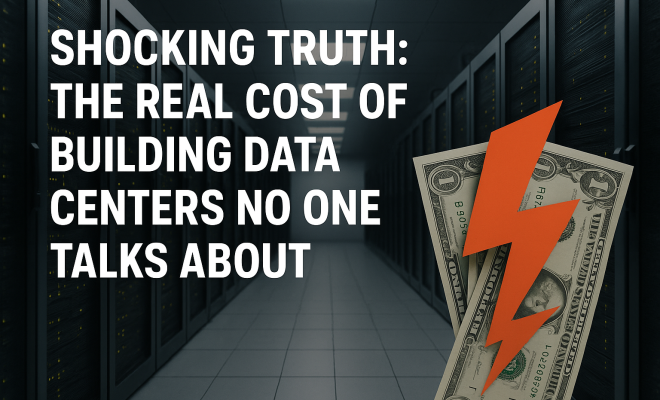
When you think about the internet, you probably picture a seamless flow of information, instant communication, and endless entertainment. What you might not visualize are the massive, windowless fortresses humming with servers, consuming vast amounts of power and water, often located just outside your town. These are data centers, the physical backbone of our digital world, and the true cost of building data centers is becoming a fiercely debated topic, pitting communities against corporations, and even unionized workers against the very tech giants they serve.
For years, the construction of data centers was largely celebrated, seen as a sign of economic progress and a source of high-paying tech jobs. But a growing backlash across the United States is revealing a far more complex picture. Local residents are raising legitimate concerns about soaring electricity bills, the immense water consumption these facilities demand, and the constant, low hum of their operations. Meanwhile, an unexpected force has entered the fray: labor unions. These unions, particularly in the construction trades, are vigorously defending data center projects, highlighting the thousands of building-related jobs they create. This clash isn’t just a local skirmish; it’s a microcosm of a broader struggle within the tech industry itself, where workers are increasingly organizing to challenge everything from AI deployment strategies to the ethical implications of their employers’ products.
The Rising Tide of Community Opposition
It used to be that a new data center proposal was met with open arms by local governments, eager for the tax revenue and the promise of economic development. Not anymore. Communities are becoming increasingly vocal, and frankly, quite sophisticated in their opposition. Take Loudoun County, Virginia, often dubbed ‘Data Center Alley’ due to its immense concentration of these facilities. Residents there have long grappled with the implications of hosting such a massive digital infrastructure. But it’s not just Virginia; states like Nebraska, Iowa, and even smaller towns across the country are seeing similar pushback.
The core of the problem often boils down to resource strain. Data centers are power hungry, and I mean truly ravenous. They require colossal amounts of electricity to run their servers and, crucially, to cool them down. This demand can put immense pressure on local power grids, leading to higher electricity costs for everyone in the area. For homeowners and small businesses already struggling with inflation, this isn’t just an inconvenience; it’s a significant financial burden. Beyond electricity, water consumption is another major flashpoint. Many data centers rely on evaporative cooling systems, which can guzzle millions of gallons of water annually. In regions already facing drought conditions or water scarcity, this is simply unsustainable and understandably infuriates local populations.
Then there’s the less tangible, but equally irritating, issue of noise pollution. While not as loud as a factory, the constant, low-frequency hum of thousands of servers and their cooling systems can be a persistent nuisance, disrupting the peace and quiet of residential areas. And let’s not forget the aesthetic impact. These facilities are rarely architectural marvels; they’re large, utilitarian boxes designed for function, not beauty, often clashing with the character of surrounding neighborhoods. This isn’t just NIMBYism; it’s a legitimate concern for quality of life.
The Economic Lifeline: Why Unions Are Fighting for Data Center Jobs
In stark contrast to community protestors, labor unions are often staunch advocates for data center construction. Why? Because these projects represent a significant source of employment, particularly for skilled tradespeople. Building a data center is a massive undertaking, requiring thousands of workers over several years. We’re talking about electricians, pipefitters, welders, ironworkers, operating engineers, and laborers – all union members who depend on large-scale infrastructure projects for their livelihoods. For these unions, the cost of building data centers isn’t just about concrete and steel; it’s about putting food on tables and ensuring good wages and benefits for their members.
Consider the sheer scale. A single hyperscale data center can easily involve a construction budget in the hundreds of millions, sometimes even billions, of dollars. That translates into an enormous number of hours for skilled trades. The International Brotherhood of Electrical Workers (IBEW), for instance, sees these projects as critical for maintaining a strong workforce and apprenticeship programs. For a union electrician, working on a data center means steady, well-paying work for months, sometimes years. It’s not just the initial construction either; once operational, these facilities require ongoing maintenance and upgrades, providing a long-term economic ripple effect for local contractors and service providers.
When communities push back against data center development, unions see it as a direct threat to job creation. They argue that while there are legitimate concerns to address, these can often be mitigated through thoughtful planning, advanced cooling technologies, and engagement with local stakeholders. Their priority, understandably, is to ensure that these valuable job opportunities aren’t lost, especially in an economy where reliable, high-wage construction jobs can be hard to come by. It’s a complex balancing act, trying to address environmental and community concerns without sacrificing vital employment. (See: impact of data centers on the environment.)
The Unexpected Rise of Tech Unionization
Beyond the construction sites, a fascinating and somewhat unexpected trend is unfolding within the tech industry itself: unionization. For decades, the tech sector was largely seen as an anti-union bastion, characterized by a culture of individual achievement, stock options, and a belief that traditional labor organizing wasn’t necessary. That perception is rapidly changing. We’re seeing workers at major tech companies, including powerhouses like Google DeepMind and Meta, increasingly organizing and forming unions. This isn’t just about wages and benefits, though those are certainly factors. It’s about something far deeper and more existential. For more context, see Facebook privacy lawsuit.
The anxieties driving this new wave of unionization are multifaceted. A significant concern is the rapid deployment of Artificial Intelligence (AI). Workers are worried about AI-induced job losses, fearing that their roles could be automated away. There’s also the issue of increased workloads, with AI tools often pitched as efficiency boosters that, in practice, lead to more work for fewer people. Beyond the immediate impact on their jobs, many tech workers are grappling with profound ethical concerns. They’re questioning the military use of AI products, the potential for surveillance technologies, and the broader societal implications of the very tools they are building. This isn’t just a paycheck for them; it’s a moral quandary.
The fact that a union like the Alphabet Workers Union (AWU) at Google, or organizing efforts at Meta, are gaining traction speaks volumes. These are highly educated, often well-compensated individuals who are choosing to collectivize their power to influence corporate decisions. They want a voice in how AI is developed and deployed, demanding greater transparency and accountability from their employers. This shift marks a significant departure from the ‘move fast and break things’ ethos that once defined Silicon Valley and is adding another layer of complexity to the overall cost of building data centers, as companies now need to factor in potential labor disputes and ethical compliance.
The Ethical Quandaries of AI Deployment
When we talk about the cost of building data centers, we can’t ignore the ethical frameworks (or lack thereof) governing the AI systems housed within them. The debate isn’t just about megawatts and gigalitres; it’s about morality and societal impact. Tech workers are increasingly unwilling to be silent participants in projects they deem harmful or ethically dubious. This is a profound shift from a decade ago when the prevailing attitude was often to simply build the technology and let others worry about the consequences.
Consider the concerns around AI in military applications. Many engineers and researchers feel a deep discomfort with their work being used to develop autonomous weapons systems or enhanced surveillance tools that could be deployed in conflict zones. They recognize the immense power of AI and the potential for misuse, and they don’t want to be complicit. Similarly, the ethical implications of data privacy, algorithmic bias, and the spread of misinformation via AI-generated content are weighing heavily on the consciences of those building these systems. They’re asking tough questions: Are we building tools that will empower humanity, or tools that could erode democracy and individual freedoms?
These ethical considerations aren’t just academic; they have real-world consequences and are becoming a driving force behind unionization efforts. Workers want to establish clear ethical guidelines, have a say in project selection, and ensure that their companies are acting responsibly. This push for ethical AI governance is a nascent but powerful movement, and it adds another layer to the already complex calculus of bringing new data centers online. Companies now face not just community and construction union pressure, but also internal dissent from their own highly skilled workforce.
The True Cost of Building Data Centers: Beyond Bricks and Mortar
Let’s break down the financial cost of building data centers more granularly. It’s far more than just the physical structure. You’ve got the land acquisition, which in desirable locations can be astronomical. Then there’s the actual construction: the concrete, steel, specialized HVAC systems, fire suppression, and security infrastructure. But the real money sink, often, is the IT equipment itself. Servers, storage arrays, networking gear, and cabling represent a colossal investment, easily dwarfing the cost of the building itself.
Beyond the initial capital expenditure, the operational costs are relentless. Power is a huge one, as we’ve discussed. Energy bills for a large data center can run into millions of dollars per month. Cooling systems also contribute significantly to both power and water consumption. Then there’s the ongoing maintenance of all that hardware, software licenses, security personnel, and a small but highly skilled IT staff. It’s a continuous drain on resources, making efficiency a paramount concern for operators. (See: water consumption and public health.)
However, the ‘true cost’ now extends beyond these traditional line items. It includes the cost of mitigating community opposition, which can involve expensive public relations campaigns, legal fees, and even concessions to local governments or residents. It includes the cost of addressing union demands, whether from construction unions seeking better wages or tech workers pushing for ethical guidelines. And increasingly, it includes the reputational cost of being seen as an irresponsible corporate citizen, especially in an era where environmental, social, and governance (ESG) factors are under intense scrutiny by investors and the public alike.
Navigating the Regulatory and Political Landscape
The regulatory and political environment surrounding data center development is becoming increasingly complex and often contentious. What was once a relatively straightforward permitting process is now fraught with potential roadblocks, driven by the factors we’ve discussed. Local zoning boards and planning commissions are under immense pressure from their constituents to scrutinize proposals far more rigorously than in the past. This means longer approval times, more detailed environmental impact assessments, and a greater need for developers to demonstrate how they will mitigate negative effects. For more context, see industries facing catastrophe.
Politicians, too, are caught in the middle. On one hand, they see the potential for job creation and tax revenue, which are always attractive. On the other, they face angry voters concerned about utility costs, water usage, and quality of life. This political tightrope walk can lead to delayed projects, revised plans, and even outright rejections. For instance, some municipalities are now implementing stricter water usage requirements or demanding that data centers use renewable energy sources as a condition of approval. This adds another layer to the cost of building data centers, both in terms of direct investment in green technologies and the time spent navigating a more demanding regulatory maze.
Then there’s the emerging field of AI regulation. Governments globally are grappling with how to govern AI, from data privacy to algorithmic bias. While not directly tied to the physical construction, these regulations will undoubtedly impact the operations and even the design of future data centers, particularly those housing sensitive AI infrastructure. Companies will need to invest in compliance, auditing, and ethical oversight, all of which add to the overall operational burden and, indirectly, the initial planning cost.
Innovation in Sustainability: A Path Forward?
The backlash against data centers is forcing the industry to innovate, particularly in the realm of sustainability. Developers are no longer just building for capacity; they’re building for efficiency and environmental responsibility. This means exploring advanced cooling technologies that use less water, or even no water at all, such as air-side economizers or liquid immersion cooling. These solutions, while often more expensive upfront, can significantly reduce operational costs and mitigate community concerns over water scarcity.
Renewable energy integration is another critical area. Many major tech companies, like Google, Microsoft, and Amazon, have committed to powering their data centers with 100% renewable energy. This involves purchasing renewable energy credits, investing in large-scale solar and wind farms, or even building their own renewable generation facilities directly connected to their data centers. This commitment not only addresses environmental concerns but can also stabilize energy costs over the long term, reducing exposure to volatile fossil fuel markets. It’s a significant investment, but one that’s increasingly seen as essential for social license to operate.
Furthermore, there’s a growing focus on optimizing server utilization and reducing ‘ghost servers’ – equipment that’s running but not doing useful work. Software-defined data centers, virtualization, and intelligent workload management are all tools being employed to squeeze more efficiency out of existing infrastructure, thereby reducing the need for new, energy-intensive facilities. These innovations are not just good for the planet; they’re becoming a necessary component in managing the escalating cost of building data centers and ensuring their long-term viability.
The Broader Implications for Tech Jobs and the Economy
This whole dynamic has profound implications for the future of tech jobs and the broader economy. On one hand, the construction of data centers provides a vital economic boost through direct employment and indirect spending. These are good, often unionized, jobs that contribute significantly to local economies. Losing these projects due to community opposition or regulatory hurdles could have a tangible negative impact on a significant segment of the skilled workforce. For more context, see Oracle's billion-dollar AI bet. (See: latest technology news and trends.)
On the other hand, the rise of unionization within tech itself signals a maturing industry where workers are demanding a greater say in their working conditions and the ethical direction of their employers. This could lead to a more equitable and responsible tech sector, but it also introduces new complexities for companies. They’ll need to adapt to collective bargaining, engage in more transparent decision-making, and potentially re-evaluate their AI deployment strategies. This isn’t necessarily a bad thing; a more ethically grounded tech industry could foster greater public trust and lead to more sustainable innovation in the long run.
The challenge, as always, is finding a balance. How do we continue to build the digital infrastructure necessary for a modern economy without overwhelming local communities or compromising ethical principles? It requires collaboration, compromise, and a willingness from all sides – corporations, unions, and communities – to engage in meaningful dialogue. The cost of building data centers is no longer just a balance sheet item; it’s a societal equation that demands a holistic solution.
The Path Ahead: Dialogue, Innovation, and Responsible Growth
The tensions surrounding data center construction are unlikely to dissipate anytime soon. As our digital needs continue to grow, so too will the demand for these physical manifestations of the internet. The path forward will require a concerted effort from all stakeholders to move beyond entrenched positions and find common ground.
For tech companies and data center developers, this means a renewed commitment to transparency and community engagement. It’s about proactively addressing concerns about power, water, and noise, rather than waiting for backlash. It means investing in cutting-edge sustainable technologies not just as a PR exercise, but as a core business strategy. It also means recognizing the legitimate concerns of their own employees, particularly regarding AI ethics and job security, and engaging constructively with unionization efforts.
For communities, it means being open to dialogue and understanding the economic benefits these facilities can bring, while still holding developers accountable for their environmental and social impact. For unions, it’s about advocating for their members while also being part of the solution in addressing broader societal concerns. Ultimately, the cost of building data centers is a shared responsibility. We need innovation that serves both progress and people, ensuring that our digital future is built on a foundation of sustainability, equity, and ethical responsibility. It’s a tough challenge, but one we absolutely must get right.
Trending Now
Frequently Asked Questions
What are the real costs of building data centers?
The real costs of building data centers extend beyond construction expenses. Communities face rising electricity bills, significant water consumption, and environmental impacts. Additionally, the social dynamics shift as local residents push back against these developments, raising concerns about their long-term effects.
Why are communities opposing data centers?
Communities are opposing data centers due to concerns over increased electricity costs, excessive water usage, and noise pollution. Residents are becoming more organized and vocal about the negative implications of hosting such facilities, challenging the previously accepted economic benefits.
How do data centers impact local economies?
While data centers can initially boost local economies through job creation and tax revenue, the long-term impacts may include increased utility costs for residents and potential environmental degradation, leading to community pushback against new proposals.
What role do labor unions play in data center construction?
Labor unions play a significant role in data center construction by advocating for the thousands of jobs these projects create. They support the development of data centers while also addressing workers' rights and concerns about the broader tech industry's ethical practices.
What is 'Data Center Alley'?
'Data Center Alley' refers to Loudoun County, Virginia, known for its high concentration of data centers. This area exemplifies the clash between economic development opportunities and community concerns regarding the environmental and social impacts of such facilities.
Have you experienced this yourself? We'd love to hear your story in the comments.