Macau Gaming Dispute Escalates to Classroom Knife Attack: A Troubling Warning
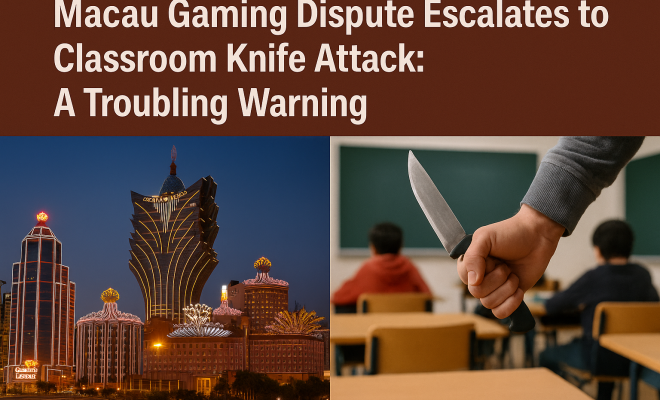
When Online Feuds Bleed Into Reality: A Macau Classroom Incident
It’s a scenario that keeps parents, educators, and even law enforcement up at night: the digital world, with its often-unfiltered commentary and anonymous bravado, suddenly colliding with the tangible, physical space of a school classroom. This isn’t just a hypothetical fear; it became a stark reality in Macau recently, when a seemingly innocuous online disagreement over video game strategies spiraled into a physical altercation involving a weapon. The incident, which saw a secondary school student injured by an unsharpened butterfly knife, serves as a chilling reminder of how easily virtual tensions can cross the line, demanding our attention and a deeper look into the dynamics at play. The Macau gaming dispute, once confined to screens, exploded into a very real-world problem.
The details are unsettling. Two male classmates, one of whom had been the target of online mockery regarding his gaming skills, found their digital animosity manifesting in the real world. This isn’t just about a playground scrap; it’s about the potent cocktail of adolescent emotions, the perceived anonymity of the internet, and the very real consequences when those boundaries blur. The transfer student, a new face in the school environment, became a catalyst, and what began as a verbal spat over game strategies quickly escalated into something far more dangerous. It’s a complex tapestry of social dynamics, digital culture, and the ever-present challenge of conflict resolution among young people.
The Spark: A Macau Gaming Dispute Ignites Personal Animosity
At the heart of this incident was a Macau gaming dispute, a common enough occurrence among teenagers who immerse themselves in competitive online environments. What makes this case so disturbing, however, is the way a seemingly trivial disagreement over video game tactics metastasized into genuine personal animosity. One student, the eventual victim, had apparently been ridiculed online by his classmate for his gaming strategies. This isn’t just a casual jab; in the intense social hierarchies of adolescence, being mocked, especially publicly or semi-publicly on social media, can feel like a profound personal attack. The digital realm, far from being a detached space, often amplifies these feelings, making slights feel more personal and lasting.
Consider the psychological impact. For a teenager, their identity is often closely tied to their peer group and their perceived competence, whether in sports, academics, or, increasingly, gaming. When that competence is publicly questioned or derided, it can chip away at self-esteem and foster resentment. The online environment provides a platform for these taunts to persist, perhaps even be revisited, unlike a fleeting verbal insult in the hallway. This persistent, digital mockery laid the groundwork for the later physical confrontation, transforming a simple gaming disagreement into a deeply personal feud that simmered beneath the surface, waiting for an opportunity to erupt.
Escalation in the Classroom: From Bump to Brawl
The classroom, ideally a sanctuary for learning, became the unfortunate stage for the physical manifestation of this simmering tension. The arrival of a new transfer student further complicated the dynamics. While the exact role of the transfer student in the initial gaming dispute isn’t explicitly detailed, his presence clearly acted as a flashpoint. When the transfer student, identified as the suspect, became enraged after being bumped by the classmate who had been the target of online mockery, the situation rapidly deteriorated. It’s crucial to understand that this ‘bump’ wasn’t an isolated incident; it was likely perceived through the lens of existing animosity, a final straw in a series of provocations that had been building for some time.
What followed was a physical struggle. This transition from verbal sparring to physical violence is often a rapid one, especially in high-stress situations involving adolescents. The emotional fuse is short, and the ability to de-escalate is often underdeveloped. The close proximity of a classroom, combined with the pre-existing tension from the Macau gaming dispute, created a combustible environment. The ‘bump’ wasn’t merely an accidental physical contact; it became a symbolic act, interpreted as either an intentional slight or a challenge, pushing both individuals past their breaking point and into a physical confrontation.
The Weapon: An Unsharpened Butterfly Knife and its Implications
Perhaps the most alarming aspect of this incident was the introduction of a weapon: an unsharpened butterfly knife. The suspect claimed he had purchased the knife for performance demonstrations, a common enough hobby for some, and inadvertently brought it to school. While the knife being unsharpened might mitigate the severity of the physical injury, it does absolutely nothing to diminish the gravity of its presence in a school setting. The very act of brandishing such an item, sharpened or not, transforms a fight into something far more serious, invoking fear and carrying significant legal ramifications.
The explanation — that it was brought inadvertently — raises its own set of questions. Does it speak to a casual disregard for school rules, or a deeper lack of understanding about the potential consequences of carrying such an item? Regardless, the psychological impact of a knife, even an unsharpened one, during a classroom altercation cannot be overstated. It immediately elevates the perceived threat level, creates a climate of fear, and signals a dangerous escalation in aggressive behavior. This isn’t just about the physical injury; it’s about the erosion of safety and trust within a school community, all stemming from what began as a Macau gaming dispute.
The Charges: Simple Assault and Unjustified Possession of a Prohibited Weapon
The legal consequences for the suspect were swift and serious. He now faces charges of simple assault and unjustified possession of a prohibited weapon. These charges underscore the severity with which authorities view such incidents, regardless of the ‘unsharpened’ nature of the blade. Simple assault, while perhaps sounding minor, still refers to any intentional act that causes another person to reasonably apprehend immediate harmful or offensive contact. When a weapon is involved, even if not used to inflict deep wounds, the intent to intimidate or threaten is often clear. (See: youth violence prevention resources.)
The charge of unjustified possession of a prohibited weapon is particularly significant. Laws regarding weapon possession, especially in sensitive environments like schools, are stringent for a reason. They exist to prevent exactly this kind of escalation and to ensure the safety of students and staff. The suspect’s claim of ‘inadvertently’ bringing the knife to school is unlikely to serve as a sufficient defense against this charge, as individuals are generally held responsible for what they bring onto school grounds. These charges send a clear message: the line between a school fight and a criminal offense is crossed quickly when weapons are introduced, a direct consequence of allowing a Macau gaming dispute to boil over.
Judiciary Police’s Plea: Restraint and Peaceful Resolution
In the wake of the incident, the Judiciary Police issued a crucial statement, urging young people to exercise restraint and seek peaceful resolutions to conflicts. This isn’t just a boilerplate public service announcement; it’s a direct response to a worrying trend. The police highlighted the serious consequences that can arise when online disagreements spill into real-world violence. Their message serves as a vital reminder that the digital realm is not consequence-free, and that actions taken online can have profound and often devastating real-world repercussions.
The emphasis on restraint speaks to the emotional volatility often seen in adolescent disputes. Learning to step back, to de-escalate, and to communicate effectively are critical life skills that are increasingly challenged by the instant gratification and often aggressive communication styles prevalent online. The call for peaceful resolution isn’t about avoiding conflict entirely, but about channeling it constructively, through dialogue, mediation, or seeking help from trusted adults, rather than resorting to aggression or violence. This incident underscores the urgent need for robust education in conflict resolution and digital citizenship, especially in an era where a Macau gaming dispute can lead to police intervention.
The Broader Context: Online Aggression and Youth Culture
This incident in Macau isn’t an isolated anomaly; it’s a symptom of a larger societal challenge concerning online aggression and its impact on youth culture. The internet, while connecting us in unprecedented ways, has also become a breeding ground for cyberbullying, heated arguments, and the normalization of aggressive language. For young people, who are still developing their sense of self and their social skills, navigating this complex digital landscape can be incredibly difficult. The perceived anonymity of online platforms can embolden individuals to say things they would never utter face-to-face, leading to a disconnect between digital words and their real-world impact.
Consider the competitive nature of online gaming. While it can foster teamwork and strategic thinking, it also often involves intense rivalries, taunting, and even ‘trash talk.’ For some, this remains within the bounds of healthy competition. For others, particularly those with pre-existing insecurities or anger issues, it can easily devolve into personal attacks and deep-seated grudges. When these online personas and conflicts merge with offline interactions, the results can be unpredictable and dangerous. The Macau gaming dispute, in this context, highlights a critical intersection of digital behavior and school safety.
Parental and Educational Responsibilities in a Digital Age
The Macau incident places a spotlight on the critical roles parents and educators play in equipping young people to navigate the digital world responsibly. For parents, this means more than just monitoring screen time; it involves engaging in open conversations about online interactions, the potential for cyberbullying (both as a victim and a perpetrator), and the importance of empathy and respect online. It also means teaching children how to handle online conflict without resorting to aggression or taking it offline.
Schools, similarly, bear a significant responsibility. Beyond traditional anti-bullying programs, there’s a growing need for comprehensive digital citizenship curricula. This includes teaching students about online etiquette, the permanence of digital footprints, the psychological impact of online speech, and effective strategies for de-escalation and conflict resolution in both digital and physical spaces. Creating safe spaces for students to report bullying, whether online or offline, without fear of retaliation is also paramount. This Macau gaming dispute serves as a painful case study for proactive educational strategies.
The Role of Game Developers and Platforms
While the primary responsibility for navigating online interactions lies with individuals and their immediate support systems, we can’t ignore the significant influence of game developers and online platforms. Many games, especially competitive ones, are designed to be engaging and even addictive, often leveraging features that can inadvertently contribute to toxic environments. Things like in-game chat systems, public leaderboards, and even certain cosmetic items can become tools for taunting or bullying.
Game developers have a growing responsibility to implement robust reporting mechanisms and moderation tools. This means not just having a “report player” button, but actively reviewing these reports and taking meaningful action against repeat offenders. Some platforms are experimenting with AI-powered moderation to catch hateful speech or harassment in real-time. Beyond moderation, designers can also think about how game mechanics themselves can either foster cooperation or inadvertently encourage aggression. For instance, rewarding positive communication or teamwork can shift the culture within a game. The Macau gaming dispute reminds us that the digital spaces we create or inhabit aren’t neutral; they shape behavior, and creators have a role to play in shaping it positively.
Psychological Underpinnings: Why Online Anonymity Breeds Aggression
The concept of “online disinhibition effect” helps us understand why individuals might act more aggressively or rudely online than they would in person. There are several factors at play. First, there’s the perceived anonymity: when you’re behind a screen, you might feel less accountable for your actions because you can’t be easily identified or judged face-to-face. This creates a sense of detachment from the real-world consequences of your words. (See: youth violence in schools.)
Second, the asynchronous nature of online communication means you don’t get immediate feedback from the person you’re interacting with. You can send a message and walk away, not seeing their reaction, which makes it easier to dehumanize them or forget there’s a real person with feelings on the other end. Third, a lack of non-verbal cues (like facial expressions, tone of voice, or body language) strips away crucial information that usually helps us gauge how our words are being received. This can lead to misinterpretations and escalated misunderstandings. In the Macau gaming dispute, this online disinhibition likely allowed the mockery to become more severe than it might have been face-to-face, setting the stage for the later physical confrontation.
Comparisons to Other Incidents: A Global Pattern
While the Macau incident is specific in its details, the underlying pattern of online feuds spilling into real-world violence isn’t unique. We see similar stories emerge globally, highlighting a widespread societal issue. In the United States, for example, there have been numerous cases of cyberbullying leading to physical altercations, and tragically, even suicides. In South Korea, a country with a highly developed esports culture, there have been instances where intense online gaming rivalries have translated into personal threats and harassment offline.
These comparisons aren’t meant to diminish the Macau incident but to emphasize its place within a larger, troubling trend. They show that regardless of cultural context or specific gaming genre, the human element of competition, identity, and peer pressure, when amplified by the internet’s features, can lead to dangerous outcomes. Understanding this global pattern helps us realize that solutions need to be comprehensive and adaptable, considering both local specificities and universal psychological principles of online behavior. The Macau gaming dispute serves as another data point in this critical global conversation.
Preventing Future Incidents: A Call for Holistic Solutions
Preventing similar incidents requires a holistic approach that addresses multiple facets of the problem. Firstly, schools must reinforce clear policies against bullying, both online and offline, and ensure consistent, fair enforcement. There needs to be a clear pathway for students to report issues and a guarantee that those reports will be taken seriously.
Secondly, educational institutions should invest in robust conflict resolution programs, teaching students practical skills in communication, negotiation, and anger management. Peer mediation programs can also be incredibly effective, empowering students to help their classmates resolve disputes constructively. Thirdly, parents need to be actively involved, fostering open communication channels with their children about their online lives and serving as role models for respectful interaction. Finally, the broader community, including law enforcement, must continue to emphasize the serious legal and personal consequences of violence, ensuring that the digital world is understood not as a separate, consequence-free zone, but as an extension of our real lives. The repercussions of this Macau gaming dispute should resonate as a powerful lesson for all.
FAQ: Understanding the Macau Gaming Dispute Incident
What exactly was the “Macau gaming dispute” about?
The dispute originated from an online disagreement between two secondary school students over video game strategies. One student had been ridiculing the other online for his gaming skills, which created significant personal animosity that eventually spilled over into the physical classroom.
Was the weapon used in the incident sharpened?
No, the weapon involved was an unsharpened butterfly knife. While it did not cause severe physical injury due to its bluntness, its presence and brandishing in a school setting significantly escalated the incident and carried serious legal consequences.
What charges did the suspect face?
The student who brought the knife and initiated the physical altercation faces charges of simple assault and unjustified possession of a prohibited weapon. Even an unsharpened knife is considered a prohibited weapon in a school environment, and its presence implies an intent to intimidate or threaten.
How did the Judiciary Police respond to the incident?
The Judiciary Police issued a public statement urging young people to exercise restraint and seek peaceful resolutions to conflicts. They highlighted the serious consequences that can arise when online disagreements transition into real-world violence, emphasizing the importance of digital citizenship and responsible behavior.
What role did online anonymity play in the escalation?
Online anonymity and the “online disinhibition effect” likely contributed to the severity of the initial mockery. When behind a screen, individuals often feel less accountable for their words, making it easier to engage in aggressive or taunting behavior that they might hesitate to do face-to-face. This detachment can allow grudges to fester and intensify.
What can parents do to prevent similar incidents?
Parents can foster open communication with their children about online interactions, discuss cyberbullying (both as a victim and perpetrator), and teach empathy and respect online. It’s crucial to model respectful behavior and guide children on how to handle online conflict constructively without resorting to aggression or taking disputes offline.
What responsibilities do schools have in addressing this issue?
Schools have a significant responsibility to implement and enforce clear anti-bullying policies for both online and offline behavior. They should also provide comprehensive digital citizenship education, teaching students about online etiquette, the impact of digital speech, and effective conflict resolution strategies. Creating safe reporting mechanisms for students is also key.
Are game developers also responsible for preventing such disputes?
Yes, game developers and online platforms share a growing responsibility. They can implement robust reporting and moderation tools, actively review player reports, and even use AI to detect harmful content. Additionally, designing game mechanics that encourage positive interaction and teamwork, rather than solely competition, can help foster healthier online environments.
Is this incident unique to Macau?
No, the pattern of online disputes, particularly those originating from competitive gaming, spilling into real-world aggression is a global issue. Similar incidents have been reported in various countries, highlighting a widespread challenge in managing the intersection of digital culture and youth behavior.
The Macau classroom incident, born from a seemingly minor gaming dispute, serves as a stark warning. It underscores the urgent need for a collective effort — from individuals to institutions — to bridge the gap between our online and offline behaviors, ensuring that digital interactions foster connection and understanding, rather than animosity and violence. We owe it to our youth to equip them with the tools to navigate this complex world safely and peacefully.
Trending Now
- our breakdown of your ai assistant is a trojan horse: 10 tools to lock down your digital life
- our breakdown of this one flaw could hand your ai assistant to hackers – and steal your data
- the complete explanation
- The Brutal Truth About AI Search Poisoning: 9 Tools You NEED Now
- This New AI Cybersecurity Threat Is…
Frequently Asked Questions
What happened in the Macau classroom knife attack incident?
The incident involved a secondary school student in Macau who was injured by an unsharpened butterfly knife after an online dispute over video game strategies escalated into a physical altercation. This alarming event highlights the risks of digital conflicts spilling into real life.
How do online gaming disputes affect real-life interactions?
Online gaming disputes can lead to heightened emotions and misunderstandings, which may escalate into real-life confrontations. In Macau, a disagreement over gaming tactics resulted in a classroom knife attack, showing how virtual tensions can translate into physical violence.
What are the implications of digital conflicts for students?
The implications of digital conflicts for students include potential physical altercations, emotional distress, and the need for effective conflict resolution strategies. The Macau incident serves as a warning about the dangers of unresolved online disputes spilling into the school environment.
Why did the Macau gaming dispute escalate to violence?
The Macau gaming dispute escalated to violence due to a combination of adolescent emotions, perceived anonymity online, and a new transfer student acting as a catalyst. What began as a verbal disagreement over gaming strategies turned into a dangerous physical confrontation.
What can be done to prevent online disputes from turning violent?
Preventing online disputes from turning violent involves promoting digital literacy, encouraging open communication about conflicts, and teaching conflict resolution skills. Schools and parents can play a crucial role in addressing the challenges posed by digital interactions among students.
Have you experienced this yourself? We'd love to hear your story in the comments.