The Trillion-Dollar Moon Rush: Why Lunar Mining Companies Could Ignite Global Conflict
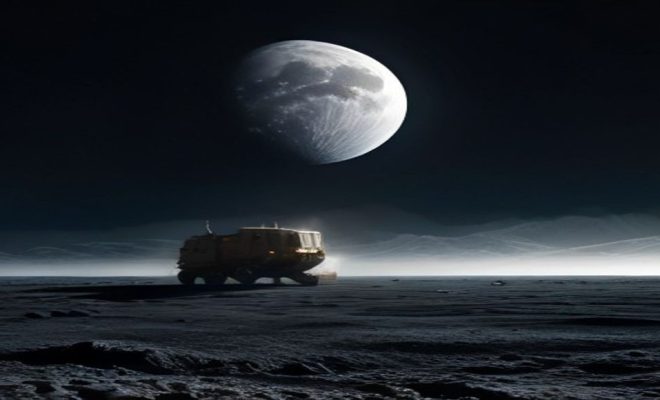
Imagine a future where nations aren’t just squabbling over oil fields or rare earth minerals on Earth, but over helium-3 deposits on the Moon. It sounds like science fiction, right? Well, it’s not. The race for lunar resources is heating up at an astonishing pace, creating an entirely new industry that pits lunar mining companies vs traditional mining operations in a truly unprecedented way. We’re talking about a potential multi-billion-dollar economy emerging within the next decade, one that could reshape geopolitics, energy production, and even our understanding of property rights.
The ‘trillion-dollar moon’ narrative isn’t just hype; it’s a very real projection based on the immense value of resources like water ice and helium-3, essential for future space exploration and potentially clean energy back on Earth. But here’s the kicker: while companies are rapidly developing the tech to get there and extract these riches, the international legal frameworks to govern such activities are virtually non-existent. This isn’t just a regulatory gap; it’s a governance vacuum, a wide-open space ripe for conflict. Let’s dig into what makes this new frontier so different, and why the stakes are higher than anything we’ve ever seen in terrestrial mining.
1. The Resource Imperative: Water Ice and Helium-3
When we talk about lunar mining, we’re not just looking for shiny rocks. The primary targets are resources that are either incredibly valuable for space operations or hold revolutionary potential for Earth. First up is water ice. Found predominantly in permanently shadowed craters at the Moon’s poles, water ice is the holy grail for lunar outposts. Why? Because it can be processed into breathable oxygen for astronauts, and more importantly, into hydrogen and oxygen propellants for rockets. This means future missions won’t need to haul all their fuel from Earth, dramatically reducing launch costs and enabling deeper space exploration.
Then there’s helium-3. This rare isotope, virtually non-existent on Earth, is abundant in the Moon’s regolith, deposited over billions of years by solar winds. Helium-3 is a dream fuel for aneutronic fusion reactors – a theoretical type of nuclear fusion that produces minimal radioactive waste and could offer a clean, virtually limitless energy source. While still in experimental stages, the potential of helium-3 is so immense that it drives a significant portion of the ‘trillion-dollar moon’ valuation. For lunar mining companies, getting their hands on these resources isn’t just about profit; it’s about enabling the next chapter of human civilization, both on and off-world.
2. Technological Leaps: Robotics, AI, and Autonomous Systems
Here’s where lunar mining companies truly diverge from their terrestrial counterparts: the sheer leap in technology required. Traditional mining, while increasingly automated, still relies heavily on human intervention, massive infrastructure, and established supply chains. Lunar mining, however, demands an entirely new paradigm. We’re talking about highly autonomous robotic systems, artificial intelligence for prospecting and resource identification, and advanced materials engineering capable of withstanding the harsh lunar environment – extreme temperatures, vacuum, and abrasive dust.
Companies like Interlune, which secured a significant $6.9 million NASA contract in January 2026, are at the forefront of this innovation. They’re not just designing new drills; they’re developing integrated systems that can land, prospect for helium-3 and water ice, extract it, process it, and store it – all with minimal human oversight. These systems need to be lightweight enough for launch, robust enough for the lunar surface, and smart enough to make decisions autonomously. It’s a technological frontier that makes even the most advanced terrestrial mining operations look quaint by comparison.
3. Economic Viability: Sky-High Costs, Sky-High Returns?
Let’s be blunt: the initial investment for lunar mining is astronomical. Launching equipment, developing specialized robots, and establishing even a pilot extraction plant on the Moon involves costs that dwarf traditional mining exploration budgets. However, the potential returns are equally staggering. The source material highlights a near-term annual demand for 450 metric tonnes of lunar-derived propellant, representing a potential $2.4 billion revenue stream. That’s just for propellant!
The long-term vision, particularly for helium-3, speaks of energy independence and a complete paradigm shift in global power generation. The economics aren’t about competitive pricing with Earth-based resources; they’re about creating entirely new markets and capabilities that simply don’t exist yet. The cost-benefit analysis for lunar mining companies isn’t just about ROI; it’s about pioneering an industry that could redefine humanity’s future. This kind of economic calculus is fundamentally different from the marginal gains and market fluctuations that dominate traditional mining investments.
4. The Regulatory Wild West: A Governance Vacuum
This is arguably the most unsettling aspect of the burgeoning lunar resource economy. While commercial lunar operations are advancing rapidly – with resource development missions planned for 2027 and pilot extraction plants by 2029 – the international legal frameworks to govern resource extraction are lagging far behind. We’re hurtling towards a situation where multiple entities, both state and private, will be operating on the Moon with significant investments, but without clear rules of engagement or property rights.
The Outer Space Treaty of 1967, the foundational document for space law, explicitly forbids national appropriation of the Moon or other celestial bodies. But what about private companies? Can they claim resources once extracted? Who owns the territory where they operate? This governance vacuum, as the source points out, could lead to extraterrestrial resource conflicts within a decade. The existing legal instruments are simply inadequate for the complexities of commercial lunar mining companies and their activities, setting the stage for potential international disputes that traditional mining, for all its problems, doesn’t typically encounter on this scale. (See: NASA's lunar exploration initiatives.)
5. Operational Environment: Lunar Extremes vs. Earthly Challenges
The challenges faced by lunar mining companies are literally out of this world. Traditional mining deals with diverse geological formations, water ingress, ventilation, and the occasional seismic event. Lunar mining? It’s a whole different beast. You’re operating in a vacuum, with no atmosphere to protect equipment from micrometeoroids or extreme radiation. Temperatures swing wildly from scorching sunlight to cryogenic darkness. The lunar regolith, a fine, abrasive dust, is incredibly pervasive and damaging to machinery and seals. For more context, see This AI Just Made Fusion Energy a Reality.
Furthermore, communication delays make real-time human control impossible, necessitating advanced autonomy. There’s no existing infrastructure – no roads, no power grids, no repair shops. Every piece of equipment, every spare part, every joule of energy must be brought or generated locally. This contrasts sharply with traditional mining, which benefits from established infrastructure, logistics networks, and a relatively benign environment. The engineering ingenuity required for lunar operations is simply on another level, demanding solutions to problems that Earth-based miners never even dream of.
6. Environmental and Ethical Considerations: A New Frontier for Responsibility
Traditional mining has a long, often fraught, history with environmental impact. From deforestation and habitat destruction to water pollution and carbon emissions, the industry is constantly battling to mitigate its footprint. For lunar mining companies, the environmental considerations are utterly novel. While there’s no terrestrial-style ecosystem to destroy, questions arise about lunar heritage sites (e.g., Apollo landing zones), astronomical observation sites, and the potential for contaminating pristine lunar environments with Earth-derived materials or exhaust plumes.
Beyond environmental impact, there are profound ethical questions. Who benefits from these resources? Is it fair for a few wealthy nations or corporations to claim these extraterrestrial riches? What about the ‘common heritage of mankind’ principle often cited in space law? These aren’t just academic debates; they’re critical discussions that need to happen before large-scale extraction begins. Unlike traditional mining, where environmental and ethical frameworks have evolved over centuries, lunar mining is starting from scratch, demanding proactive and inclusive global dialogue to prevent future conflicts and ensure equitable access.
7. Geopolitical Implications: The New Space Race
The ‘trillion-dollar moon’ narrative isn’t just about economics; it’s deeply intertwined with geopolitics. Control over lunar resources, especially those vital for propulsion or energy, grants immense strategic advantage. This isn’t just a commercial free-for-all; it’s a new space race, with nations like the US, China, and Russia vying for influence and access. The lack of a robust international legal framework means that whoever establishes a presence and begins extraction first might de facto claim ownership, creating a dangerous precedent.
The potential for extraterrestrial resource conflicts is a very real concern, as highlighted by the source. Imagine a scenario where two nations or commercial entities lay claim to the same polar crater rich in water ice. Without clear international arbitration mechanisms, how would such a dispute be resolved? This isn’t a problem traditional mining companies typically face unless they’re operating in disputed territories on Earth. For lunar mining companies, this geopolitical uncertainty is a foundational risk that could either be managed through international cooperation or escalate into a genuine global flashpoint.
8. Investment and Monetization: Betting on the Future
For investors, the lunar resource economy presents a unique opportunity, albeit with significant risk. Monetization strategies for lunar mining companies vs traditional mining investments are vastly different. While traditional mining offers relatively stable, albeit cyclical, returns based on established commodity markets, lunar mining is about investing in nascent technology, pioneering ventures, and speculative long-term gains. You’re not just buying shares in a company; you’re betting on the future of space exploration and energy.
The opportunities extend beyond direct investment in space mining and energy companies. There’s a burgeoning demand for legal services specializing in space law and property rights – a field that will explode as disputes inevitably arise. Furthermore, B2B solutions for lunar operations – everything from specialized robotics and power systems to communications infrastructure and life support – represent massive market potential. This isn’t just about mining; it’s about building an entire off-world economy from the ground up, attracting venture capital and strategic investments unlike anything we’ve seen before.
9. The Pace of Development: Outpacing Governance
Perhaps the most critical difference and the most alarming trend is the sheer speed at which the commercial lunar economy is developing. We’re not talking about a distant future; resource development missions are planned for 2027, and pilot extraction plants are slated for 2029. That’s just a few years away! This rapid advancement is far outpacing the development of international legal frameworks.
Traditional mining has benefited from centuries of legal evolution, common law, and international treaties. Lunar mining companies, however, are essentially operating in a legal void. This disjunction creates an urgent need for global cooperation and proactive policymaking. If we don’t establish clear rules and regulations soon, the race for lunar resources, for all its promise, could very well become a source of unprecedented international tension and conflict. The future isn’t waiting for us to catch up; it’s already here, demanding solutions today. (See: Scientific analysis of lunar resources.)
10. Infrastructure on the Moon: Building from Scratch
Consider the infrastructure a traditional mining operation requires: roads, power plants, housing for workers, water treatment facilities, and extensive communication networks. It’s a massive undertaking, often requiring years of planning and construction even on Earth. Now, imagine building all of that on the Moon, from scratch.
Lunar mining companies face the monumental task of establishing every single piece of infrastructure needed for their operations. This includes landing pads for spacecraft, power generation systems (likely solar or small nuclear reactors), habitats for any human personnel, communication relays to Earth, and manufacturing facilities to produce spare parts or even process raw materials. There’s no existing grid to tap into, no local hardware store for replacement parts. Every screw, every cable, every module must be launched from Earth, or eventually, fabricated on the Moon using local resources. This foundational challenge alone sets lunar mining apart, demanding a level of self-sufficiency and ingenuity that traditional terrestrial operations rarely, if ever, encounter. For more context, see A Mysterious Dark Matter Signal Around Earth Could Rewrite Physics.
11. Logistics and Supply Chains: The Ultimate Remote Operation
For traditional mining, supply chain management is a complex but well-understood discipline. Parts can be ordered, equipment shipped, and personnel rotated with relative ease, thanks to global transportation networks. Lunar mining companies, however, operate at the extreme end of remote logistics.
Every single item needed on the Moon has to survive a rocket launch, a deep space journey, and a lunar landing. The cost per kilogram to send anything to the Moon is astronomical, making every piece of equipment and every consumable critically important. This necessitates incredibly robust design, extensive redundancy, and a minimalistic approach to everything brought from Earth. The return journey for extracted resources also presents its own logistical hurdles, requiring specialized transportation systems to bring valuable materials back to Earth orbit or directly to Earth. This isn’t just about managing a supply chain; it’s about pioneering an entirely new interplanetary logistics network.
12. Human Factors: The Role of Astronauts vs. Remote Operators
Traditional mining, even with increasing automation, still involves a significant human workforce on-site, from engineers and geologists to equipment operators and safety personnel. While lunar mining aims for high autonomy, the role of humans, though different, remains critical.
Initially, human presence might be limited to highly skilled astronauts overseeing robotic deployments, performing complex repairs that AI can’t handle, or setting up initial infrastructure. However, the long-term vision includes sustained human habitation, requiring life support systems, radiation shielding, and psychological support for individuals working in extreme isolation. The challenges of human factors – managing risk, ensuring well-being, and optimizing productivity in such a hostile environment – are unique to lunar mining. Traditional mining deals with worker safety and labor relations on Earth; lunar mining must contend with the fundamental biological and psychological limits of humans in space.
13. Public Perception and Social License: A Global Conversation
Traditional mining often struggles with public perception, facing scrutiny over environmental impact, indigenous rights, and local community benefits. Acquiring a “social license to operate” is a continuous challenge for terrestrial miners. Lunar mining companies will face an entirely different, yet equally complex, public perception landscape.
The Moon holds deep cultural and spiritual significance for humanity across the globe. The idea of “mining” it could evoke strong reactions, ranging from wonder and excitement to apprehension and outrage. Questions about commercializing a celestial body, the potential for ‘space junk’ or visible changes to the lunar surface from Earth, and the equitable distribution of benefits will be central to public discourse. Lunar mining companies will need to engage in transparent communication, demonstrate a commitment to responsible practices, and articulate the broader benefits for humanity to gain widespread acceptance. This isn’t just about local communities; it’s about a global public watching our first steps as an interplanetary species.
14. Expert Perspectives: What Leaders are Saying
The space industry is buzzing with discussions about lunar mining. NASA Administrator Bill Nelson has emphasized the strategic importance of lunar resources, particularly water ice, for sustained human presence beyond Earth. “Water on the Moon isn’t just for drinking; it’s rocket fuel,” he often states, highlighting its role in enabling missions to Mars and beyond. Companies like Lunar Outpost, known for their lunar rovers, echo this sentiment, focusing on the practical applications of lunar resources to reduce the cost and increase the cadence of space exploration. (See: BBC report on lunar mining prospects.)
On the legal front, experts like Professor Joanne Gabrynowicz, former editor-in-chief of the Journal of Space Law, frequently point to the urgent need for a multilateral legal framework. She stresses that without clear rules, the potential for conflict is very real. “The Outer Space Treaty was visionary for its time, but it simply wasn’t designed for commercial resource extraction,” she remarks, underscoring the legal void. These perspectives from industry leaders and legal scholars reinforce the critical juncture we’re at, where technological capability is rapidly outstripping regulatory foresight.
Frequently Asked Questions About Lunar Mining
Q1: Is lunar mining legal right now?
A: It’s complicated. The 1967 Outer Space Treaty forbids national appropriation of celestial bodies, meaning no country can “own” the Moon. However, it doesn’t explicitly prohibit private entities from extracting and owning resources once they’ve been removed from the lunar surface. Several countries, including the U.S. with the SPACE Act of 2015, have passed domestic laws affirming the right of their citizens to engage in commercial space resource extraction. But there’s no universally agreed-upon international framework governing property rights or resource claims on the Moon, creating the “governance vacuum” discussed earlier.
Q2: What are the main resources lunar mining companies are looking for?
A: The two primary targets are water ice and helium-3. Water ice, found mainly in permanently shadowed craters at the lunar poles, is crucial because it can be converted into breathable oxygen for life support and hydrogen/oxygen rocket propellant. Helium-3, abundant in the lunar regolith, is sought after as a potential fuel for clean nuclear fusion reactors on Earth, offering a virtually limitless energy source with minimal radioactive waste.
Q3: How will lunar mining benefit people on Earth?
A: The benefits could be revolutionary. Lunar water ice could significantly reduce the cost of space travel, making missions to Mars and beyond more feasible. Helium-3 could provide a clean, abundant energy source for Earth, potentially solving global energy crises and reducing reliance on fossil fuels. Additionally, the technological advancements driven by lunar mining, especially in robotics, AI, and materials science, could have numerous spin-off applications back on Earth, much like innovations from previous space programs.
Q4: What are the biggest challenges for lunar mining companies?
A: The challenges are immense. They include the astronomical cost of launching equipment, the harsh lunar environment (vacuum, extreme temperatures, radiation, abrasive dust), communication delays, the lack of existing infrastructure, and the absence of clear international legal frameworks. Developing highly autonomous robots capable of operating reliably in such conditions for extended periods is also a major hurdle.
Q5: When can we expect to see actual lunar mining operations?
A: The timeline is rapidly approaching. Resource development missions are planned for as early as 2027, with pilot extraction plants potentially operating on the Moon by 2029. While full-scale, economically viable operations might be a decade or more away, the initial steps of prospecting, demonstrating extraction technologies, and proving the viability of lunar resources are very much in the near-term plans of several companies and space agencies.
The race to the Moon isn’t just about flags and footprints anymore; it’s about resources, technology, and the very fabric of international relations. The unique challenges and opportunities presented by lunar mining companies demand a fresh perspective, not just from engineers and investors, but from policymakers and ethicists worldwide. The question isn’t whether we’ll mine the Moon, but how we’ll do it responsibly, equitably, and peacefully.
Trending Now
Frequently Asked Questions
What are the main resources being targeted in lunar mining?
Lunar mining primarily targets water ice and helium-3. Water ice is crucial for sustaining lunar outposts and can be converted into breathable oxygen and rocket fuel, while helium-3 holds potential for clean energy production back on Earth.
How could lunar mining impact global geopolitics?
The emergence of lunar mining could reshape global geopolitics by creating competition for valuable resources like helium-3 and water ice. As nations and companies vie for these resources, it may lead to increased tensions and conflicts similar to historical resource disputes on Earth.
What are the potential benefits of helium-3 mining on the Moon?
Helium-3 mining on the Moon could revolutionize energy production on Earth by providing a clean and efficient fuel source for nuclear fusion. This could significantly reduce reliance on fossil fuels and help address global energy challenges.
Why is there a governance vacuum in lunar mining?
Currently, there is a lack of international legal frameworks to regulate lunar mining activities. This governance vacuum creates uncertainty and potential for conflict, as companies and nations navigate the uncharted territory of lunar resource extraction.
What are the economic implications of the lunar mining industry?
The lunar mining industry has the potential to develop into a multi-billion-dollar economy within the next decade. As companies invest in technology and infrastructure for resource extraction, it may lead to significant economic growth and innovation in space exploration.
Agree or disagree? Drop a comment and tell us what you think.