Revolta debuts what it calls the first high-voltage sodium home battery for solar rooftops
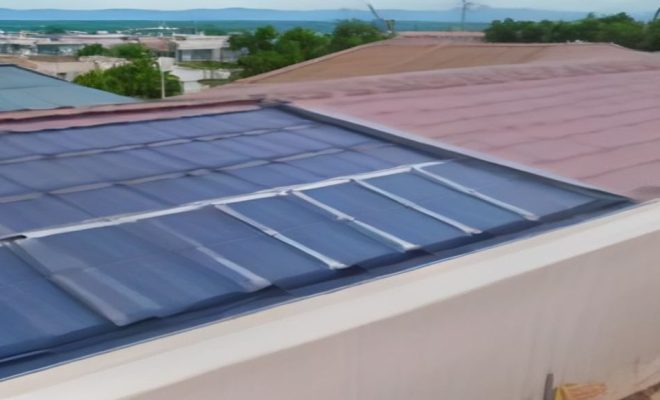
“`html
For years, the promise of true energy independence for homeowners has been tantalizingly close, yet often just out of reach. We’ve seen the rise of solar panels, transforming rooftops into personal power plants, but the Achilles’ heel has always been storage. What happens when the sun goes down, or on a cloudy day? Lithium-ion batteries stepped in, offering a solution, but they brought with them concerns about safety, cost, and environmental impact. Now, a German startup named Revolta AG is shaking up the residential solar storage market with what they’re calling a first: a high-voltage sodium home battery system designed specifically for solar rooftops.
Unveiled at Intersolar Europe 2026, this new sodium-ion technology isn’t just an incremental improvement; it’s a fundamental shift that addresses some of the most persistent hurdles in home energy storage. By leveraging the inherent thermal stability of sodium-ion chemistry and coupling it with a clever high-voltage design, Revolta aims to make solar storage safer, more compact, and ultimately, more appealing to a broader audience. It’s a development that’s already generating significant buzz among homeowners, environmentalists, and anyone keeping an eye on the future of sustainable living. Could this be the breakthrough that truly democratizes solar power?
The Lithium-Ion Conundrum: Why We Needed Something New
Before we dive into the specifics of Revolta’s innovation, let’s understand why the industry was so eager for an alternative to lithium-ion. Lithium-ion batteries, while powerful and relatively compact, have several drawbacks when it comes to large-scale residential use. Firstly, there’s the safety aspect. While rare, thermal runaway events in lithium-ion batteries can lead to fires that are difficult to extinguish, posing a genuine concern for homeowners. The chemistry itself is inherently more volatile under certain conditions, a fact that’s led to stringent safety regulations and, understandably, some homeowner hesitation.
Then there’s the environmental footprint. Lithium mining is resource-intensive and often comes with significant environmental and social costs. The supply chain for lithium is also dominated by a few key regions, leading to geopolitical complexities and price volatility. Moreover, the long-term sustainability of lithium-ion battery disposal and recycling is still an evolving challenge. For a technology meant to power a green future, these environmental considerations presented a significant paradox. Finally, the cost of lithium-ion systems, while decreasing, has remained a barrier for many households, particularly when considering the total upfront investment for a complete solar-plus-storage setup. These factors collectively created a strong impetus for innovators to explore new battery chemistries, and sodium-ion emerged as a frontrunner.
Sodium-Ion: A Safer, More Sustainable Alternative
Sodium-ion battery technology isn’t entirely new; it’s been researched for decades as a potential successor to lithium-ion. The fundamental principle is similar: ions move between an anode and a cathode through an electrolyte during charging and discharging. The key difference, of course, is the use of sodium instead of lithium. And why sodium? Well, for starters, sodium is incredibly abundant. It’s found in vast quantities in seawater and rock salt, making it far more readily available and geographically diverse than lithium. This abundance translates directly into lower material costs and a more resilient supply chain, freeing us from the geopolitical entanglements associated with lithium.
Beyond abundance, sodium-ion batteries boast superior thermal stability. This is a critical safety advantage. They are less prone to overheating and thermal runaway, significantly reducing the risk of fires compared to their lithium-ion counterparts. Imagine the peace of mind knowing your home battery system, quietly humming away in your garage or utility room, carries a substantially lower risk of internal combustion. This inherent safety feature alone is a massive selling point for residential applications, where families and personal property are paramount. While energy density per cell has traditionally been lower for sodium-ion, Revolta’s innovative high-voltage approach is helping to bridge that gap for practical applications.
Revolta’s Ingenious High-Voltage Design: Fewer Cells, More Power
This is where Revolta’s engineering truly shines. The core of their innovation lies in their ability to achieve a high-voltage sodium home battery system. Traditional sodium-ion battery designs often require a large number of cells connected in series and parallel to achieve the necessary voltage and capacity for a home. This can lead to bulkier, more complex systems. Revolta, however, has developed a custom transformer that dramatically increases the voltage output from the battery pack. We’re talking about increasing the voltage by approximately 50 times!
What does this mean in practical terms? It means that a 2.2-kilowatt-hour (kWh) battery module can operate effectively with just three sodium-ion cells. Think about that for a moment: three cells delivering the kind of power that would typically require many more. Fewer cells mean less complexity, fewer points of failure, and ultimately, a more compact and elegant design. This isn’t just about efficiency; it’s a game-changer for installation and aesthetics. Homeowners often balk at bulky, industrial-looking battery units. Revolta’s approach allows for a much sleeker profile, making the idea of installing home energy storage far more palatable for those who value both function and form.
Scalability and Modularity: Tailored to Your Home’s Needs
One of the most appealing aspects of Revolta’s high-voltage sodium home battery system is its inherent scalability and modularity. Home energy needs are far from uniform. A small apartment with minimal power consumption will have very different requirements than a large family home with electric vehicles and energy-intensive appliances. Revolta understands this, designing their system to be incredibly flexible. (See: environmental impact of lithium-ion batteries.)
Homeowners can start with a single 2.2 kWh module, which might be perfect for basic backup power or to offset some evening peak usage. But if your needs grow, or if you want to achieve true off-grid independence, you can seamlessly scale the system up. Revolta allows for the integration of up to ten modules, creating a robust 22 kWh storage capacity. This modular approach is fantastic for several reasons. Firstly, it allows for a lower initial investment, making solar storage accessible to more households. You can start small and expand as your budget or energy demands evolve. Secondly, it provides redundancy. If one module were to ever have an issue, the rest of the system could continue to function, ensuring continuous power. This kind of flexibility is crucial for widespread adoption and makes the high-voltage sodium home battery a truly adaptive solution.
The Buzz: Why Homeowners and Environmentalists Are Excited
The unveiling of Revolta’s high-voltage sodium home battery has generated a considerable amount of buzz, and for good reason. For homeowners, the primary draw is the enhanced safety. The peace of mind that comes with a thermally stable battery system cannot be overstated. When you’re talking about a device integrated into your home, safety is often the number one concern, even over cost or capacity. The compact design and aesthetic appeal are also huge factors, removing some of the visual clutter associated with traditional battery installations.
Environmentalists, too, are thrilled by this development. The shift away from lithium, with its associated mining impacts and supply chain issues, towards a more abundant and sustainable material like sodium, aligns perfectly with the broader goals of renewable energy. It represents a step towards truly green technology, from generation to storage. The reduced environmental footprint and the potential for a more ethical and less resource-intensive supply chain are powerful arguments for sodium-ion. This combination of practical benefits for homeowners and significant environmental advantages has propelled Revolta’s announcement into a viral topic, sparking discussions across online forums, social media, and industry publications. It signifies a collective hope for a more sustainable and secure energy future.
Beyond the Hype: Practical Implications for Energy Independence
While the excitement around Revolta’s high-voltage sodium home battery is palpable, it’s important to consider the practical implications for achieving genuine energy independence. For many, ‘energy independence’ isn’t just about lowering their electricity bill; it’s about resilience. It’s about having power during grid outages, about knowing that your essential appliances will run even when the neighborhood goes dark. A robust home battery system, especially one as safe and scalable as Revolta’s, brings that vision much closer to reality.
Consider the increasing frequency and intensity of extreme weather events, which often lead to widespread power outages. A 22 kWh system, achievable with Revolta’s maximum configuration, can power a typical home for several days, depending on consumption. This level of backup power provides an invaluable sense of security. Furthermore, for those living in areas with time-of-use (TOU) electricity rates, a home battery allows for significant savings by storing cheap solar energy generated during the day and discharging it during expensive peak hours in the evening. This ‘arbitrage’ strategy can significantly reduce a homeowner’s annual electricity costs, making the investment in solar and storage even more financially attractive. It’s not just about greener energy; it’s about smarter energy management and unparalleled peace of mind.
The Road Ahead: Challenges and Opportunities for Sodium-Ion
While Revolta’s high-voltage sodium home battery marks a significant milestone, the journey for sodium-ion technology is still unfolding. There are always challenges when introducing a new technology to a market dominated by an established incumbent. One key aspect will be demonstrating long-term cycle life and performance consistency. While lab tests might show promising results, real-world conditions with fluctuating temperatures and varying charge/discharge cycles will be the ultimate proving ground. Consumers need assurance that these batteries will last for a decade or more, matching the typical lifespan of solar panels.
Another area is cost. While sodium’s abundance suggests lower material costs, the manufacturing processes for sodium-ion batteries are still scaling up. Achieving economies of scale will be crucial to making these systems competitive on price with lithium-ion, especially as lithium-ion battery prices continue to decline. However, the inherent safety advantages and the reduced environmental impact could provide a premium value proposition that homeowners are willing to pay for. The regulatory landscape will also play a role; as sodium-ion gains traction, we can expect to see new standards and certifications emerge, further validating its safety and performance. The opportunities, however, are immense, particularly in regions keen to diversify their energy storage supply chains and prioritize sustainable materials.
Comparing the Options: How Revolta Stacks Up
When you’re considering a home battery system, you’re faced with a growing array of choices. How does Revolta’s high-voltage sodium home battery stack up against the established players like Tesla’s Powerwall or Enphase’s IQ Battery, which are based on lithium-ion? The most immediate differentiator is safety. While lithium-ion systems have advanced safety features, the fundamental chemistry of sodium-ion offers an inherent thermal stability advantage. For those with safety as a top priority, Revolta presents a compelling argument.
Then there’s the environmental footprint. Revolta’s use of abundant sodium, rather than scarce lithium, positions it as a more sustainable choice in the long run. From a design perspective, the compact, modular nature of Revolta’s system, enabled by its high-voltage architecture, might appeal to homeowners who prefer a less intrusive installation. While specific pricing details and warranty information will be critical for a full comparison, the initial indications suggest Revolta is targeting a sweet spot of safety, sustainability, and aesthetic appeal. It’s not just another battery; it’s a distinct proposition for a particular segment of the market that values these attributes above all else. (See: sodium-ion battery technology advancements.)
The Future of Home Energy Storage: A Sodium-Powered Horizon?
Revolta’s high-voltage sodium home battery system isn’t just a product launch; it’s a statement about the future direction of home energy storage. It signals a maturation of the industry, moving beyond a sole reliance on lithium-ion and embracing alternative chemistries that offer distinct advantages. The successful deployment and widespread adoption of sodium-ion technology could have profound implications, not only for individual homeowners but for entire energy grids.
Imagine a future where homes are powered by rooftop solar, storing excess energy in safe, sustainable, and affordable sodium-ion batteries. This decentralized energy model could reduce stress on centralized grids, enhance energy security, and accelerate the transition away from fossil fuels. It’s a vision of true energy democracy, where individuals have greater control over their power supply, insulated from volatile energy markets and grid vulnerabilities. Revolta’s innovation pushes us closer to that horizon, proving that sometimes, the most revolutionary solutions come from looking at familiar elements with a fresh, high-voltage perspective.
Expert Perspectives: What Industry Leaders Are Saying
The introduction of the high-voltage sodium home battery has certainly caught the attention of experts across the energy sector. Dr. Elena Petrova, a leading materials scientist specializing in battery chemistry at the Institute for Sustainable Energy, noted in a recent interview, “Revolta’s high-voltage architecture is a clever engineering solution. It addresses one of the primary hurdles for sodium-ion, which has traditionally been lower energy density. By optimizing the voltage, they’re getting more practical output from fewer cells, which is a significant step for residential applications.” She also highlighted the long-term potential for grid stability, saying, “As distributed energy resources grow, having inherently safer and more sustainable storage options at the residential level is crucial for grid operators. It de-risks the entire system.”
Meanwhile, Mr. David Chen, CEO of a major solar installation firm, commented on the market impact: “Our customers are increasingly asking about alternatives to lithium-ion, driven by both environmental concerns and a desire for maximum safety. If Revolta can deliver on its promises for competitive pricing and a robust warranty, their sodium battery could capture a significant share of the premium market. The modularity also makes it easier to integrate into existing solar setups, which is a big plus for installers.” These insights suggest that the industry is watching closely, recognizing the potential for Revolta to carve out a unique and valuable niche.
The Environmental Edge: A Deeper Dive into Sustainability
When we talk about the environmental benefits of a high-voltage sodium home battery, it’s not just about the abundance of sodium itself. It’s also about the entire lifecycle. Consider the manufacturing process. Lithium-ion battery production often involves significant energy consumption and the use of certain hazardous chemicals. While all manufacturing has an environmental footprint, sodium-ion has the potential for a cleaner process due to the nature of the materials and the lower energy requirements for extraction. Think about the reduced need for complex, deep-earth mining operations that impact local ecosystems and water tables. Sodium, derived from salt, is far less invasive to acquire.
Moreover, the end-of-life scenario for sodium-ion batteries holds promise. Because sodium is non-toxic and abundant, the challenges and costs associated with recycling are potentially lower. While lithium-ion battery recycling is improving, it’s still an energy-intensive process to recover valuable materials. Sodium-ion batteries could offer a more straightforward and less costly path to circularity, reducing waste and closing the loop on material use. This holistic view of sustainability, from source to disposal, truly sets the high-voltage sodium home battery apart as a genuinely green energy storage solution.
Economic Impact: Beyond the Homeowner’s Bill
The economic benefits of a high-voltage sodium home battery extend far beyond individual homeowners saving money on their electricity bills. Widespread adoption of such technology can have significant macro-economic impacts. For one, it reduces a nation’s reliance on foreign energy sources, enhancing energy security and stability. This means less vulnerability to geopolitical events that can drive up fossil fuel prices and cause supply chain disruptions. By decentralizing power generation and storage, countries can build a more resilient energy infrastructure.
Furthermore, the development and manufacturing of sodium-ion batteries can stimulate local economies. As companies like Revolta scale up, they create jobs in research and development, manufacturing, installation, and maintenance. This fosters innovation and builds a skilled workforce in green technologies. It’s an investment in a future economy that is less dependent on finite resources and more focused on sustainable growth. The lower material costs associated with sodium also mean that as production scales, the overall cost of renewable energy infrastructure can decrease, making the transition to a carbon-neutral future more economically feasible for everyone. (See: benefits of solar energy.)
FAQs About High-Voltage Sodium Home Batteries
Q: How safe are high-voltage sodium home batteries compared to lithium-ion?
A: High-voltage sodium home batteries offer superior inherent thermal stability compared to lithium-ion batteries. This means they are significantly less prone to overheating and thermal runaway events that can lead to fires. While all batteries have safety mechanisms, the fundamental chemistry of sodium-ion provides an extra layer of peace of mind, making them a very safe option for residential use.
Q: What is the typical lifespan of a Revolta sodium home battery?
A: While specific long-term data for Revolta’s system is still emerging, sodium-ion batteries are designed for a long cycle life, often comparable to or exceeding the typical 10-15 year lifespan of residential lithium-ion systems. As with any battery, performance can vary based on usage patterns and environmental conditions, but manufacturers aim for durability that matches solar panel warranties.
Q: Can a high-voltage sodium home battery power my entire home off-grid?
A: Yes, with sufficient capacity, a high-voltage sodium home battery system can enable off-grid living. Revolta’s modular design allows for scalability up to 22 kWh, which can power a typical home for several days depending on energy consumption habits. For true off-grid independence, it would be paired with a robust solar array and potentially a backup generator for extended periods of low solar production.
Q: Is sodium-ion technology truly environmentally friendly?
A: Sodium-ion technology is considered more environmentally friendly than lithium-ion for several reasons. Sodium is vastly more abundant and less resource-intensive to extract than lithium. Its non-toxic nature also simplifies potential recycling processes and reduces environmental impacts throughout the battery’s lifecycle, from mining to disposal.
Q: How does the cost of a high-voltage sodium home battery compare to lithium-ion?
A: Initial costs can vary as sodium-ion technology scales up its manufacturing. However, due to the abundance and lower material cost of sodium, the expectation is that high-voltage sodium home batteries will become increasingly competitive, and potentially more affordable than lithium-ion systems in the long run. The overall value proposition also includes enhanced safety and environmental benefits.
Q: Will Revolta’s high-voltage sodium home battery work with my existing solar panel system?
A: Most modern home battery systems, including Revolta’s, are designed to be compatible with existing solar panel installations. They typically integrate through a hybrid inverter or a battery-specific inverter that works in conjunction with your solar inverter. It’s always best to consult with a certified installer to ensure seamless integration with your specific solar setup.
“`
Trending Now
Frequently Asked Questions
What is the first high-voltage sodium home battery for solar rooftops?
The first high-voltage sodium home battery, developed by the German startup Revolta AG, is designed specifically for solar rooftops. This innovative battery utilizes sodium-ion technology, which offers enhanced thermal stability and aims to provide safer and more efficient energy storage for residential solar systems.
How does sodium-ion technology compare to lithium-ion batteries?
Sodium-ion technology presents several advantages over lithium-ion batteries, including improved thermal stability and safety. While lithium-ion batteries can experience thermal runaway and pose fire risks, sodium-ion systems mitigate these concerns, making them a more appealing option for homeowners looking for reliable energy storage.
What are the benefits of using sodium home batteries for solar energy?
Sodium home batteries offer significant benefits for solar energy users, including enhanced safety, compact design, and cost-effectiveness. These batteries are specifically engineered to work with solar rooftops, providing reliable energy storage even during cloudy days or at night, thereby promoting energy independence for homeowners.
Why is there a need for alternatives to lithium-ion batteries?
The need for alternatives to lithium-ion batteries arises from their safety concerns, high costs, and environmental impact. Issues like thermal runaway and the volatility of lithium-ion chemistry have prompted the search for safer, more sustainable energy storage solutions, such as sodium-ion technology.
What impact could Revolta's sodium battery have on the solar market?
Revolta's sodium battery could significantly impact the solar market by democratizing access to solar energy. By addressing safety and efficiency concerns, this innovative technology may encourage more homeowners to adopt solar power, ultimately contributing to a more sustainable energy future.
Agree or disagree? Drop a comment and tell us what you think.