Peek-a-Boo’s Secret: The Science of Object Permanence
“`html
Every parent knows the joy of playing peek-a-boo with their child. The laughter, the squeals of delight, and the look of wonder on their faces are unforgettable moments. But what if I told you that this simple game is about much more than just entertainment? The act of hiding and revealing is a crucial step in a child’s cognitive development, tied directly to the concept of object permanence. In this article, we’ll explore the science behind object permanence, its significance in early childhood development, and how peek-a-boo illustrates this fundamental principle.
Understanding Object Permanence
At its core, object permanence is the understanding that objects continue to exist even when they cannot be seen, heard, or otherwise perceived. This cognitive milestone is a significant part of child development, typically emerging around 4 to 7 months of age. Before this stage, infants may believe that when an object disappears from their view, it ceases to exist. This is why peek-a-boo is so entertaining for babies; every time you hide your face, they genuinely believe you’ve vanished!
The concept was first introduced by Swiss psychologist Jean Piaget. He proposed that children move through four stages of cognitive development, and object permanence is a critical feature of the sensorimotor stage, which spans from birth to about two years. Piaget believed that achieving object permanence marked the beginning of a child’s understanding of the world around them.
The Evolution of Understanding
Before infants grasp object permanence, they live in a world where things seem to exist only when they are directly in sight. For instance, if a favorite toy is hidden under a blanket, an infant might not search for it, believing it has disappeared. Once they develop this understanding, the world becomes a much more complex place. They begin to understand that their actions can influence their environment — a critical step toward more sophisticated cognitive functions.
Research has shown that the development of object permanence is not just a simple switch that gets flipped on at a certain age. Instead, it’s a gradual process. For example, a study conducted by researchers at the University of California, Berkeley, found that even infants as young as three months old might have some rudimentary understanding of object permanence. In this study, babies were shown a partially hidden object, and their gaze lingered on it, suggesting they were aware that it still existed even though it was not fully visible.
The Peek-a-Boo Effect
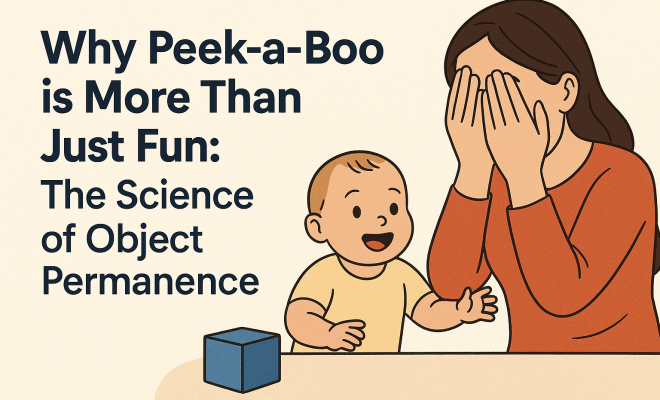
Peek-a-boo serves as an excellent illustration of object permanence in action. When you cover your face with your hands, children are momentarily surprised, but as the game continues, they start to anticipate your reappearance. This anticipation is a direct result of their burgeoning understanding of object permanence.
As they giggle and react to your playful disappearance and reappearance, they are practicing cognitive skills that are vital for their development. Peek-a-boo not only reinforces the idea that objects can be temporarily hidden and then revealed but also helps develop social skills and emotional bonds between parent and child. It’s this interactive element that makes the game so beneficial for development.
The Role of Play in Development
Play is not just a way for children to pass the time; it’s a critical component of their development. Engaging in playful activities like peek-a-boo contributes to a child’s emotional, social, and cognitive growth. According to child development experts, play allows children to express themselves, explore their environment, and learn important life skills.
Through such interactive games, children learn to communicate and develop their language skills. They begin to understand concepts of turn-taking, which is essential for social interaction. Furthermore, the sheer joy of play fosters emotional intelligence, as children experience and express happiness, surprise, and even mild frustration during games like peek-a-boo.
Beyond Infancy: Object Permanence in Later Development
While object permanence is often associated with infancy, its implications extend far beyond that first year of life. As children grow, their understanding of the concept deepens and becomes more sophisticated. For example, once a child has mastered basic object permanence, they begin to apply this understanding to more abstract concepts, like relationships and emotions. A child who has learned that a parent will return after leaving the room is beginning to grasp more complex social dynamics. (See: Wikipedia article on object permanence.)
This understanding is crucial as it allows children to develop trust and security in their relationships. They start to recognize that just because they can’t see someone doesn’t mean that person isn’t there — a critical leap in emotional and social understanding. This lays the groundwork for future relationships, teaching them about separation, loss, and reunion.
Practical Applications: Games and Activities to Foster Object Permanence
If you’re a parent or caregiver looking to help a child develop their understanding of object permanence, there are several engaging activities you can try beyond the classic peek-a-boo. Here are a few creative ideas:
- Hide-and-Seek: A great way to extend the concepts of peek-a-boo. You can hide yourself or a toy, and encourage the child to find you or the object.
- Object Hiding Games: Place toys under cups or blankets and encourage the child to find them. This reinforces the idea that even when something is out of sight, it still exists.
- Box Play: Fill a box with various toys, allowing the child to take things in and out. This helps them understand that items are there even when they’re not in view.
- Storytime: Choose storybooks that feature characters hiding and reappearing. This can reinforce the concept of object permanence in a narrative context.
These activities not only encourage cognitive growth but also foster creativity and imaginative play. They help children understand their world while having fun.
Challenges and Misunderstandings
Despite its significance, there are still many misconceptions surrounding object permanence. Some parents may believe that if a child doesn’t show an understanding of object permanence by a certain age, there might be cause for concern. However, it’s essential to remember that each child develops at their own pace. It’s not uncommon for some children to grasp the concept earlier than others; what’s most important is to encourage exploration and play.
Additionally, some children may show signs of distress when an object or person is out of sight. This is often a normal part of development, stemming from their limited understanding of the permanence of objects. Providing reassurance and engaging in activities that reinforce object permanence can help ease these feelings.
The Neuroscience Behind Object Permanence
Recent studies have explored the neural basis of object permanence, revealing fascinating insights into how our brains process information. Researchers have identified specific regions of the brain involved in tracking objects and understanding their permanence. Functional MRI studies show that different brain areas activate when a child engages with a hidden object.
For instance, areas related to memory and spatial reasoning become active when infants look for hidden objects. This suggests that object permanence involves not just memory but also the ability to reason about space and objects. Such findings illustrate just how complex and integrated our cognitive processes are, even at a young age.
Current Relevance: Understanding Object Permanence in Today’s World
In today’s fast-paced world, where technology and media surround children from a very young age, the development of object permanence is still incredibly relevant. With screens often providing instant gratification, children may struggle with concepts of absence and presence, and the transient nature of digital objects might add complexity to their understanding. This is why engaging in traditional play, such as peek-a-boo, remains vital in helping children comprehend their reality.
Moreover, as parents and educators, there’s a growing recognition of the importance of fostering social and emotional development alongside cognitive milestones. Understanding object permanence can lead to healthier relationships as children learn about presence and absence in a social context. By incorporating play and interaction into daily routines, we can help navigate the complexities of development in a modern context.
Object Permanence and Attachment Theory
One influential theory that connects to object permanence is attachment theory, proposed by John Bowlby. This theory suggests that the bonds formed between children and their caregivers influence their emotional development and relationships later in life. A solid grasp of object permanence plays a crucial role in attachment formation. When children understand that their caregivers exist even when they can’t see them, it fosters a sense of security and trust.
Children who develop object permanence and secure attachments often exhibit better emotional regulation and social skills as they grow. They learn that their caregivers will return, which helps alleviate anxiety and fosters independence. This understanding can be observed in how children respond to separations, such as when a parent leaves the room for a short while. A child who has a firm grasp of object permanence may be more willing to explore their surroundings, knowing that their caregiver will return.
Statistical Insights into Object Permanence Development
Research conducted in various childcare environments has revealed interesting statistics regarding the development of object permanence. For instance, studies indicate that approximately 60% of children exhibit signs of object permanence by the age of 5 months, with a significant increase to over 90% by 12 months. These figures highlight the importance of early cognitive engagement and interaction in enhancing children’s understanding of their world. (See: NIH article on cognitive development.)
Furthermore, longitudinal studies have shown that children who play interactive games that encourage the understanding of object permanence often display advanced problem-solving skills and cognitive abilities by the time they reach preschool age. This correlation emphasizes the role of play and direct interaction in shaping cognitive development.
Expert Perspectives on Object Permanence
Experts in child psychology and cognitive development stress the importance of object permanence in fostering emotional health and resilience in children. Dr. Lisa Feldman Barrett, a renowned psychologist, notes that “the ability to understand that objects and people exist independently of one’s perception of them is foundational to all future learning and emotional experiences.” This statement underscores how crucial this concept is not only for cognitive development but also for social interactions and emotional wellbeing.
Child development specialists recommend that parents and caregivers actively engage in activities that enhance this understanding. Dr. Sarah L. DeMarco, a child psychologist, advises that “simple games like peek-a-boo or hide-and-seek can be more than just play; they’re essential tools for building cognitive and emotional skills.” Her insights reflect a broader consensus among experts that play should be viewed as integral to childhood learning.
Frequently Asked Questions About Object Permanence
What is object permanence?
Object permanence is the understanding that objects continue to exist even when they cannot be seen or perceived. It is a crucial cognitive development milestone in infants.
At what age do babies develop object permanence?
Most infants begin to show signs of object permanence between 4 to 7 months of age, with a more consistent understanding developing by 12 months.
How can I help my baby develop object permanence?
Engaging in games like peek-a-boo, hide-and-seek, or simple object hiding games can help reinforce the concept of object permanence. These activities encourage exploration and cognitive engagement.
Is it normal for some children to take longer to develop object permanence?
Yes, every child develops at their own pace. Some may grasp object permanence earlier or later than others, and this variability is perfectly normal. Encouragement and play can aid their understanding.
How does object permanence relate to emotional development?
Understanding object permanence is foundational for developing trust and security in relationships. It helps children realize that loved ones exist even when they are not present, which is critical for emotional health.
Are there any long-term implications for children who struggle with object permanence?
While a delay in understanding object permanence can be concerning, many children catch up with guidance and support. Parents should engage them in interactive play to nurture cognitive and emotional skills. This builds on Understanding object permanence.
Expanding the Discussion: Object Permanence and Cognitive Skills
A deeper dive into object permanence reveals its connection to various cognitive skills. For instance, problem-solving abilities and memory are closely tied to the understanding of permanence. Studies indicate that children who engage with activities enhancing this understanding show improved memory retention and problem-solving skills as they grow older. This connection makes intuitive sense; if children understand that objects continue to exist, they can strategize better during play and everyday tasks.
In fact, a study published in the journal “Cognitive Development” found that toddlers who played object permanence games scored higher on problem-solving tests later on. This correlation suggests that reinforcing the concept of object permanence through playful interactions not only aids immediate cognitive development but also sets the stage for complex reasoning skills in the future.
Exploring Object Permanence Across Cultures
Interestingly, the concept of object permanence can vary across cultures. For example, in some cultures where children are raised in communal settings with more extensive family interactions, the understanding of object permanence may be developed through different social interactions. Children may have more opportunities to witness object permanence in action, such as seeing family members return home regularly, which reinforces their understanding.
Conversely, children in isolation may not experience this as frequently, potentially leading to differences in developmental timelines. Research shows that cultural practices significantly impact children’s cognitive development, including their grasp of object permanence. This phenomenon highlights the importance of considering cultural context when exploring cognitive milestones.
The Future of Research on Object Permanence
As our understanding of child development continues to evolve, future research on object permanence is poised to explore even more dimensions. One exciting area of inquiry is the impact of technology on cognitive development. With the proliferation of screens and digital play, researchers are investigating how these new forms of play influence children’s understanding of permanence. Are children who engage with digital objects at a young age more or less likely to develop a robust understanding of object permanence? What implications does this have for their cognitive and emotional growth?
Another line of inquiry focuses on neurodevelopmental variations. Studies are examining how differences in brain structure and function influence the grasp of object permanence. Understanding these variations could lead to better-targeted interventions for children who may struggle with this critical cognitive milestone.
Conclusion: The Lasting Impact of Object Permanence
The concept of object permanence might seem simple at first glance, but its implications stretch far beyond just knowing an object still exists when out of sight. Peek-a-boo is a delightful game that encapsulates the essence of this concept, serving as a powerful tool for cognitive and emotional development. By recognizing and nurturing the understanding of object permanence, we can better support our children as they grow, helping them forge connections and navigate their relationships more effectively.
So, the next time you play peek-a-boo, remember that it’s not just a game; it’s laying the foundation for your child’s understanding of the world. Let the giggles continue!
“`
Trending Now
Frequently Asked Questions
What is object permanence in child development?
Object permanence is the understanding that objects continue to exist even when they cannot be seen or perceived. This cognitive milestone typically emerges in infants around 4 to 7 months of age and is crucial for their overall understanding of the world.
Why is peek-a-boo important for babies?
Peek-a-boo is important for babies as it helps them develop object permanence. The game illustrates the concept that even when something is hidden, it still exists, fostering cognitive development and enhancing their understanding of their environment.
At what age do babies understand object permanence?
Babies typically begin to understand object permanence between 4 to 7 months of age. Before this stage, they may believe that objects that are out of sight have ceased to exist.
Who introduced the concept of object permanence?
The concept of object permanence was introduced by Swiss psychologist Jean Piaget. He identified it as a key feature of the sensorimotor stage of cognitive development, which occurs from birth to about two years of age.
How does object permanence affect a child's learning?
Understanding object permanence significantly impacts a child's learning by allowing them to recognize that their actions can influence their environment. This realization is a critical step toward more complex cognitive skills and problem-solving.
Agree or disagree? Drop a comment and tell us what you think.