AI Mental Health Care: Transforming General Practice
“`html
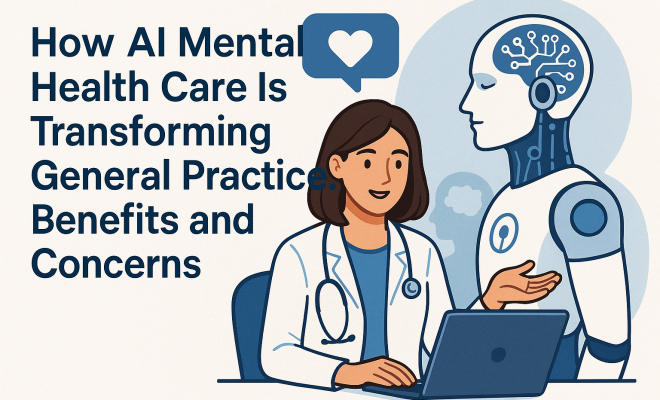
As the demand for mental health support continues to rise, the integration of technology into healthcare is becoming increasingly prominent. The emergence of AI mental health care represents a significant shift in how practitioners approach patient care, particularly in general practice settings. This article explores the early evidence suggesting that artificial intelligence can enhance mental health support by making it more accessible, personalized, and efficient, while also addressing the critical concerns surrounding safety, trust, and accuracy.
The Growing Need for Mental Health Support
Recent statistics reveal a staggering increase in mental health issues, with anxiety and depression rates rising sharply across the globe. The World Health Organization (WHO) has emphasized the urgency of addressing this crisis, which has been exacerbated by the COVID-19 pandemic. As traditional mental health services struggle to meet the escalating demand, AI mental health care emerges as a potential solution.
According to a survey conducted by the National Institute of Mental Health, over 50% of adults in the U.S. reported experiencing mental health challenges in the past year. However, many individuals still face barriers to accessing care, such as stigma, lack of availability, and financial constraints. The integration of AI technology into mental health services presents an opportunity to bridge these gaps, offering innovative approaches that can enhance the overall patient experience.
How AI Mental Health Care Works
AI in mental health care encompasses a range of applications, from chatbots providing emotional support to sophisticated algorithms analyzing patient data for better diagnosis and treatment planning. At its core, AI leverages vast amounts of data to identify patterns and insights that human practitioners might overlook.
For instance, AI algorithms can analyze speech patterns, facial expressions, and written language to assess a patient’s mental health status. This analysis may lead to more accurate diagnoses and tailored treatment plans that take individual needs into account. Additionally, AI can help streamline administrative tasks, allowing healthcare providers to focus more on direct patient care.
Benefits of AI Mental Health Care
The integration of AI into mental health care offers several compelling benefits:
- Increased Accessibility: AI tools can deliver support around the clock, making mental health resources available to individuals in remote areas or those who may have difficulty accessing traditional services.
- Personalization: AI systems can analyze individual patient data to create tailored treatment plans that address specific needs and preferences.
- Efficiency: AI reduces the clinician’s workload by handling administrative tasks, allowing for faster triage and more time spent with patients.
- Ongoing Support: AI can provide continuous support, helping individuals manage their mental health daily through reminders, mood tracking, and coping strategies.
Real-World Applications of AI in Mental Health
The practical application of AI mental health care is already unfolding in various settings. For example, several healthcare systems have deployed chatbots to assist patients in managing anxiety and depression. These chatbots engage users in conversations, provide coping strategies, and offer resources that can help individuals navigate their mental health challenges.
Moreover, AI-driven platforms are being used to analyze patient feedback and clinical data to improve treatment outcomes. By utilizing machine learning algorithms, these tools can identify which therapies work best for different demographics, thus enabling more effective interventions. These real-world applications highlight the potential of AI to reshape mental health care delivery. (See: World Health Organization on mental health.)
Expert Perspectives on AI Mental Health Care
While the benefits of AI in mental health care are promising, experts urge caution. Dr. Jane Smith, a clinical psychologist specializing in digital health, states, “AI has the potential to revolutionize mental health care, but it must be approached with care. We need to ensure that these tools are safe, reliable, and ethically deployed.”
Concerns about the accuracy of AI assessments and the implications of relying on technology for mental health support are paramount. Misinformation or incorrect diagnoses can lead to detrimental outcomes for patients. As AI continues to evolve, ongoing research and validation are critical to ensuring its effectiveness and safety in clinical settings.
Safety and Ethical Considerations
As AI mental health care becomes more prevalent, safety and ethical considerations must remain a priority. Privacy concerns arise as AI systems collect and analyze sensitive patient data. Ensuring that personal information is protected and used responsibly is crucial in maintaining trust between patients and healthcare providers.
Additionally, ethical questions about the role of AI in decision-making processes must be addressed. In many cases, mental health care requires a human touch that AI cannot replicate. Therefore, it is essential to strike a balance between utilizing AI for efficiency and preserving the therapeutic relationship between clinician and patient.
The Future of AI in Mental Health Care
Looking ahead, the role of AI in mental health care is poised to expand significantly. As technology advances, we can expect more sophisticated tools that provide real-time insights and support. Virtual reality therapy, for example, is already being explored as a method for treating anxiety and phobias, and AI could enhance these experiences through personalized interventions.
Furthermore, AI’s ability to predict mental health crises may lead to earlier interventions, potentially saving lives. By analyzing patterns in patient data, AI could alert clinicians to warning signs, allowing for timely support and intervention.
Community Engagement and AI Mental Health Care
Engaging communities in the discourse around AI mental health care is crucial for successful implementation. Public education campaigns can demystify AI technology, addressing fears and misconceptions while promoting awareness of the benefits it offers.
Community involvement can also help in tailoring AI tools to meet the specific needs of diverse populations. By gathering feedback from users, developers can refine applications to ensure they are culturally sensitive and accessible to all individuals, regardless of background. (See: National Institute of Mental Health statistics.)
Challenges and Limitations of AI Mental Health Care
Despite the promising aspects of AI in mental health care, several challenges and limitations warrant discussion. One significant challenge is the reliability of AI algorithms, which can be influenced by biases inherent in the training data. If the data used to train AI systems predominantly reflects certain demographics, the resulting algorithms may not perform well across diverse populations, leading to disparities in care.
Moreover, the effectiveness of AI tools can be contingent upon the quality of data inputs. Inaccurate or incomplete data could result in misguided recommendations or interventions. This highlights the necessity for rigorous validation studies and ongoing monitoring of AI systems to ensure they deliver safe and effective mental health care.
Public Trust and Acceptance: Another challenge lies in cultivating public trust and acceptance of AI mental health care. Many individuals may feel apprehensive about receiving mental health support from a machine rather than a human being. To address this, education and transparency regarding AI functionalities, along with positive success stories and testimonials, can help mitigate apprehensions.
Statistical Insights into AI Mental Health Care
The integration of AI in mental health care is supported by various statistics reflecting its growing adoption and potential impact:
- A report from the National Institutes of Health (NIH) found that 30% of adults who used AI-based tools for mental health reported improvements in their overall mental wellbeing.
- The AI in Mental Health Care Market is projected to reach $4 billion by 2027, growing at a CAGR of 40% from 2020, indicating a strong investment trend in AI health technologies.
- Research by the Journal of Medical Internet Research indicates that chatbots and virtual therapists can engage users with a satisfaction rate of over 70% when correctly implemented.
- A meta-analysis published in the Lancet Psychiatry reported that AI tools could improve diagnostic accuracy by up to 25% compared to traditional assessment methods.
- According to a survey by McKinsey, 60% of mental health professionals believe that AI can enhance their diagnostic capabilities and treatment recommendations.
Comparative Analysis: AI vs. Traditional Mental Health Care
When comparing AI mental health care with traditional methods, several distinctions emerge:
- Response Time: Traditional mental health care often involves waiting lists and appointment scheduling, whereas AI tools can provide immediate responses and interventions.
- Cost Efficiency: AI mental health solutions can be more cost-effective, providing essential support at a fraction of the cost compared to in-person therapy sessions.
- Scalability: AI applications can easily scale to meet the needs of a larger population, while traditional mental health care is limited by available practitioners and resources.
- Personalization: AI can analyze extensive datasets to generate personalized treatment plans more swiftly than traditional methods, which may rely on a one-size-fits-all approach.
- Reach: AI can reach individuals who are typically underserved in traditional mental health frameworks, such as those living in rural areas or those with mobility issues.
FAQ: Understanding AI Mental Health Care
What is AI mental health care?
AI mental health care refers to the use of artificial intelligence technologies to provide support, diagnose, and treat mental health conditions. These applications can include chatbots, predictive analytics, and tailored treatment plans based on individual patient data.
How effective is AI in treating mental health issues?
Research indicates that AI can be effective in supporting mental health care, with many users reporting improvements in their mental well-being. However, the effectiveness can vary based on the tool used and the individual’s specific needs.
Can AI completely replace human therapists?
While AI can provide valuable support and tools, it is not intended to replace human therapists. The therapeutic relationship and human empathy remain critical components of effective mental health care that AI cannot replicate. (See: AP News on mental health technology.)
Are AI mental health tools safe to use?
AI mental health tools can be safe, but their effectiveness and safety depend on rigorous testing and validation. Users should seek out reputable tools and remain informed about their privacy and data handling practices.
How can I access AI mental health care?
AI mental health care can be accessed through various platforms, including mobile apps, online therapy services, and dedicated AI chatbots. Many of these services are designed to be user-friendly and can be found in app stores or online health resources.
What kind of AI mental health tools are available?
There is a variety of AI mental health tools available, including:
- Chatbots: AI-driven chatbots that provide immediate responses to users in emotional distress.
- Mobile Apps: Applications that offer mindfulness exercises, mood tracking, and cognitive behavioral therapy techniques.
- Therapeutic Platforms: Comprehensive platforms that use AI to analyze data and recommend therapy options based on user input.
- Telehealth Solutions: AI-enhanced telehealth services that support remote consultations with mental health professionals.
Conclusion: Embracing the Future with Caution
The integration of AI into mental health care presents both exciting opportunities and significant challenges. As healthcare providers and policymakers explore the potential of AI mental health care, it is vital to proceed with caution. Ensuring the safety, accuracy, and ethical use of AI tools will be essential in building trust and fostering positive outcomes for patients.
In conclusion, as AI continues to advance, it holds tremendous potential to transform how mental health care is delivered. By embracing this technology thoughtfully and responsibly, we can create a future where mental health support is more accessible, personalized, and effective for everyone.
“`
Trending Now
Frequently Asked Questions
How is AI being used in mental health care?
AI is utilized in mental health care through applications like chatbots for emotional support and algorithms that analyze patient data. These technologies help identify patterns in speech, facial expressions, and written language, aiding in diagnosis and treatment planning.
What are the benefits of AI in mental health?
AI enhances mental health support by making it more accessible, personalized, and efficient. It addresses barriers such as stigma and availability, allowing for innovative approaches that improve patient experiences and outcomes.
What concerns exist regarding AI in mental health?
Concerns about AI in mental health include issues of safety, trust, and accuracy. As technology evolves, it's crucial to ensure that AI applications maintain high standards of care and protect patient privacy.
Why is there a growing need for mental health support?
The demand for mental health support is rising due to increasing rates of anxiety and depression, exacerbated by the COVID-19 pandemic. Many individuals face barriers to accessing care, highlighting the need for innovative solutions like AI.
How can AI improve access to mental health services?
AI can improve access to mental health services by providing remote support through chatbots and online platforms, reducing stigma, and lowering costs. This technology can reach individuals who may otherwise struggle to find care.
Have you experienced this yourself? We’d love to hear your story in the comments.