IoT Botnet Takedown: The Dangers of Connected Devices Revealed
“`html
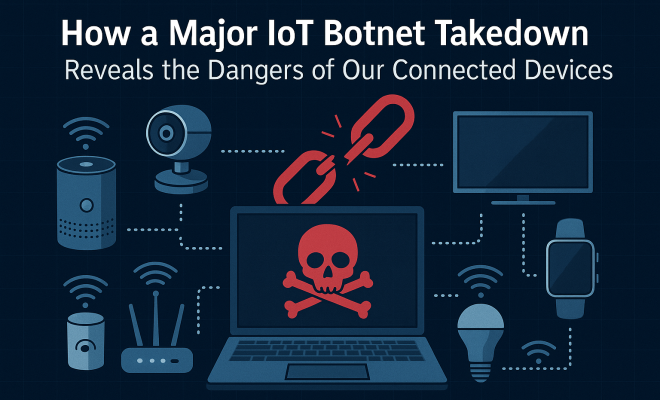
The recent IoT botnet takedown in Canada has unveiled a troubling reality: the Internet of Things (IoT)—once considered a marvel of modern technology—has birthed a dangerous landscape where everyday devices can be weaponized. The arrest of a 23-year-old Ottawa man, suspected of building and operating a massive botnet named Kimwolf, has raised critical questions about digital security and our reliance on connected gadgets.
Unpacking the IoT Botnet Takedown
The takedown of the Kimwolf botnet marks a significant event in cybersecurity history. Authorities reported that this botnet enslaved millions of smart devices, transforming them into an army capable of launching devastating distributed denial-of-service (DDoS) attacks. These attacks have plagued businesses and institutions globally, highlighting how vulnerable our digital infrastructure has become.
In the past six months alone, Kimwolf has been implicated in a series of high-profile DDoS attacks, causing substantial disruption to online services. This case illustrates how the convergence of everyday devices and malicious intent can result in widespread chaos.
Understanding DDoS Attacks
Before delving deeper into the implications of the IoT botnet takedown, it’s essential to understand the mechanics of DDoS attacks. A DDoS attack involves overwhelming a target server or network with traffic from multiple sources, rendering it unable to respond to legitimate requests. This can lead to significant downtime, loss of revenue, and damage to reputation.
Botnets are often the weapon of choice for executing these attacks. They consist of compromised devices—like routers, security cameras, and smart home systems—that attackers control remotely. When a botnet is large, even relatively simple attacks can generate overwhelming traffic, making it nearly impossible for the target to defend itself.
The Role of IoT Devices in Cybercrime
IoT devices are increasingly becoming a popular target for cybercriminals. From smart refrigerators to connected home security systems, any device that connects to the internet can potentially be compromised if not properly secured. The Kimwolf botnet was particularly alarming because it demonstrated how easily these devices could be exploited.
Many consumers are unaware of the vulnerabilities that exist in their devices. Often, manufacturers do not prioritize security, leading to easy-to-exploit flaws. Default passwords are commonly left unchanged, making it a simple task for hackers to gain control. As more devices enter our homes and workplaces, the attack surface for potential cyber threats expands dramatically.
The Arrest That Shook the Cybersecurity Community
The arrest of the individual behind Kimwolf was a watershed moment that reverberated throughout the cybersecurity community. The suspect, whose identity remains undisclosed, was taken into custody by Canadian law enforcement following a lengthy investigation. This arrest raises numerous questions about how such botnets can proliferate undetected and the responsibility of device manufacturers.
Security experts noted that this case illustrates the need for more stringent regulations and security protocols regarding IoT devices. As the line between consumer technology and cybersecurity continues to blur, proactive measures must be taken to ensure that devices are not just built for convenience but also for security.
Impact on Businesses and Individuals
The implications of the IoT botnet takedown extend beyond just the arrest. Businesses, both large and small, must now grapple with the reality that their operations could be disrupted by such attacks. The economic impact can be staggering; companies affected by DDoS attacks can face losses in revenue, customer trust, and even legal consequences. (See: Internet of Things overview.)
For individuals, the risks are equally concerning. With smart devices becoming ubiquitous in homes, the likelihood that personal information could be compromised in a botnet attack is a growing concern. Home routers, security cameras, and other IoT devices often hold sensitive data that could be exploited if these devices are not adequately secured.
Experts Weigh In: Future of IoT Security
As cybersecurity experts analyze the implications of the Kimwolf botnet takedown, many agree that a multi-faceted approach is necessary to combat the rise of IoT-based attacks. This includes enhancing consumer education, developing better device security standards, and fostering collaboration between tech companies and law enforcement agencies.
Experts advocate for increased awareness among consumers about the risks associated with IoT devices. Users are encouraged to change default passwords, regularly update device software, and employ security measures like firewalls. Additionally, manufacturers must be held accountable for creating devices that prioritize security from the outset.
Case Studies of DDoS Attacks
The Kimwolf incident is not isolated; it is part of a larger trend of escalating DDoS attacks facilitated by botnets. Several high-profile cases illustrate this increasing trend. For instance, the Mirai botnet, which emerged in 2016, commandeered thousands of IoT devices to carry out one of the largest DDoS attacks in history, affecting major internet platforms like Dyn.
Mirai’s legacy is still evident today, contributing to the ongoing concern surrounding IoT security. Similarly, the attack on the New Zealand Stock Exchange in 2020 disrupted trading for days, underscoring the vulnerability of critical infrastructure to botnet-driven attacks.
Preventative Measures for IoT Devices
In light of recent events, both consumers and businesses must take steps to safeguard their IoT devices against potential exploitation. Here are several actionable measures that can be implemented:
- Change Default Credentials: Always change default usernames and passwords on devices to something more secure.
- Regular Updates: Keep device firmware and software updated to protect against known vulnerabilities.
- Network Segmentation: Use guest networks for IoT devices to isolate them from critical personal and business data.
- Secure Configurations: Disable unnecessary features and services on IoT devices that may expose them to attacks.
- Monitoring: Use security tools that can monitor network traffic and identify suspicious behavior associated with IoT devices.
The Road Ahead: Emerging Trends and Threats
As technology evolves, the threats associated with IoT devices are likely to grow. Emerging trends, such as the increased adoption of 5G networks, raise concerns about the potential scale of future attacks. With faster connections and more devices online, the risk of massive botnets is greater than ever.
Moreover, as more sectors begin to integrate IoT solutions—from healthcare to smart cities—the stakes become even higher. A successful attack on healthcare infrastructure, for example, could have catastrophic consequences for patient safety and privacy.
Comparative Analysis: IoT Botnets vs. Traditional Botnets
To fully grasp the severity of the IoT botnet situation, it is crucial to compare IoT botnets like Kimwolf with traditional botnets that primarily utilize computers. Traditional botnets consist of compromised PCs, which often have more robust security measures than IoT devices. Therefore, while they can also launch significant DDoS attacks, the scale and ease of exploiting IoT devices present unique challenges.
According to a report by Cybersecurity Ventures, IoT botnets are expected to grow 30% annually, while traditional botnets are experiencing stagnation due to more effective cybersecurity measures. This trend indicates a shift in attack vectors, with cybercriminals capitalizing on the growing number of insecure IoT devices. (See: CDC on cybersecurity and public health.)
Regulatory Perspectives on IoT Security
Regulatory bodies worldwide have begun to recognize the need for more stringent security measures for IoT devices. For example, the European Union is working on the Cybersecurity Act, which aims to establish a cybersecurity certification framework for IoT devices. This initiative is designed to ensure that manufacturers adhere to specific security standards, ultimately reducing the risk of botnet exploitation.
In the United States, the IoT Cybersecurity Improvement Act mandates that federally procured IoT devices meet baseline security requirements. Such regulatory measures could significantly alter the landscape of IoT security, pushing manufacturers to prioritize security features in their product designs.
Industry Impact: The Cost of IoT Vulnerabilities
The financial implications of IoT vulnerabilities cannot be overstated. A recent study by the Cybersecurity & Infrastructure Security Agency (CISA) estimated that DDoS attacks related to IoT botnets cost businesses approximately $1.5 million per incident, accounting for lost revenue, legal fees, and public relations costs. As IoT devices proliferate, the potential for more frequent and severe attacks looms.
For small to medium-sized enterprises (SMEs), the impact can be particularly devastating. Many SMEs lack the resources to implement robust cybersecurity measures, leaving them vulnerable to attacks that could cripple operations. Therefore, addressing IoT security is not only a technical challenge but also a crucial business concern.
Public Awareness and Consumer Education
The role of public awareness in combating IoT botnets cannot be overlooked. Consumers need to be educated about the security risks and the importance of adopting best practices for securing their devices. Awareness campaigns can help inform users about the necessity of changing default passwords, enabling two-factor authentication, and understanding the implications of their IoT device choices.
In fact, a survey conducted by Security.org found that 60% of respondents had never changed the default password on their smart devices. This statistic illustrates the critical need for education and outreach. By collaborating with cybersecurity professionals and organizations, manufacturers can help distribute informative materials that empower consumers to take control of their IoT security.
FAQ Section: Addressing Common Concerns
What is an IoT botnet?
An IoT botnet is a network of compromised Internet of Things devices that are controlled by a malicious actor. These devices can include anything from smart home appliances to connected industrial equipment. Once infected, they can be used to perform coordinated attacks, such as DDoS attacks.
How can I protect my IoT devices?
To protect your IoT devices, follow these guidelines:
- Change default usernames and passwords.
- Keep firmware updated.
- Enable network security features, such as firewalls.
- Disable remote access unless necessary.
- Regularly monitor your devices for unusual activity.
Are IoT devices more vulnerable than traditional devices?
Yes, IoT devices are generally more vulnerable than traditional computing devices. They often have weaker security protocols, limited processing power, and are designed for ease of use rather than security. This makes them attractive targets for cybercriminals. (See: New York Times on IoT botnets.)
What should I do if I suspect my IoT device has been compromised?
If you suspect that your IoT device has been compromised, immediately disconnect it from the internet. Change the passwords and update the firmware if possible. Additionally, consider factory resetting the device and monitoring your network for any suspicious activity.
What role do manufacturers play in IoT security?
Manufacturers are responsible for ensuring that their devices have robust security features. This includes secure coding practices, regular software updates, and responsive customer support. They must also provide consumers with clear instructions on how to secure their devices effectively.
Additional Security Considerations for Smart Homes
As the number of IoT devices in homes increases, it becomes essential to evaluate the security of smart home ecosystems. This includes devices like smart thermostats, light bulbs, and home assistants. Each device presents its own set of vulnerabilities, and consumers should consider a few additional measures:
- Integrate a Unified Security Solution: Some security systems can monitor and manage multiple devices from one interface, making it easier to ensure that all devices are secure.
- Implement Stronger Network Security: Use WPA3 encryption for Wi-Fi networks and consider employing a Virtual Private Network (VPN) for added security.
- Educate Family Members: Ensure that all individuals in the household are aware of security practices and the importance of maintaining device security.
Future Technological Innovations in IoT Security
The future of IoT security lies in ongoing technological innovations aimed at enhancing device security. Some promising developments include:
- AI-Powered Threat Detection: Machine learning algorithms can analyze device behavior to detect anomalies and potential threats, allowing for quicker responses to attacks.
- Blockchain for Device Identity Verification: Utilizing blockchain technology can provide a decentralized method for verifying the identity and integrity of IoT devices, reducing the risk of unauthorized access.
- Edge Computing Solutions: By processing data closer to the source, edge computing can minimize the risk of attacks by reducing the data transmitted over the network.
The Role of Cyber Insurance in IoT Security
As the threat landscape for IoT devices continues to evolve, the role of cyber insurance becomes increasingly pertinent. Businesses are beginning to adopt cyber insurance policies to protect against losses associated with cyber incidents, including those caused by IoT vulnerabilities. Some key points include:
- Coverage for Business Interruption: Policies can cover losses incurred from downtime due to a DDoS attack or data breach resulting from compromised IoT devices.
- Legal Liability Coverage: If sensitive consumer data is leaked due to inadequate device security, businesses may face legal action. Cyber insurance can help cover associated legal costs.
- Assistance with Incident Response: Many insurers offer resources and services to help businesses respond effectively to a cyber incident, including access to cybersecurity experts.
Conclusion: The Call for Action
The takedown of the Kimwolf botnet serves as both a warning and a call to action for all stakeholders involved in the IoT ecosystem. It underscores the urgency to address vulnerabilities in connected devices and to foster a culture of cybersecurity.
As individuals, businesses, and manufacturers work together to enhance security measures, the ultimate goal should be to create a safer digital environment. Only through collective efforts can we mitigate the risks posed by IoT botnets and protect our interconnected world from potential threats.
“`
Trending Now
- our breakdown of why financial markets stability is under siege amid geopolitical turbulence and economic uncertainty
- the complete explanation
- This One Key Shift in Global Politics Is Capturing Everyone’s Attention Right Now
- this guide on explosive shift: fatah opens leadership vote to freed terror convicts, igniting political turmoil
- this guide on 9 proven ways to lose deep belly fat naturally without quick fixes
Frequently Asked Questions
What is an IoT botnet?
An IoT botnet is a network of compromised Internet of Things devices, such as smart cameras and routers, that are controlled by an attacker. These devices can be used to execute large-scale cyberattacks, like distributed denial-of-service (DDoS) attacks, overwhelming targeted servers with traffic.
How do DDoS attacks work?
DDoS attacks work by overwhelming a target server or network with excessive traffic from multiple compromised devices. This flood of traffic makes it difficult for the server to respond to legitimate requests, leading to downtime, loss of revenue, and potential damage to the organization's reputation.
What are the dangers of connected devices?
The dangers of connected devices include their potential to be hacked and used in cyberattacks. Vulnerable IoT devices can be compromised and turned into parts of a botnet, which can launch attacks like DDoS, causing significant disruption to online services and infrastructure.
What happened in the recent IoT botnet takedown?
In a recent takedown in Canada, a 23-year-old was arrested for operating a massive IoT botnet named Kimwolf. This botnet enslaved millions of smart devices, enabling it to launch large-scale DDoS attacks that disrupted businesses and online services globally.
Why are IoT devices targeted in cybercrime?
IoT devices are targeted in cybercrime due to their widespread use and often weak security measures. Many connected devices lack robust protections, making them easy targets for attackers who can exploit them to create botnets for executing various cyberattacks.
Agree or disagree? Drop a comment and tell us what you think.