The Future of Representation: The Black Caucus Faces Challenges After Supreme Court Ruling
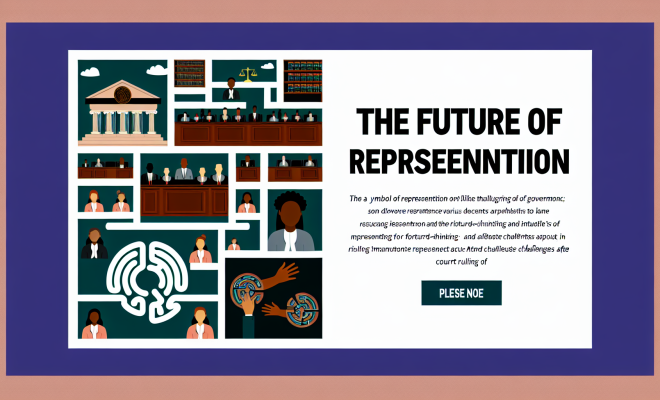
The landscape of political representation in the United States has been irrevocably shifted following a recent Supreme Court decision that has raised alarms among minority communities and advocates for fair representation. This ruling, which significantly undermines a critical provision of the Voting Rights Act, allows states to redraw congressional districts without considering racial demographics, a move that could reshape the political map in favor of Republican interests.
The Impact of the Supreme Court Ruling
In late April 2026, the Supreme Court delivered a ruling that many are calling a pivotal moment in American politics. The decision primarily affects Section 2 of the Voting Rights Act, which was designed to prevent discriminatory practices in redistricting that dilute the voting power of minority groups. By allowing states to redraw congressional districts with little regard to race, the ruling sets a precedent that could lead to the elimination of minority-majority districts across the country.
Experts predict that over a dozen House seats currently held by Black representatives could be at risk as Republican-led states mobilize to take advantage of this ruling. Already, discussions are underway in several Southern states about how to implement new congressional maps that could favor Republican candidates. This development raises significant concerns about the erosion of minority representation in Congress, particularly for the Congressional Black Caucus (CBC), which has long been seen as the ‘conscience of Congress.’
The Congressional Black Caucus: A Brief Overview
The Congressional Black Caucus, established in 1971, serves as a vital platform for Black lawmakers to advocate for policies that benefit African American communities and address issues related to social justice, economic inequality, and civil rights. With membership often fluctuating between 40 to 50 members, the CBC plays a crucial role in shaping legislation and influencing national discourse on race-related issues.
As the political landscape changes due to redistricting, the CBC stands to lose not only seats but also its voice in pivotal discussions that affect millions of African Americans across the nation. The potential loss of representation could have implications that extend far beyond the walls of Congress, affecting policy decisions on issues like healthcare, education, and policing.
Redistricting and Its Consequences
Redistricting, the process of redrawing electoral district boundaries, occurs every ten years following the census. It is a politically charged process often exploited by parties in power to create favorable electoral outcomes—a practice known as gerrymandering. The Supreme Court’s ruling now enables Republican-led states to engage in this practice with fewer constraints, raising fears that minority communities will be further marginalized.
- Historical Context: The Voting Rights Act of 1965 was enacted to combat systemic racism in voting and ensure that African Americans could exercise their right to vote. Section 2 specifically prohibits voting practices that discriminate on the basis of race.
- Gerrymandering Examples: States like North Carolina and Texas have previously engaged in gerrymandering, manipulating district lines to dilute the voting power of minority populations.
- Potential Losses: Analysts warn that states such as Georgia, Florida, and Alabama may seek to eliminate majority-Black districts, potentially displacing incumbents and altering the balance of power in Congress.
Reactions from the Congressional Black Caucus
In response to the ruling, members of the CBC have expressed deep concerns about the potential ramifications for their communities. Representative Steven Horsford, the CBC chair, articulated the urgent need for legislative action to safeguard voting rights. He emphasized that the ruling threatens not only representation but also the core democratic principle of equal access to the ballot.
Many CBC members are calling for renewed efforts to restore protections under the Voting Rights Act, arguing that the integrity of democracy is at stake. They emphasize the importance of coalition-building among various advocacy groups to combat the looming threat of disenfranchisement.
Looking Ahead: Strategies for Advocacy
As the CBC braces for the potential fallout from the Supreme Court ruling, several strategies are being discussed to fortify their representation and the interests of the communities they serve:
- Legislative Action: Advocating for new federal legislation that reinstates protections for racial and ethnic minorities during the redistricting process.
- Community Engagement: Mobilizing grassroots efforts to educate constituents about the implications of redistricting and encouraging voter participation.
- Legal Challenges: Preparing to challenge new district maps in court, should they be deemed discriminatory against minority voters.
- Partnerships: Collaborating with civil rights organizations and advocacy groups to amplify their message and push for reforms.
The Broader Political Landscape
The implications of the Supreme Court ruling extend beyond the CBC, affecting the broader political landscape in the United States. As states begin the redistricting process, the potential for increased polarization and partisanship looms large. The ability for political parties to manipulate district lines could lead to a Congress that fails to adequately represent the diverse tapestry of American society.
Furthermore, the ruling raises questions about the future of the two-party system in America. If the Republican Party successfully capitalizes on this opportunity to gain a stronger foothold in Congress by diminishing minority representation, it could result in a less inclusive political environment.
The Role of Voter Mobilization
In light of these developments, voter mobilization becomes a critical focus for the CBC and other advocacy groups. The ability to engage and mobilize voters, particularly in historically marginalized communities, can serve as a counterbalance to the effects of gerrymandering and disenfranchisement.
- Education Campaigns: Informing voters about their rights and the importance of participating in elections, regardless of redistricting changes.
- Utilizing Technology: Leveraging social media and digital platforms to reach younger voters and engage them in the political process.
- Coalition Building: Forming alliances with other minority groups to create a united front against voter suppression efforts.
The Future of the Black Caucus and Minority Representation
As the Congressional Black Caucus prepares for what could be a significant reshaping of its membership and influence, the stakes could not be higher. The loss of representation could reverberate through policy decisions affecting crucial issues such as education, healthcare, and social justice.
In the face of adversity, the CBC’s resilience and commitment to advocating for the rights of Black Americans will be tested. The coming months will be critical as they navigate the challenges posed by the Supreme Court ruling while striving to maintain their role as a powerful voice for their constituents.
Conclusion
The Supreme Court’s recent decision has opened the door for significant changes to the political landscape regarding minority representation. As the Congressional Black Caucus braces for potential losses in congressional seats, the implications for African American communities and the broader democratic process are profound. The need for advocacy, community engagement, and strategic legislative action has never been more urgent.
As the CBC and its allies prepare for battle, one thing remains clear: the fight for equitable representation and protection of voting rights is far from over. The resilience of the CBC, coupled with the mobilization of grassroots movements, will be key in facing the challenges ahead and ensuring that the voices of minority communities continue to be heard in Congress.