A Celestial Dance: The Occultation of Regulus by the Moon on April 25, 2026
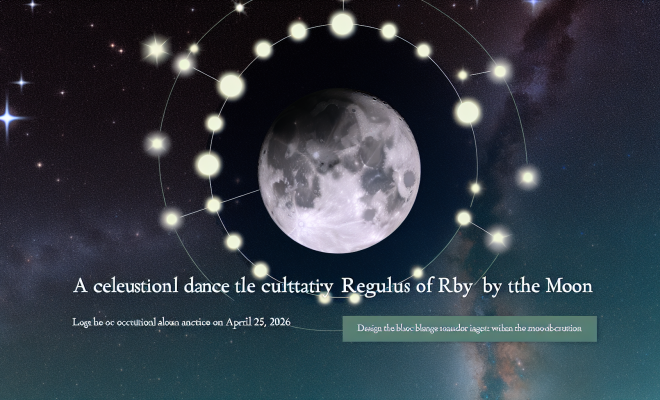
The night sky is a canvas of wonders, and on April 25, 2026, it will unveil a spectacular display as the waxing gibbous moon obscures one of the brightest stars in our night sky, Regulus. This rare astronomical event, known as an occultation, will allow observers in certain regions to witness the temporary disappearance of this first-magnitude star, creating a unique opportunity for stargazers and amateur astronomers alike.
Understanding Occultations
An occultation occurs when one celestial body passes in front of another, blocking it from view. This phenomenon is not only a visual spectacle but also an important event for astronomers, as it can provide valuable data about the sizes and distances of celestial objects. Occultations can involve various celestial bodies, including planets, asteroids, and stars, but the upcoming event involving Regulus is particularly noteworthy due to the star’s brightness and the moon’s visibility.
What to Expect on April 25, 2026
On the evening of April 25, observers located in the middle Atlantic and southeastern United States will have the best seats in the house for this celestial event. The moon, at 70% illumination as a waxing gibbous, will gradually drift across the sky and obscure Regulus, the brightest star in the constellation Leo.
- Timing: The star will become obscured for up to an hour, depending on the observer’s specific location. Detailed predictions will be available for 660 locations.
- Visibility: Those in the middle Atlantic and southeast regions will have optimal viewing conditions, with a color-coded visibility map provided by the International Occultation Timing Association (IOTA).
- Viewing Conditions: Clear skies will be essential for the best experience, as cloud cover can hinder visibility of this fleeting event.
Regulus: A Star of Notable Significance
Regulus holds a special place in the night sky, not only for its brightness but also for its historical and astronomical significance. As the brightest star in the constellation Leo, it is classified as a first-magnitude star, making it easily visible to the naked eye. Here are some key facts about Regulus:
- Brightness: Regulus shines at a magnitude of approximately 1.35, making it the 21st brightest star in the night sky.
- Distance: It is located about 79 light-years from Earth.
- Multiple Star System: Regulus is a multiple star system, consisting of four stars in total, with the main component being a blue-white giant star.
The Importance of Observing Occultations
For amateur astronomers and stargazers, observing an occultation is not just a matter of aesthetic enjoyment; it also provides a hands-on opportunity to engage with astronomy. During an occultation, the moment a star disappears and reappears can be timed accurately, allowing astronomers to gather data on the moon’s size, shape, and even its atmospheric conditions if applicable. These events often contribute to ongoing research in the field of astronomy.
Preparing for the Event
As the date of the occultation approaches, there are several steps observers can take to prepare for this thrilling event:
- Check Local Timing: Utilize resources from IOTA to find specific times for your location. This will ensure you know when to look up to catch the action.
- Find a Suitable Viewing Spot: Look for an area with minimal light pollution for the best visibility. Parks or elevated areas away from city lights often provide ideal conditions.
- Gather Equipment: While the event can be viewed with the naked eye, using binoculars or a telescope can enhance the experience. A simple tripod-mounted camera can also capture the moment.
- Invite Fellow Stargazers: Sharing the experience with friends or family can make the event even more enjoyable. Consider organizing a small gathering for the occasion.
Engaging with the Community
As the event draws near, engaging with local astronomy clubs or online communities can enrich your experience. Many clubs host star parties or informational sessions leading up to significant celestial events. These gatherings not only provide valuable information but also foster a sense of community among astronomy enthusiasts.
Conclusion
The occultation of Regulus by the moon on April 25, 2026, promises to be a captivating event that will offer observers a rare glimpse of the celestial mechanics at play in our universe. With proper preparation and a keen eye on the night sky, stargazers in the middle Atlantic and southeastern United States can look forward to witnessing this extraordinary cosmic phenomenon. As the moon gracefully passes in front of Regulus, it will not only remind us of the beauty of our universe but also of the intricate dance of celestial bodies that has fascinated humanity for millennia.
Mark your calendars, gather your gear, and prepare for an evening of astronomical wonder as we await this stunning display of nature’s artistry.