Asteroid 2026 HJ1: A Safe April 2026 Earth Flyby
Introduction
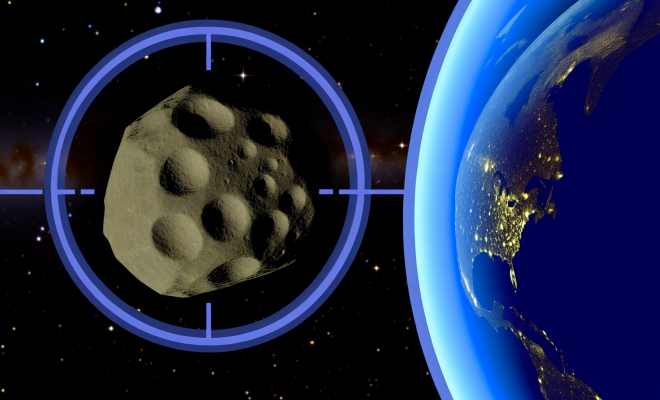
As we navigate through the cosmos, Earth often finds itself in the path of numerous celestial objects. One such object is the asteroid designated 2026 HJ1, which is set for a close approach on April 21, 2026. NASA recently confirmed that this asteroid, roughly the size of a bus, will pass by Earth at a safe distance, raising questions about the potential dangers posed by near-Earth objects (NEOs) and how scientists monitor them.
What is Asteroid 2026 HJ1?
Asteroid 2026 HJ1 is classified as a near-Earth object, specifically a member of the Apollo group of asteroids. This group consists of asteroids whose orbits bring them close to Earth. The term “bus-sized” indicates that this asteroid measures approximately 10 to 15 meters in diameter, similar to the length of a standard city bus. While many asteroids orbit the Sun, only a fraction come close enough to Earth to be categorized as NEOs.
NASA’s Monitoring Efforts
NASA has a dedicated program for tracking and monitoring these celestial bodies as part of its planetary defense strategy. This program employs advanced telescopic technology to observe the trajectories of near-Earth asteroids. In the case of 2026 HJ1, astronomers have been keeping a close watch on its path to ensure that it poses no threat to our planet.
- Distance from Earth: On April 21, 2026, 2026 HJ1 will pass at a distance of approximately 400,000 miles from Earth, which is about 1.6 times the distance between Earth and the Moon.
- Safety Measures: The distance is well within the safe range, and NASA has confirmed that there is no impact risk associated with this asteroid.
The Science Behind Asteroids
Asteroids, often referred to as “minor planets,” are remnants from the early formation of the solar system. They are primarily composed of rock and metal and can vary widely in size, shape, and composition. Understanding these celestial bodies is vital for several reasons:
- Planetary Defense: Monitoring asteroids helps scientists prepare for potential threats.
- Scientific Research: Studying asteroids can provide insights into the early solar system and the formation of planets.
- Resource Potential: Some asteroids may contain valuable minerals that could be harvested for use in space exploration.
Impact Risk Assessment
When assessing the potential dangers posed by near-Earth asteroids, scientists consider several factors:
- Size: Larger asteroids pose a greater risk due to their potential for significant damage upon impact.
- Trajectory: An asteroid’s orbit determines how close it will come to Earth and whether it could potentially collide with our planet.
- Composition: The material an asteroid is made of can influence its behavior when entering Earth’s atmosphere.
In the case of 2026 HJ1, experts note that even if a bus-sized asteroid were to enter Earth’s atmosphere, it would likely disintegrate due to the immense heat generated by friction, preventing any substantial damage on the surface.
The Importance of Continuous Monitoring
NASA’s ongoing monitoring of asteroids like 2026 HJ1 is crucial in ensuring planetary safety. The agency uses a combination of ground-based telescopes and space missions to track these objects and predict their paths accurately. Some of the key observatories involved in this effort include:
- Pan-STARRS (Panoramic Survey Telescope and Rapid Response System): Located in Hawaii, this facility is designed to detect and characterize NEOs.
- NEOWISE: A NASA mission that repurposed the Wide-field Infrared Survey Explorer (WISE) satellite to discover and track asteroids.
- Goldstone Solar System Radar: This facility uses radar technology to obtain precise measurements of the orbits of NEOs.
Understanding Near-Earth Objects (NEOs)
NEOs are classified into two primary categories: asteroids and comets. Their orbits often bring them close to Earth, and understanding their behavior is essential for avoiding potential threats. This section will delve into the characteristics and classifications of NEOs.
Asteroids vs. Comets
Both asteroids and comets are celestial bodies found within our solar system, but they have distinct differences:
- Composition: Asteroids are primarily made of rock and metal, while comets are composed of ice, dust, and rocky material.
- Appearance: Comets often develop tails when they approach the Sun, while asteroids typically do not.
- Origin: Most asteroids are found in the asteroid belt between Mars and Jupiter, while comets originate from further out in the solar system, such as the Kuiper Belt or Oort Cloud.
Types of Near-Earth Asteroids
NEOs are further categorized based on their orbits. The main types include:
- Apollo Asteroids: These have orbits that cross Earth’s path.
- Aten Asteroids: These orbit the Sun but remain mostly inside Earth’s orbit.
- Amor Asteroids: These approach but do not cross Earth’s orbit.
The Role of International Collaboration
Monitoring and understanding NEOs is a global endeavor. Various space agencies and organizations collaborate to track these objects and develop strategies for planetary defense. Notable collaborations include:
- NASA and ESA: The European Space Agency (ESA) works closely with NASA on projects like the Asteroid Impact & Deflection Assessment (AIDA) mission.
- UN Office for Outer Space Affairs: Promotes international cooperation in the peaceful use of outer space.
- Various universities and research institutions: Contribute to the study and tracking of asteroids.
Public Awareness and Education
As close encounters with asteroids like 2026 HJ1 become more frequent, public awareness and education are essential components of planetary defense. Here are some ways to engage the public:
- Outreach Programs: Educational programs aimed at schools and communities can raise awareness about asteroids and their potential risks.
- Public Events: Astronomy clubs and organizations often host events to educate the public about celestial events and NEOs.
- Online Resources: NASA and other organizations provide extensive online resources, including real-time tracking of NEOs and educational materials.
Conclusion
The upcoming close approach of asteroid 2026 HJ1 on April 21, 2026, serves as a reminder of the dynamic environment of our solar system. While this bus-sized asteroid poses no threat to Earth, it highlights the importance of continuous monitoring and research into near-Earth objects. As technology advances and our understanding of these celestial bodies deepens, we can better protect our planet from potential threats and unlock the mysteries of our solar system.
With collaboration among international space agencies, ongoing research, and public education, we stand prepared to face the challenges posed by near-Earth objects while fostering a greater appreciation for the wonders of the universe.