NASA Confirms No Threat from 2026 Asteroid Flyby
Introduction
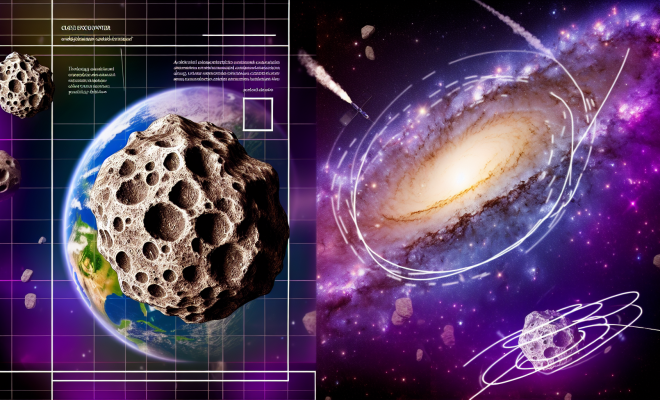
On April 21, 2026, a bus-sized asteroid, designated as 2026 HJ1, is set to make a close approach to Earth. While the term “bus-sized” might evoke images of a dangerous collision, NASA has confirmed that this celestial visitor poses no threat to our planet. This event serves as a reminder of the ongoing efforts in planetary defense and the importance of monitoring near-Earth objects (NEOs).
The Asteroid 2026 HJ1: What We Know
Asteroid 2026 HJ1 is classified as a near-Earth object, a category that encompasses any small celestial body whose orbit brings it into proximity with our planet. With dimensions comparable to a bus, this asteroid is relatively small in the grand scheme of the cosmos, but its approach has garnered attention due to the potential implications of such encounters.
Characteristics of 2026 HJ1
- Size: Approximately the size of a standard city bus, which measures about 12 meters (39 feet) in length).
- Orbital Path: Its trajectory intersects with Earth’s orbit, allowing for close approaches.
- Composition: While specific details about its composition are still being studied, asteroids of this size are typically made up of rock and metal.
The Significance of the Flyby
The upcoming flyby of 2026 HJ1 presents a unique opportunity for scientists and astronomers. Close encounters with asteroids can provide valuable insights into the composition and behavior of these ancient celestial bodies. By studying 2026 HJ1, researchers may gain a better understanding of the early solar system and the materials that formed it.
Asteroid Monitoring and Detection
NASA and other space agencies around the world have implemented sophisticated systems to monitor and detect NEOs. This proactive approach is vital for assessing potential threats and formulating responses if a future asteroid were to pose a risk of collision with Earth.
- Space Surveillance: Various telescopes and radar systems are employed to track asteroids and calculate their orbits. This includes both ground-based observatories and space-based platforms.
- Risk Assessment: Each detected asteroid is assessed for its potential impact risk. Factors such as size, speed, and trajectory are analyzed to determine if further observation is needed.
- International Collaboration: Many countries participate in planetary defense initiatives, sharing data and resources to enhance detection capabilities.
Why 2026 HJ1 is Not a Threat
Despite the asteroid’s close approach, NASA has confirmed that there is no risk of impact. The agency’s monitoring data indicates that 2026 HJ1 will safely pass by Earth at a distance that poses no threat to our planet.
Key Factors Mitigating Risk
- Distance: The asteroid will pass at a distance that is considered safe, far beyond the thresholds that would indicate a potential collision.
- Size: While any asteroid can be concerning, the relatively small size of 2026 HJ1 means that even if it were to enter Earth’s atmosphere, it would likely disintegrate before causing harm.
- Predictability: Advanced tracking methods allow scientists to predict the asteroid’s path with a high degree of accuracy, providing confidence in its non-threatening trajectory.
Planetary Defense: A Growing Priority
The flyby of 2026 HJ1 underscores the importance of planetary defense initiatives. As the number of detected NEOs increases, so does the necessity for comprehensive monitoring and response strategies.
NASA’s Planetary Defense Coordination Office (PDCO)
Established to coordinate efforts related to NEOs, NASA’s PDCO plays a critical role in planetary defense.
- Mission Objectives: The PDCO is tasked with detecting, tracking, and characterizing NEOs, assessing their potential threat to Earth, and facilitating response strategies.
- Public Outreach: The office also engages in public education, raising awareness about the risks posed by NEOs and the importance of monitoring these objects.
Technological Advancements in Detection
Recent advancements in technology have significantly improved our ability to detect and track asteroids.
- Improved Telescopes: Next-generation telescopes equipped with advanced imaging capabilities are enhancing our ability to identify smaller asteroids.
- Radar Systems: Ground-based radar systems provide real-time tracking of NEOs, allowing for precise calculations of their orbits.
- Space Missions: Missions like NASA’s NEOWISE and ESA’s Hera are specifically designed to study asteroids and gather critical data for planetary defense.
Conclusion
The upcoming flyby of asteroid 2026 HJ1 serves as a reminder of the dynamic and ever-changing nature of our solar system. While the asteroid is classified as bus-sized and makes a close approach to Earth, NASA has confirmed that it poses no danger to our planet. This event highlights the importance of continuous monitoring and the advancements made in planetary defense efforts. As we look to the future, it is crucial to remain vigilant and prepared for any potential threats posed by near-Earth objects.
Looking Ahead
As scientists continue to track and study NEOs, the knowledge gained will play an essential role in safeguarding our planet from potential impacts. The case of 2026 HJ1 is just one of many instances demonstrating the need for ongoing research and collaboration among the global scientific community.