North America’s Fintech Dominance: Analyzing the 32% Global Market Share
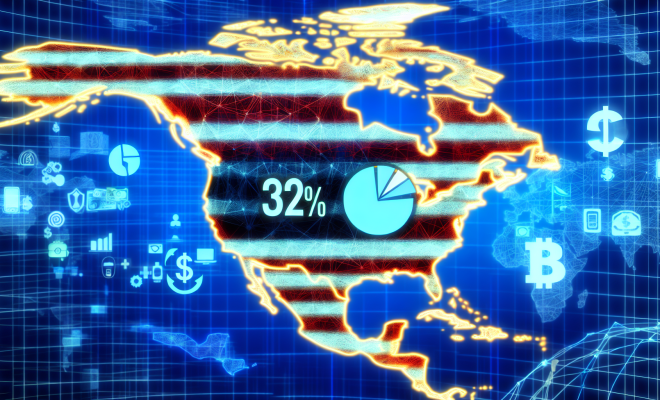
As the digital finance landscape continues to evolve, North America has cemented its position as a powerhouse in the fintech sector, currently holding a remarkable 32% of the global fintech market. This dominance, particularly evident in the United States, is driven by significant venture capital investments and the innovative capabilities of major industry players.
The Numbers Behind North America’s Fintech Market
According to recent projections, the U.S. fintech market is expected to reach a staggering $66.82 billion by 2026. This robust growth trajectory is supported by a thriving ecosystem of startups and established companies that are pushing the boundaries of financial technology. Notably, U.S. companies captured an impressive 47% of worldwide fintech venture capital, amounting to $25.1 billion out of a total of $53 billion in 2025.
Key Players Shaping the Landscape
The success of the North American fintech market can largely be attributed to key players such as Stripe and PayPal. These companies have not only revolutionized payment processing but have also set the stage for innovations that resonate on a global scale. By providing seamless and scalable solutions, they have enabled businesses of all sizes to adapt to the ever-changing financial landscape.
Factors Contributing to North America’s Edge
Several factors contribute to North America’s significant lead in the fintech arena:
- Concentration of Capital: The U.S. benefits from a high concentration of venture capital, which fosters innovation and enables startups to scale quickly.
- Established Infrastructure: A robust financial infrastructure allows fintech companies to integrate their solutions with ease, enhancing user experience.
- Regulatory Environment: While regulations can pose challenges, the existing frameworks in North America provide a level of clarity that is appealing to investors.
- Talent Pool: The region boasts a diverse and highly skilled workforce, with many professionals experienced in both technology and finance.
Comparison with Faster-Growing Regions
While regions like Asia Pacific are experiencing rapid growth in the fintech sector, North America still holds a competitive edge. The concentration of capital in the U.S., combined with the presence of established giants, creates a formidable barrier for emerging markets. Although Asia Pacific is home to a number of innovative fintech companies, the lack of similar levels of venture capital investment and infrastructure development has hindered their ability to scale at the same pace.
The Future of Fintech in North America
Looking ahead, the future of fintech in North America appears bright. With the continuous advancements in technology and the increasing demand for digital financial services, companies are likely to expand their offerings and enhance their platforms. This will not only drive revenue growth but also create more opportunities for collaboration and competition within the sector.
Emerging Trends to Watch
Several emerging trends are poised to shape the future of fintech in North America:
- Artificial Intelligence and Machine Learning: Financial institutions are increasingly adopting AI and ML to improve customer service, risk assessment, and fraud detection.
- Blockchain Technology: The integration of blockchain will enhance transaction security and transparency, offering new solutions to long-standing challenges in finance.
- Regenerative Finance: As sustainability becomes a priority, fintech companies are exploring ways to align their services with environmental and social governance (ESG) criteria.
- Embedded Finance: The rise of embedded finance will allow non-financial companies to offer financial services, further blurring the lines between industries.
Conclusion
North America’s remarkable 32% share of the global fintech market exemplifies its leadership in the financial technology arena. The U.S. fintech sector, buoyed by significant venture capital investments and the presence of influential platforms such as Stripe and PayPal, is well-positioned to continue its expansion. As the market evolves, staying ahead of emerging trends will be crucial for stakeholders looking to capitalize on the opportunities presented by this dynamic and rapidly changing landscape.