Artemis II: A Historic Step Toward Lunar Exploration and Beyond
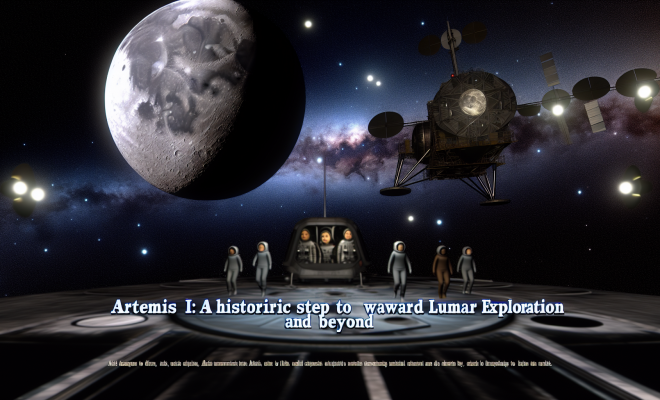
As the world watches with bated breath, NASA’s Artemis II mission is set to make history. Scheduled for splashdown on April 10, 2026, the mission’s crew of four astronauts is returning from a lunar flyby, marking a significant milestone in humanity’s journey to explore the Moon and eventually Mars.
The Mission Overview
The Artemis II mission is part of NASA’s ambitious Artemis program, which aims to establish a sustainable human presence on the Moon and facilitate future crewed missions to Mars. This particular mission will see the Orion spacecraft re-enter Earth’s atmosphere after a successful loop around the Moon, utilizing lunar gravity to assist in its journey back home.
Countdown to Splashdown
As the Orion spacecraft approaches Earth, astronauts are meticulously preparing for a safe splashdown in the Pacific Ocean. The mission is expected to benefit from calm seas and favorable weather conditions, which are crucial for ensuring a smooth landing.
The Reentry Process
The reentry phase is one of the most critical and challenging aspects of any space mission. As the Orion spacecraft re-enters Earth’s atmosphere, it will experience extreme heat and friction. Temperatures can soar to approximately 5,000 degrees Fahrenheit (about 2,760 degrees Celsius), necessitating the use of advanced heat shield technology to protect the spacecraft and its crew.
To slow down the spacecraft for its descent, Orion will deploy a series of parachutes. This multi-stage process begins with smaller parachutes, which help to stabilize the capsule, followed by larger main parachutes that significantly reduce the descent speed. The entire operation is a well-coordinated sequence, designed to ensure the safety of the astronauts aboard.
The Crew of Artemis II
The Artemis II mission crew includes a diverse group of highly trained astronauts:
- Reid Wiseman (Commander)
- Victor Glover (Pilot)
- Christina H. Koch (Mission Specialist)
- Jeremy Hansen (Mission Specialist)
Each member brings a wealth of experience and expertise, making them well-suited for the challenges of this historic mission. Notably, Christina Koch, who previously set a record for the longest single spaceflight by a woman, is part of this groundbreaking crew.
Significance of the Artemis II Mission
The Artemis II mission holds profound significance for the future of space exploration. It is the first crewed flight in the Artemis program and serves as a precursor to subsequent missions that will land astronauts on the lunar surface. The data and experiences gained from Artemis II will inform the design and execution of future lunar landings, ultimately enhancing NASA’s capabilities for human exploration beyond Earth.
Future Lunar Landings and Mars Exploration
With each step taken in the Artemis program, NASA is laying the groundwork for a sustainable human presence on the Moon. This includes developing technologies that will support long-term exploration and habitation. Artemis III, the next mission planned after Artemis II, aims to land astronauts on the lunar South Pole, a region rich in resources and scientific potential.
Moreover, the knowledge acquired from lunar missions will be instrumental in planning future crewed missions to Mars. NASA envisions a timeline that could see astronauts on Mars in the 2030s, and the Artemis program is a crucial part of this journey.
Looking Ahead
As the Artemis II mission progresses toward its splashdown, excitement builds not just for the astronauts on board, but for the global community that has a vested interest in space exploration. The successful execution of this mission will not only demonstrate the capabilities of NASA’s Artemis program but also inspire a new generation of scientists, engineers, and explorers.
In conclusion, the Artemis II mission stands as a testament to human ingenuity and our relentless pursuit of knowledge. As we prepare for the historic splashdown, the entire world looks forward to the next chapter in our exploration of the cosmos, with the Moon as our stepping stone to Mars and beyond.