Revealing Earth’s Past: Breakthrough Analysis of Antarctic Ice Cores Uncovers 3 Million Years of Climate Data
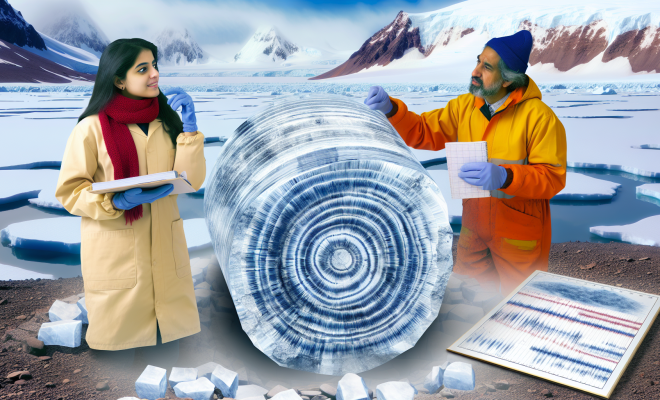
In a groundbreaking study published on April 2, 2026, scientists have unveiled a treasure trove of climate history embedded in Antarctic ice cores, dating back an astonishing 3 million years. This research not only enhances our understanding of long-term climate patterns but also provides critical insights into past environmental changes that are increasingly relevant in today’s context of climate change.
The Significance of Ice Core Research
Ice cores serve as natural archives of Earth’s climate history. By drilling deep into glaciers, scientists can extract cylindrical sections of ice that encapsulate air bubbles, dust, and other particles. Each layer of ice corresponds to a specific time period, providing a chronological record of atmospheric composition and climatic conditions.
The new analysis, conducted by an international team of researchers, utilized advanced ice core technology to retrieve and analyze data that was previously inaccessible. This innovative approach has allowed the team to decipher climate changes over millions of years with unprecedented detail.
Key Findings from the Antarctic Ice Cores
The study revealed several unexpected insights into Earth’s climate dynamics:
- Temperature Variability: The analysis indicated that temperature fluctuations over the past 3 million years were more pronounced than previously understood. These fluctuations align with glacial and interglacial periods, providing clearer connections between temperature variations and carbon dioxide levels.
- Long-Term Climate Trends: Researchers identified long-term trends in greenhouse gas concentrations, showing a correlation with major climatic shifts. The data suggest that current levels of atmospheric carbon dioxide are unprecedented in the context of the last 3 million years.
- Rapid Climate Events: The study uncovered evidence of rapid climate events, suggesting that significant shifts could occur more quickly than traditional models have predicted. This finding raises concerns about the potential for abrupt climate changes in the future.
Technological Advancements Paving the Way
The success of this research can be attributed to advancements in ice core drilling and analysis techniques. The team employed state-of-the-art tools to extract ice cores from remote locations in Antarctica, where conditions have preserved the ancient ice effectively. These tools allow for high-resolution measurements of isotopes and gases, providing a clearer picture of past climates.
Moreover, sophisticated modeling techniques were used to interpret the data, enabling scientists to reconstruct past temperatures and atmospheric compositions with remarkable accuracy. This combination of technology and methodology marks a significant leap forward in paleoclimatology.
Implications for Future Climate Research
The implications of this research extend beyond understanding Earth’s past. By providing a clearer picture of how climate systems have behaved over millions of years, scientists can better predict future trends and potential tipping points in the climate system. The study emphasizes the importance of long-term data in informing climate policy and adaptation strategies.
As global temperatures continue to rise, understanding the natural variability of Earth’s climate becomes increasingly crucial. This research could inform models that assess the potential impacts of climate change on ecosystems, sea-level rise, and weather patterns.
Conclusion: A Call for Continued Research
The findings from the Antarctic ice core analysis serve as a vital reminder of the complexity of Earth’s climate system. They also highlight the necessity for continued investment in climate research and technology. As the world grapples with the realities of climate change, studies like this one provide essential data that can guide efforts to mitigate its impacts.
In conclusion, the recent breakthroughs in ice core research not only unlock the secrets of our planet’s climate history but also equip us with the knowledge needed to navigate the future. As scientists continue to analyze these ancient records, we stand to gain even deeper insights into the intricate relationship between greenhouse gases, temperature, and climate change.