The Tech Edvocate

Top Menu

  • Advertisement
  • Apps
  • Home Page
  • Home Page Five (No Sidebar)
  • Home Page Four
  • Home Page Three
  • Home Page Two
  • Home Tech2
  • Icons [No Sidebar]
  • Left Sidbear Page
  • Lynch Educational Consulting
  • My Account
  • My Speaking Page
  • Newsletter Sign Up Confirmation
  • Newsletter Unsubscription
  • Our Brands
  • Page Example
  • Privacy Policy
  • Protected Content
  • Register
  • Request a Product Review
  • Shop
  • Shortcodes Examples
  • Signup
  • Start Here
    • Governance
    • Careers
    • Contact Us
  • Terms and Conditions
  • The Edvocate
  • The Tech Edvocate Product Guide
  • Topics
  • Write For Us
  • Advertise

Main Menu

  • Start Here
    • Our Brands
    • Governance
      • Lynch Educational Consulting, LLC.
      • Dr. Lynch’s Personal Website
      • Careers
    • Write For Us
    • The Tech Edvocate Product Guide
    • Contact Us
    • Books
    • Edupedia
    • Post a Job
    • The Edvocate Podcast
    • Terms and Conditions
    • Privacy Policy
  • Topics
    • Assistive Technology
    • Child Development Tech
    • Early Childhood & K-12 EdTech
    • EdTech Futures
    • EdTech News
    • EdTech Policy & Reform
    • EdTech Startups & Businesses
    • Higher Education EdTech
    • Online Learning & eLearning
    • Parent & Family Tech
    • Personalized Learning
    • Product Reviews
  • Advertise
  • Tech Edvocate Awards
  • The Edvocate
  • Pedagogue
  • School Ratings

logo

The Tech Edvocate

  • Start Here
    • Our Brands
    • Governance
      • Lynch Educational Consulting, LLC.
      • Dr. Lynch’s Personal Website
        • My Speaking Page
      • Careers
    • Write For Us
    • The Tech Edvocate Product Guide
    • Contact Us
    • Books
    • Edupedia
    • Post a Job
    • The Edvocate Podcast
    • Terms and Conditions
    • Privacy Policy
  • Topics
    • Assistive Technology
    • Child Development Tech
    • Early Childhood & K-12 EdTech
    • EdTech Futures
    • EdTech News
    • EdTech Policy & Reform
    • EdTech Startups & Businesses
    • Higher Education EdTech
    • Online Learning & eLearning
    • Parent & Family Tech
    • Personalized Learning
    • Product Reviews
  • Advertise
  • Tech Edvocate Awards
  • The Edvocate
  • Pedagogue
  • School Ratings
  • The SEC’s Latest Crypto Guidance: A Hidden Trap for Tokens?

  • One Ad, Two CEOs Gone: The Callaway Golf Controversy That Rocked the Industry

  • Infuriating: Michigan CEO Fired Over AI Image Sparks Outrage on 9/11

  • This One Breakthrough Could Finally Unleash Practical Quantum Computing

  • Unsettling: ChatGPT Image Leak Exposes OpenAI’s Growing Control Crisis

  • Your AI Assistant Is A Trojan Horse: 10 Tools To Lock Down Your Digital Life

  • This One Flaw Could Hand Your AI Assistant to Hackers – And Steal Your Data

  • This One Thing About AI Search Will Blow Your Mind — And Empty Your Bank Account

  • The Brutal Truth About AI Search Poisoning: 9 Tools You NEED Now

  • This New AI Cybersecurity Threat Is Quietly Stealing Millions — Are You Safe?

Tech News
Home›Tech News›Philippine Universities Go Online Amidst 2026 Transport Strike

Philippine Universities Go Online Amidst 2026 Transport Strike
By Matthew Lynch
March 19, 2026
0
Spread the love

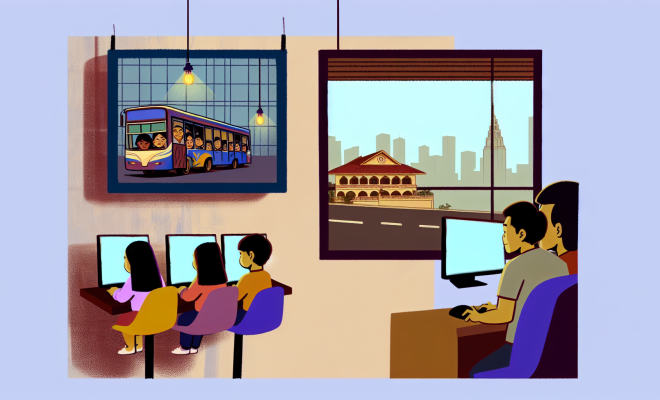
On March 19, 2026, several universities in the Philippines announced a shift to online classes in response to a nationwide transport strike. The strike was sparked by a significant increase in oil prices linked to escalating conflicts in the Middle East, severely impacting the daily commute of thousands of students and faculty members across the nation.

Background of the Transport Strike

The transport strike emerged as a direct consequence of a dramatic surge in oil prices, which has been a recurring issue in the Philippines, often tied to global events and geopolitical tensions. The recent spike in oil prices not only affected public transportation fares but also led to widespread discontent among transport workers and commuters alike. This unrest culminated in the decision to halt public transportation services, making it exceedingly difficult for students and educators to reach their respective institutions.

Schools Adapting to New Challenges

In light of the transportation crisis, prominent educational institutions swiftly transitioned to online learning platforms to ensure the continuity of academic programs. Among the universities that implemented this change were:

  • Adamson University
  • Ateneo de Manila University
  • De La Salle University
  • University of Santo Tomas

These decisions were made after consultations among university administrators, who recognized the necessity of maintaining educational momentum amidst the disruptions. The shift to virtual classrooms allows students to continue their studies without the interruptions caused by the strike.

Impact on Students and Faculty

The transition to online classes has been met with mixed reactions. For many students, especially those who rely heavily on public transportation, this shift is a welcome relief that alleviates the stress of commuting. However, some students have expressed concerns about the effectiveness of online learning, particularly those who thrive in traditional classroom settings.

Faculty members are also adjusting to this new mode of instruction, with many participating in professional development sessions to enhance their online teaching skills. Schools have provided resources and support to help educators adapt their curricula for virtual platforms.

Continuity of Education

The swift action taken by these universities underscores a commitment to ensuring that educational standards are upheld despite external challenges. Online learning platforms offer various tools that can facilitate interactive learning experiences, including video conferencing, discussion forums, and digital resources that can enhance the learning environment.

As these institutions navigate the current crisis, they are also preparing for potential future disruptions. This proactive approach includes evaluating and improving their online learning infrastructure to better support students and faculty in times of uncertainty.

Ongoing Developments

As the situation evolves, more educational institutions across the Philippines are expected to announce similar transitions to online learning. The Department of Education (DepEd) is closely monitoring the situation and may issue guidelines to support schools in making the necessary adjustments.

Updates from universities are ongoing, and stakeholders are encouraged to remain informed about the latest developments. This includes monitoring official channels and social media accounts of their respective institutions for real-time updates regarding class schedules and online learning resources.

Conclusion

The shift to online classes on March 19, 2026, highlights the resilience of the Philippine education system in the face of adversity. As schools adapt to the current challenges, the emphasis remains on ensuring that students receive quality education while prioritizing their safety and well-being.

In a world increasingly reliant on technology, this transition also presents an opportunity for institutions to further innovate and integrate digital tools into their teaching methodologies, potentially reshaping the future of learning in the Philippines.


Previous Article

RBSE Class 10 Results 2026: Access Your ...

Next Article

NCES Next Task Force: Reimagining Education Data ...

Matthew Lynch

Related articles More from author

  • Tech News

    Kerr’s Golden Comeback & Utagushimaninde’s 2026 Record Feat

    March 22, 2026
    By Matthew Lynch
  • Tech News

    Global Political & Economic Trends: April 11, 2026 Updates

    April 11, 2026
    By Matthew Lynch
  • Tech News

    How to use OpenAI for image generation

    July 18, 2026
    By Matthew Lynch
  • Tech News

    Top Inkscape Fonts for Logos: Elevate Your Brand Design

    July 29, 2026
    By Matthew Lynch
  • Tech News

    How to enable high contrast mode

    June 14, 2026
    By Matthew Lynch
  • Tech News

    How to share Sketch files?

    August 12, 2026
    By Matthew Lynch

Search

Login & Registration

  • Log in
  • Entries feed
  • Comments feed
  • WordPress.org

Newsletter

Signup for The Tech Edvocate Newsletter and have the latest in EdTech news and opinion delivered to your email address!

About Us

Since technology is not going anywhere and does more good than harm, adapting is the best course of action. That is where The Tech Edvocate comes in. We plan to cover the PreK-12 and Higher Education EdTech sectors and provide our readers with the latest news and opinion on the subject. From time to time, I will invite other voices to weigh in on important issues in EdTech. We hope to provide a well-rounded, multi-faceted look at the past, present, the future of EdTech in the US and internationally.

We started this journey back in June 2016, and we plan to continue it for many more years to come. I hope that you will join us in this discussion of the past, present and future of EdTech and lend your own insight to the issues that are discussed.

Newsletter

Signup for The Tech Edvocate Newsletter and have the latest in EdTech news and opinion delivered to your email address!

Contact Us

The Tech Edvocate
910 Goddin Street
Richmond, VA 23231
(601) 630-5238
[email protected]

Copyright © 2026 Matthew Lynch. All rights reserved.