The Tech Edvocate

Top Menu

  • Advertisement
  • Apps
  • Home Page
  • Home Page Five (No Sidebar)
  • Home Page Four
  • Home Page Three
  • Home Page Two
  • Home Tech2
  • Icons [No Sidebar]
  • Left Sidbear Page
  • Lynch Educational Consulting
  • My Account
  • My Speaking Page
  • Newsletter Sign Up Confirmation
  • Newsletter Unsubscription
  • Our Brands
  • Page Example
  • Privacy Policy
  • Protected Content
  • Register
  • Request a Product Review
  • Shop
  • Shortcodes Examples
  • Signup
  • Start Here
    • Governance
    • Careers
    • Contact Us
  • Terms and Conditions
  • The Edvocate
  • The Tech Edvocate Product Guide
  • Topics
  • Write For Us
  • Advertise

Main Menu

  • Start Here
    • Our Brands
    • Governance
      • Lynch Educational Consulting, LLC.
      • Dr. Lynch’s Personal Website
      • Careers
    • Write For Us
    • The Tech Edvocate Product Guide
    • Contact Us
    • Books
    • Edupedia
    • Post a Job
    • The Edvocate Podcast
    • Terms and Conditions
    • Privacy Policy
  • Topics
    • Assistive Technology
    • Child Development Tech
    • Early Childhood & K-12 EdTech
    • EdTech Futures
    • EdTech News
    • EdTech Policy & Reform
    • EdTech Startups & Businesses
    • Higher Education EdTech
    • Online Learning & eLearning
    • Parent & Family Tech
    • Personalized Learning
    • Product Reviews
  • Advertise
  • Tech Edvocate Awards
  • The Edvocate
  • Pedagogue
  • School Ratings

logo

The Tech Edvocate

  • Start Here
    • Our Brands
    • Governance
      • Lynch Educational Consulting, LLC.
      • Dr. Lynch’s Personal Website
        • My Speaking Page
      • Careers
    • Write For Us
    • The Tech Edvocate Product Guide
    • Contact Us
    • Books
    • Edupedia
    • Post a Job
    • The Edvocate Podcast
    • Terms and Conditions
    • Privacy Policy
  • Topics
    • Assistive Technology
    • Child Development Tech
    • Early Childhood & K-12 EdTech
    • EdTech Futures
    • EdTech News
    • EdTech Policy & Reform
    • EdTech Startups & Businesses
    • Higher Education EdTech
    • Online Learning & eLearning
    • Parent & Family Tech
    • Personalized Learning
    • Product Reviews
  • Advertise
  • Tech Edvocate Awards
  • The Edvocate
  • Pedagogue
  • School Ratings
  • The Silent Revolution: How AI Property Valuation Is Quietly Reshaping Real Estate

  • The Astonishing Truth: Why Your Dream Car Is Now a $52,000 Illusion

  • Toxic Algorithms: Why Your Bank’s AI Could Cost You Everything

  • OpenAI’s GPT-6 Cyber: A Dangerous New AI Threat or Our Ultimate Digital Guardian?

  • This Game-Changing Natural Ozempic Alternative Just Blew Up on Social Media

  • Bónuszösszeg, ingyen pörgetés és befizetési feltétel: üdvözlő és befizetés nélküli kaszinóajánlatok magyar játékosoknak

  • 9 Critical Reasons Why Athexio Might Be The Investment You Need (Or Should Avoid)

  • A Single Breakthrough Could Finally Kill Range Anxiety for Millions of EV Owners

  • Your Money, Their AI: The Secret Agents Invading Bank Accounts

  • US Battery as a Service Market Shifts Toward Fleet-Based Energy

Tech News
Home›Tech News›U.S. Urges Citizens to Evacuate Iraq Amid Escalating Tensions

U.S. Urges Citizens to Evacuate Iraq Amid Escalating Tensions
By Matthew Lynch
March 15, 2026
0
Spread the love

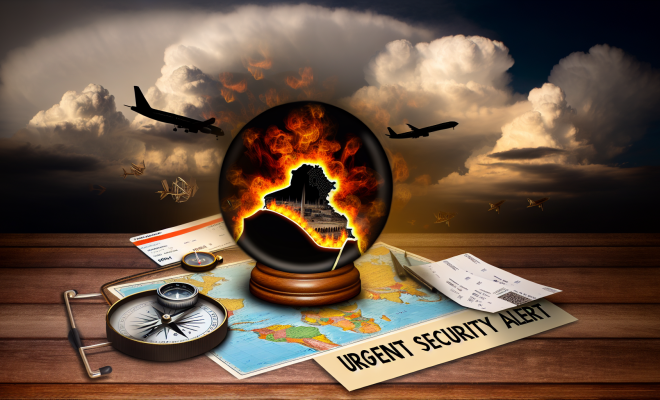
The situation in Iraq has escalated dramatically, prompting the U.S. Embassy in Baghdad to issue an urgent advisory for all American citizens to evacuate the country immediately. This warning follows a second attack on the embassy, underscoring the increasing dangers posed by militias allied with Iran. As tensions continue to rise in the region, the embassy’s guidance reflects a critical moment in U.S.-Iran relations and the safety of American nationals abroad.

Background on Recent Attacks

Since the onset of the Iran conflict, U.S. diplomatic facilities and personnel have been targeted in a series of assaults by Iranian-backed militias. These attacks have not only included the embassy in Baghdad but have also extended to American companies and popular hotels that are frequented by foreign visitors. The pattern of aggression has raised alarms within the U.S. State Department, leading to increased security measures and travel advisories.

Travel Recommendations for Americans

In light of the recent developments, the U.S. State Department has recommended that American citizens currently in Iraq take immediate action to leave the country. Due to the suspension of commercial flights, the embassy has advised travelers to consider overland routes to neighboring countries. This recommendation comes with an explicit warning against visiting the embassy or the U.S. consulate in Erbil, where safety cannot be guaranteed amidst the ongoing threats.

Key Travel Safety Measures

  • Evacuation: All American citizens are urged to leave Iraq without delay.
  • Overland Travel: Since commercial flights are not operational, Americans are advised to travel overland to nearby nations.
  • Embassy Advisory: Avoid visiting the U.S. Embassy in Baghdad and the consulate in Erbil for safety reasons.

Recent Casualties and Military Presence

The urgency of the embassy’s warning is further compounded by a tragic incident in which four U.S. service members lost their lives in the crash of a U.S. refueling plane in Iraq. This event not only highlights the immediate risks faced by military personnel in the area but also raises critical questions about the ongoing U.S. engagement in Iraq and the broader implications for national security.

Broader Implications for U.S.-Iran Relations

The escalating violence and the embassy’s advisory are indicative of the deteriorating situation between the U.S. and Iran. The Iranian government has been accused of supporting various militant groups that aim to undermine U.S. presence and influence in the region. As the conflict intensifies, the possibility of further retaliatory measures and diplomatic breakdowns looms large.

Historical Context

The longstanding tensions between the U.S. and Iran have roots that trace back decades, with significant events shaping the current landscape. The U.S. invasion of Iraq in 2003 and subsequent withdrawal, combined with Iran’s growing influence in the region, have created a volatile environment characterized by mistrust and aggression. The recent attacks on U.S. facilities are a continuation of this complex narrative, as various factions vie for control and influence.

Advice for Travelers and Expatriates

For American citizens currently residing in Iraq or planning to travel to the region, it is essential to stay informed and heed government advisories. The embassy has recommended that individuals register with the Smart Traveler Enrollment Program (STEP) to receive real-time updates and assistance. Staying connected with local news and monitoring the situation closely can provide valuable information on safety and security.

Considerations for Future Travel

As the situation remains fluid, potential travelers should carefully evaluate their plans regarding travel to Iraq and neighboring countries. Those considering travel to the region should take into account:

  • Risk Assessment: Analyze the security situation and potential risks involved.
  • Travel Insurance: Ensure comprehensive travel insurance that covers political unrest and evacuation.
  • Local Contacts: Establish reliable local contacts for assistance in case of emergencies.

Conclusion

The advisory from the U.S. Embassy in Baghdad serves as a stark reminder of the precarious situation facing American citizens in Iraq. With heightened tensions and the threat of violence looming, the safety of travelers and expatriates must be the utmost priority. As the situation develops, it is crucial for Americans to remain vigilant and responsive to official guidance to navigate this challenging landscape.


Previous Article

Brennan Bears’ Championship Dreams Dashed by North ...

Next Article

U.S. Air Travel Safety: Navigating Geopolitical Tensions

Matthew Lynch

Related articles More from author

  • Tech News

    How to remove background from image free

    June 13, 2026
    By Matthew Lynch
  • Tech News

    How to stop OneDrive sync?

    August 9, 2026
    By Matthew Lynch
  • Tech News

    How to use 1Password for business

    July 23, 2026
    By Matthew Lynch
  • Tech News

    Master the Airtable Mobile App: 9 Essential Tips

    July 19, 2026
    By Matthew Lynch
  • Tech News

    NCAA Final Four 2026: Historic Echoes & Championship Dreams

    April 2, 2026
    By Matthew Lynch
  • Tech News

    Renew Your SSL Certificate: A Comprehensive Guide

    June 24, 2026
    By Matthew Lynch

Search

Login & Registration

  • Log in
  • Entries feed
  • Comments feed
  • WordPress.org

Newsletter

Signup for The Tech Edvocate Newsletter and have the latest in EdTech news and opinion delivered to your email address!

About Us

Since technology is not going anywhere and does more good than harm, adapting is the best course of action. That is where The Tech Edvocate comes in. We plan to cover the PreK-12 and Higher Education EdTech sectors and provide our readers with the latest news and opinion on the subject. From time to time, I will invite other voices to weigh in on important issues in EdTech. We hope to provide a well-rounded, multi-faceted look at the past, present, the future of EdTech in the US and internationally.

We started this journey back in June 2016, and we plan to continue it for many more years to come. I hope that you will join us in this discussion of the past, present and future of EdTech and lend your own insight to the issues that are discussed.

Newsletter

Signup for The Tech Edvocate Newsletter and have the latest in EdTech news and opinion delivered to your email address!

Contact Us

The Tech Edvocate
910 Goddin Street
Richmond, VA 23231
(601) 630-5238
[email protected]

Copyright © 2026 Matthew Lynch. All rights reserved.