The Artistry of God of War – Visual and Audio Design
Introduction
The God of War series has long been celebrated for its stunning visuals and immersive audio design. From the sun-drenched temples of ancient Greece to the snow-covered forests of Norse mythology, each installment has pushed the boundaries of what’s possible in video game artistry. This article delves into the visual and audio elements that have made God of War a feast for the senses, exploring how these aspects contribute to the game’s storytelling and player immersion.
Visual Design in Ancient Greece
The early God of War games set in ancient Greece established a distinct visual style that became iconic for the series. The art direction drew heavily from Greek mythology and architecture, presenting a world of grand scale and mythic proportions. Towering statues, sprawling temples, and epic vistas created a sense of awe and reinforced Kratos’ role as a mere mortal challenging the gods.
Character designs in this era were equally striking. Kratos himself, with his ash-white skin and red tattoo, became instantly recognizable. The gods and monsters he faced were brought to life with imaginative designs that respected their mythological roots while adding a unique God of War twist.
Transition to Norse Mythology
With the series’ shift to Norse mythology in the 2018 release, the visual design underwent a dramatic transformation. The bright, open spaces of Greece gave way to the more subdued, often claustrophobic environments of the Norse realms. Dense forests, snowy mountains, and mystical caves replaced sun-baked marble and golden palaces.
This change in setting allowed the art team to explore a new color palette and lighting techniques. The game’s visuals became more grounded, with a focus on natural materials like wood, stone, and fur. This shift complemented the more mature tone of the story and Kratos’ character development.
Character and Creature Design
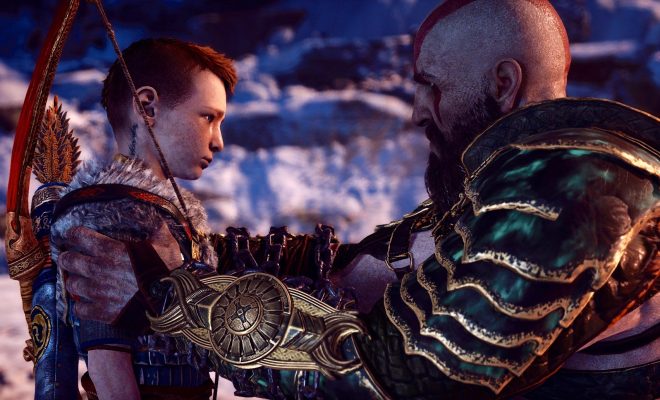
The Norse era introduced a new cast of characters and creatures, each meticulously designed to fit the new mythological context. Kratos himself was redesigned, now sporting a beard and more practical armor that reflected his age and new environment. The design of his son, Atreus, was crucial in visually representing the father-son dynamic central to the game’s narrative.
Creatures from Norse mythology were brought to life with stunning detail. From the massive World Serpent to the various trolls and draugr, each enemy was designed to be both visually impressive and true to its mythological roots.
Environmental Storytelling
One of the strengths of God of War’s visual design is its use of environmental storytelling. The game worlds are filled with details that hint at larger stories and histories. Ancient ruins, abandoned villages, and mystical artifacts all contribute to a sense of a living, breathing world with its own past and secrets.
Audio Design and Music
The audio design in God of War has always been a crucial component of the game’s immersive experience. From the clash of weapons to the roars of mythical beasts, sound effects are crafted to give weight and impact to every action.
The music of God of War deserves special mention. Composer Bear McCreary’s score for the 2018 game is a masterpiece that blends Nordic instruments and chants with orchestral grandeur. The main theme, with its deep male chorus and soaring strings, perfectly captures the epic scale of Kratos’ journey while hinting at his internal struggles.
Voice Acting and Dialogue
The voice performances in God of War, particularly in the later installments, add significant depth to the characters. Christopher Judge’s gravelly portrayal of Kratos in the 2018 game brings new layers to the character, conveying both strength and vulnerability. The interactions between Kratos and Atreus, voiced by Sunny Suljic, are brought to life through nuanced performances that capture the complex father-son relationship.
Technical Achievements
From a technical standpoint, the God of War series has consistently pushed the boundaries of what’s possible on gaming hardware. The 2018 game, in particular, was praised for its seamless, no-cut camera that follows Kratos from start to finish, creating an unprecedented level of immersion.
Conclusion
The visual and audio design of the God of War series has been instrumental in creating immersive, unforgettable gaming experiences. From the grand spectacles of Greek mythology to the more intimate, detailed world of Norse legends, the artistry on display has consistently raised the bar for what players can expect from video game aesthetics. As the series continues to evolve, fans eagerly anticipate how future installments will push the boundaries of visual and audio design even further, continuing to set new standards in the art of video game creation.