
The Tech Edvocate

Top Menu

  • Advertisement
  • Apps
  • Home Page
  • Home Page Five (No Sidebar)
  • Home Page Four
  • Home Page Three
  • Home Page Two
  • Home Tech2
  • Icons [No Sidebar]
  • Left Sidbear Page
  • Lynch Educational Consulting
  • My Account
  • My Speaking Page
  • Newsletter Sign Up Confirmation
  • Newsletter Unsubscription
  • Our Brands
  • Page Example
  • Privacy Policy
  • Protected Content
  • Register
  • Request a Product Review
  • Shop
  • Shortcodes Examples
  • Signup
  • Start Here
    • Governance
    • Careers
    • Contact Us
  • Terms and Conditions
  • The Edvocate
  • The Tech Edvocate Product Guide
  • Topics
  • Write For Us
  • Advertise

Main Menu

  • Start Here
    • Our Brands
    • Governance
      • Lynch Educational Consulting, LLC.
      • Dr. Lynch’s Personal Website
      • Careers
    • Write For Us
    • The Tech Edvocate Product Guide
    • Contact Us
    • Books
    • Edupedia
    • Post a Job
    • The Edvocate Podcast
    • Terms and Conditions
    • Privacy Policy
  • Topics
    • Assistive Technology
    • Child Development Tech
    • Early Childhood & K-12 EdTech
    • EdTech Futures
    • EdTech News
    • EdTech Policy & Reform
    • EdTech Startups & Businesses
    • Higher Education EdTech
    • Online Learning & eLearning
    • Parent & Family Tech
    • Personalized Learning
    • Product Reviews
  • Advertise
  • Tech Edvocate Awards
  • The Edvocate
  • Pedagogue
  • School Ratings

logo

The Tech Edvocate

  • Start Here
    • Our Brands
    • Governance
      • Lynch Educational Consulting, LLC.
      • Dr. Lynch’s Personal Website
        • My Speaking Page
      • Careers
    • Write For Us
    • The Tech Edvocate Product Guide
    • Contact Us
    • Books
    • Edupedia
    • Post a Job
    • The Edvocate Podcast
    • Terms and Conditions
    • Privacy Policy
  • Topics
    • Assistive Technology
    • Child Development Tech
    • Early Childhood & K-12 EdTech
    • EdTech Futures
    • EdTech News
    • EdTech Policy & Reform
    • EdTech Startups & Businesses
    • Higher Education EdTech
    • Online Learning & eLearning
    • Parent & Family Tech
    • Personalized Learning
    • Product Reviews
  • Advertise
  • Tech Edvocate Awards
  • The Edvocate
  • Pedagogue
  • School Ratings
  • The Silent Revolution: How AI Property Valuation Is Quietly Reshaping Real Estate

  • The Astonishing Truth: Why Your Dream Car Is Now a $52,000 Illusion

  • Toxic Algorithms: Why Your Bank’s AI Could Cost You Everything

  • OpenAI’s GPT-6 Cyber: A Dangerous New AI Threat or Our Ultimate Digital Guardian?

  • This Game-Changing Natural Ozempic Alternative Just Blew Up on Social Media

  • Bónuszösszeg, ingyen pörgetés és befizetési feltétel: üdvözlő és befizetés nélküli kaszinóajánlatok magyar játékosoknak

  • 9 Critical Reasons Why Athexio Might Be The Investment You Need (Or Should Avoid)

  • A Single Breakthrough Could Finally Kill Range Anxiety for Millions of EV Owners

  • Your Money, Their AI: The Secret Agents Invading Bank Accounts

  • US Battery as a Service Market Shifts Toward Fleet-Based Energy

How To
Home›How To›How to Find Valence Electrons: 12 Steps

How to Find Valence Electrons: 12 Steps
By Matthew Lynch
March 21, 2024
0
Spread the love

Step 1: Know Your Periodic Table

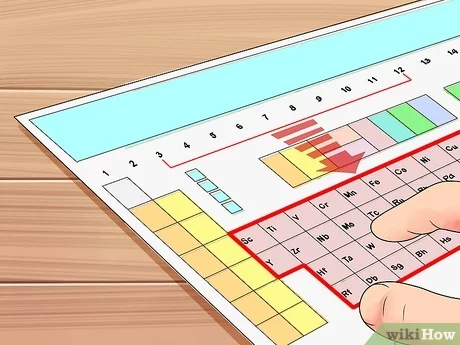
Familiarize yourself with the periodic table. The table is divided into rows called periods and columns called groups. Understanding the layout and organization of the elements is essential to finding valence electrons.

Step 2: Understand Atomic Structure

An atom contains protons, neutrons, and electrons. Electrons orbit around the nucleus in layers known as energy levels or shells. Valence electrons are those in an atom’s outermost shell.

Step 3: Learn About Valence Electrons

Valence electrons determine an element’s chemical properties and its ability to bond with other elements. Elements in the same group have the same number of valence electrons.

Step 4: Locate the Element on the Periodic Table

Find the element for which you want to determine the number of valence electrons on the periodic table.

Step 5: Identify the Group Number

Determine the group number of the element you are working with. The group number is located at the top of each column and correlates to the number of valence electrons for elements in that column.

Step 6: Main Group Elements

For main group elements (Groups 1, 2, and 13-18), simply use their group number to determine valence electrons. For example, sodium (Na) is in Group 1 and has one valence electron.

Step 7: Transition Metals

Transition metals, located in Groups 3-12, have a more complex electron configuration. Typically, these elements have two valence electrons. Understanding their electron configuration will help you better approximate their valence electrons.

Step 8: Identify Electron Configuration

Refer to a comprehensive electron configuration chart or use specific rules to write out an element’s electron configuration. This will include information about each energy level and subshell.

Step 9: Find Outermost Shell

In the electron configuration, locate the outermost or highest energy level. The electrons within this shell are your valence electrons.

Step 10: Count Valence Electrons

Count the total number of electrons present in the outermost energy level. This number is the element’s valence electrons.

Step 11: Noble Gases

Be aware that noble gases, found in Group 18, have a full outer shell of electrons which makes them unreactive. These gases, with the exception of helium, generally have eight valence electrons.

Step 12: Practice and Apply

Practice finding valence electrons for different elements and learn to predict potential chemical reactions. Understanding valence electrons is crucial in comprehending chemistry principles and how elements interact.

Now that you’ve learned these steps, you should be able to determine the number of valence electrons for any element in the periodic table. Keep practicing, and soon this skill will become second nature.


Previous Article

How to Maintain Your Computer: 9 Steps

Next Article

Things To Watch Out for When Choosing ...

Matthew Lynch

Related articles More from author

  • How To

    How to Have Difficult Conversations

    December 26, 2023
    By Matthew Lynch
  • How To

    3 Ways to Cook Perch

    October 9, 2023
    By Matthew Lynch
  • How To

    How to Blow Smoke Rings: 10 Steps

    October 21, 2023
    By Matthew Lynch
  • How To

    4 Ways to Be a Football Girlfriend

    April 7, 2024
    By Matthew Lynch
  • How To

    3 Ways to Tell if a Boy Loves You

    December 3, 2023
    By Matthew Lynch
  • How To

    4 Ways to Serve Rum

    December 11, 2023
    By Matthew Lynch

Search

Login & Registration

  • Log in
  • Entries feed
  • Comments feed
  • WordPress.org

Newsletter

Signup for The Tech Edvocate Newsletter and have the latest in EdTech news and opinion delivered to your email address!

About Us

Since technology is not going anywhere and does more good than harm, adapting is the best course of action. That is where The Tech Edvocate comes in. We plan to cover the PreK-12 and Higher Education EdTech sectors and provide our readers with the latest news and opinion on the subject. From time to time, I will invite other voices to weigh in on important issues in EdTech. We hope to provide a well-rounded, multi-faceted look at the past, present, the future of EdTech in the US and internationally.

We started this journey back in June 2016, and we plan to continue it for many more years to come. I hope that you will join us in this discussion of the past, present and future of EdTech and lend your own insight to the issues that are discussed.

Newsletter

Signup for The Tech Edvocate Newsletter and have the latest in EdTech news and opinion delivered to your email address!

Contact Us

The Tech Edvocate
910 Goddin Street
Richmond, VA 23231
(601) 630-5238
[email protected]

Copyright © 2026 Matthew Lynch. All rights reserved.